The meeting almost never happened. Eric Vishria, a general partner at venture firm Benchmark, had been reluctant to see a chip startup called Cerebras Systems when an associate pressed him on it a few years ago. He finally agreed. On May 14, that decision paid off in a way few bets in venture capital ever do: Cerebras priced its initial public offering at $185 a share, raised $5.5 billion, and saw its stock open 108% above the offer price on the Nasdaq, briefly touching $386 before closing at $311.07, up 68%.
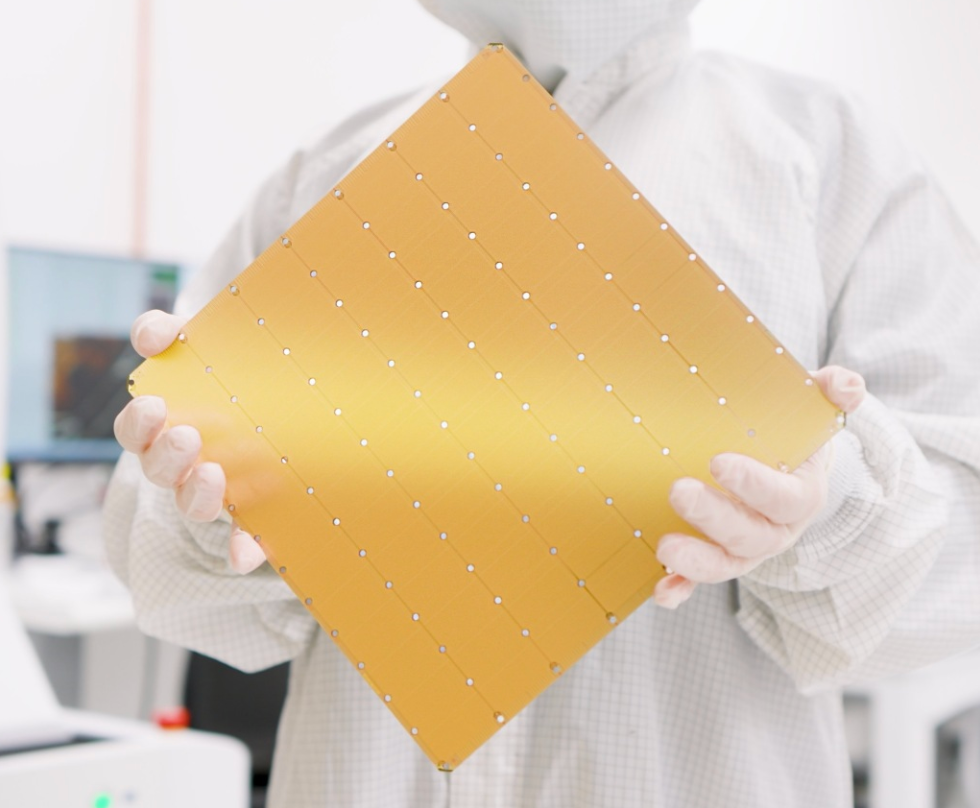
Cerebras is a Sunnyvale, California company founded in 2015 that builds a processor the size of an entire silicon wafer. Instead of stitching many small chips together the way Nvidia does with its graphics cards, Cerebras casts one enormous chip, the Wafer-Scale Engine, holding more than 4 trillion transistors. The approach avoids the slow interconnects that link GPU clusters, which the company says makes it up to 15 times faster at inference — the act of running a trained model — than comparable GPU systems.
The offering was the largest U.S. technology IPO since Uber in 2019 and the most closely watched AI listing of the year. Morgan Stanley and Citigroup led the deal, with Barclays and UBS among the underwriters. Demand was so intense that Cerebras raised its price range twice, from an initial $115 to $125 to a final $150 to $160, then priced above even that at $185. The order book closed more than 20 times oversubscribed, according to people familiar with the matter, and the company required many buyers to place limit orders.
At the offer price, the fully diluted valuation was about $56.4 billion. By the close of the first day, with the stock at $311.07, the market value stood near $66 billion, according to Yahoo Finance data cited by TechCrunch.
The debut validates a bet that seemed improbable a year ago, when Cerebras was still a niche player selling to research labs and a handful of customers. Its pitch to investors today: OpenAI, Meta and Amazon Web Services use its machines for fast inference on agentic and coding workloads, where developers notice latency. The company reported 2025 revenue of about $510 million, which at the offer price implied roughly 110 times trailing sales — and far more than that after the first-day pop.
That valuation math makes some investors uneasy. Roughly 86% of 2025 revenue came from two entities linked to the United Arab Emirates, according to the company’s S-1 filing, a concentration that leaves the young public company exposed to the whims of a small group of buyers. G42, the Abu Dhabi artificial intelligence firm, took a stake in Cerebras in 2023 and remains its largest customer; Microsoft invested $1.5 billion in G42 in 2024 after U.S. officials raised concerns about the Emirati firm’s ties to Chinese technology. Analysts said the stock is priced for years of flawless execution, with no room for a slip in customer relationships or a slowdown in AI spending.
Still, the pop says something about investor hunger. Public markets have had few ways to buy pure-play AI silicon outside Nvidia, whose market value has swelled on the back of the same spending boom. Cerebras offered a rare alternative, and retail investors in particular bid aggressively, pushing the opening trade to $350. Brokerages reported extreme allocation scarcity, with customers at Fidelity and E*TRADE receiving only a fraction of the shares they requested, according to people familiar with the situation. The stock cooled during the day before firming again in after-hours trading.
The surge also carries implications for the pipeline behind Cerebras. The company’s success is expected to encourage a wave of AI chip companies to accelerate their own listings, according to analysts. Groq, a rival building inference chips, has signaled plans to go public, and bankers said the Cerebras outcome — a heavily oversubscribed book, a double-digit first-day gain and a valuation that embarrasses skeptics — will make it easier for similar companies to raise capital and file.
For Benchmark, the outcome is a windfall that began with that nearly skipped meeting. Vishria’s firm led early rounds in Cerebras, and its stake, built at a cost of a few hundred million dollars, was worth billions at the closing bell, according to people familiar with the fund’s position. Vishria has told colleagues it was the kind of meeting he almost turned down.
Cerebras’ chief executive, Andrew Feldman, who co-founded the company after a long career in networking chips, spent years arguing that wafer-scale silicon would beat GPU clusters at AI workloads. On the Nasdaq floor he rang the opening bell flanked by employees, then watched the ticker climb. His own stake was worth nearly $1 billion at the offer price, according to the S-1.
The question now is whether the market’s enthusiasm survives the lockup. Insiders cannot sell for roughly 180 days, and when that window opens, supply will hit a stock trading at multiples that leave little room for disappointment. Executives said the company plans to use the proceeds to expand manufacturing capacity and its cloud service, which rents compute by the hour.
For the AI industry, the debut answered a question investors had been asking for a year: whether the infrastructure buildout that has enriched Nvidia can support a second wave of winners. The opening bell suggested the answer is yes. Whether the closing price will hold is another matter, and the next few quarters of Cerebras revenue will tell.