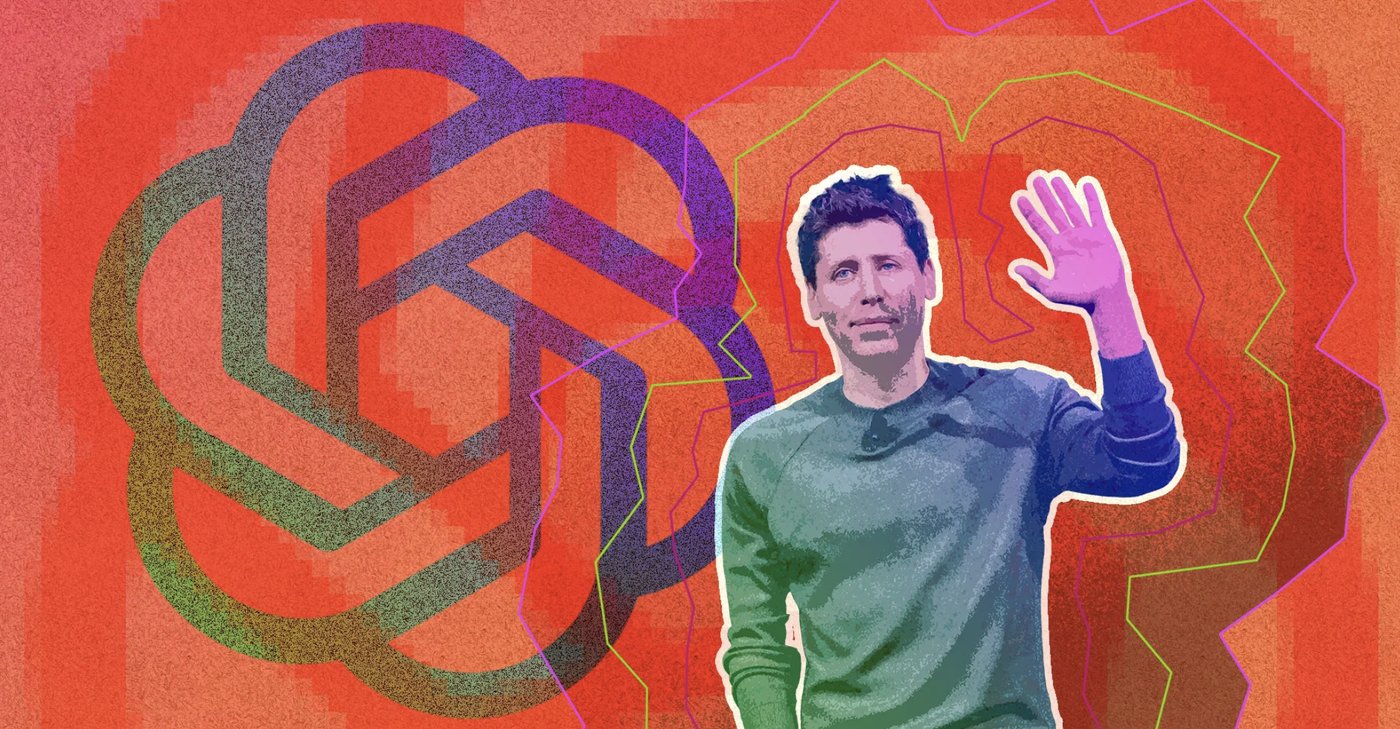
The memo arrived May 15 with a change that had been taking shape for weeks. OpenAI told employees that co-founder and president Greg Brockman will permanently lead the company’s product strategy, formalizing an arrangement in place since Fidji Simo, head of AGI deployment, went on medical leave last month.
The reorganization folds ChatGPT, the Codex coding agent, and OpenAI’s developer API into a single core product team. It is a structural shift that signals the company’s product direction is moving from a collection of AI tools toward one unified agentic platform.
Brockman keeps his existing oversight of AI infrastructure and adds the entire consumer and enterprise product line on top of it, according to a memo reviewed by TechCrunch. “We’re consolidating our product efforts to execute with maximum focus toward the agentic future, to win across both consumer and enterprise,” Brockman wrote to staff.
The move returns Brockman to the center of the company he helped build. He stepped back from day-to-day operations in 2024, then returned to lead infrastructure — the division responsible for the data centers and compute that power the company’s models. Adding products to that portfolio puts both sides of OpenAI’s operation under one executive for the first time.
The reorganization collapses three product lines that had operated with separate roadmaps and engineering organizations into a single unit. ChatGPT, the consumer chatbot that OpenAI says now serves more than 900 million weekly active users, becomes the conversation layer. Codex, the coding agent that OpenAI says is increasingly powering its consumer and enterprise offerings, becomes the action layer — the stack that lets the product perform digital tasks autonomously on behalf of users. The developer API, which had its own team and pricing structure, folds into the same organization.
Thibault Sottiaux, previously head of Codex, is elevated to lead the unified core product and platform across consumer, enterprise, and developer surfaces. Nick Turley, who managed ChatGPT, moves to enterprise solutions. Ashley Alexander, the former Instagram vice president who led OpenAI’s health division, will head the consumer division.
The underlying logic: ChatGPT, Codex, and the API now serve the same underlying models and increasingly the same end users. A casual consumer on the mobile app, an engineer running autonomous coding sessions, and an enterprise developer building on the API have little in common as customers — but OpenAI is betting that the product underneath them should be one thing: an agentic system that takes natural-language instructions and completes multi-step digital tasks across chat, code, and web navigation without the user switching between separate tools.
The change matters less for who reports to whom than for what it says about OpenAI’s product thesis. For most of its existence, OpenAI shipped separate products with separate identities: ChatGPT the chatbot, Codex the coding tool, the API the developer service. The reorganization is a public acknowledgment that the company no longer wants two separate engineering org charts maintaining what it considers functionally one product.
The competitive context explains the urgency. Anthropic’s Claude Code reached $2.5 billion in annualized revenue by February 2026, growing from $1 billion in November 2025, and Anthropic has positioned Claude as a single environment for work — chat, coding, and agents under one roof. Google is pushing a similar consolidation across Gemini. Against that, a fragmented OpenAI lineup with separate teams, separate billing, and separate interfaces for ChatGPT and Codex is harder to position, analysts said.
Brockman’s appointment also settles a question that had been open since Simo’s leave: who steers product while OpenAI approaches what the company describes as its next scaling phase. The choice of the co-founder who built the company’s early engineering culture over an external hire signals that OpenAI intends to keep product and infrastructure decisions under one roof as it races toward an agentic future.
The merger of ChatGPT and Codex is the visible part. The harder question is execution. Collapsing three product lines into one team can create focus, or it can create a bottleneck — and OpenAI has not yet demonstrated which. The company is simultaneously pushing incremental updates: a new personal finance experience in ChatGPT, improvements to working with Codex from anywhere, and better context recognition in sensitive conversations.
The direction of travel, however, is unambiguous. OpenAI is telling its workforce, its customers, and its competitors that its next phase is agents that do work rather than chatbots that talk about work, and that it is willing to reorganize the company around that bet. With ChatGPT at 900 million weekly users as the distribution channel and Codex as the execution layer, the unified team under Brockman and Sottiaux will now decide how fast that convergence happens.
OpenAI’s reorganization puts a co-founder in permanent charge of all products and merges chat, code, and the developer API into a single team. The move is a bet that the company’s future is a unified agentic platform, not a suite of separate tools — and it arrives as Anthropic’s Claude Code and Google’s Gemini push the same convergence. The product logic has shifted from “AI chat tool” to “AI development platform.” Whether the reorganization produces a faster roadmap or a slower one will become visible in the coming quarters.