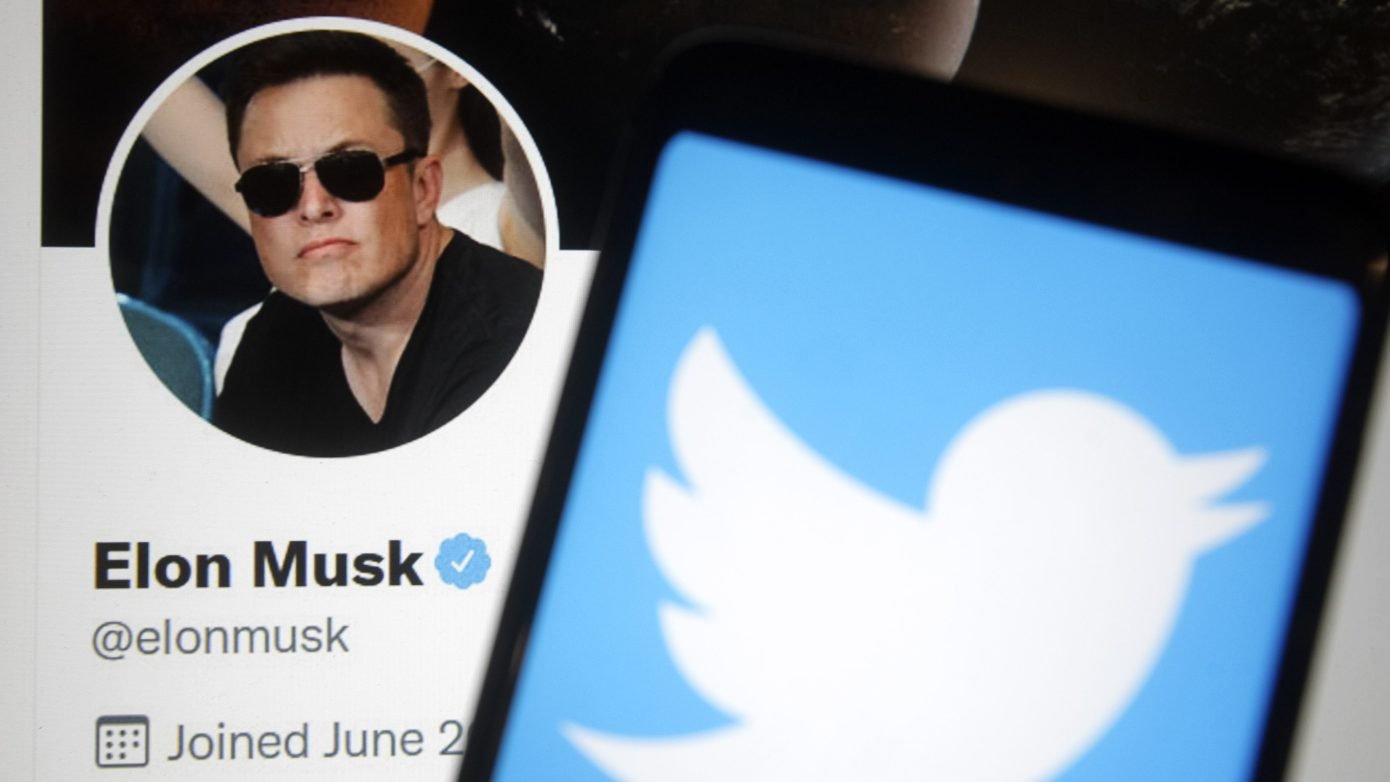
Elon Musk posted the update on X late Wednesday in his usual clipped style: SpaceX had not committed to a long-term lease of Colossus, the Memphis supercomputer his companies built and now operate. It could still happen, he said. For now, the arrangement runs 180 days, and either party can walk away with 90 days’ notice.
The statement came as the market for AI compute grows more tangled by the week. Colossus 1, the first of three planned campuses in and around Memphis, was built in 122 days in 2024 with 100,000 Nvidia H100 GPUs — a construction pace the industry called impossible — and was later doubled to more than 200,000 GPUs, including H200 and GB200 accelerators. xAI, the company Musk created to train Grok, built the facility, and when xAI was folded into SpaceX in February, Colossus became a SpaceX asset under the banner SpaceXAI.
The lease Musk referred to is with Anthropic. On May 6, Anthropic announced it had signed an agreement to use all of the compute capacity at Colossus 1 — more than 300 megawatts, or over 220,000 Nvidia GPUs — to expand capacity for its Claude chatbot and Claude Code developer product. Musk attached a condition at the time: SpaceX reserves the right to reclaim the compute if the AI’s actions harm humanity.
Wednesday’s statement does not signal a break with Anthropic. People familiar with the matter said the 180-day term with a 90-day out is a standard structure for capacity deals of this size, giving both sides an escape hatch while they test the operational relationship. Musk’s own words — the situation could indeed happen — left the long-term door open.
The short lease also reflects the hard realities that have shadowed Colossus. Reports this spring said xAI struggled to put its enormous GPU fleet to work, with utilization at the Memphis facility running as low as 11% at times, according to The Information. Engineers hit latency problems connecting Colossus 1 with two other campuses located more than ten miles away, compounded by aging network infrastructure in the city. A company that had built the world’s fastest supercomputer found itself unable to fill it.
That gap between hardware and software is why SpaceX, which had planned to train its most advanced models on a cluster of three campuses, ended up renting the machine out to a competitor — and a rival Musk has publicly disparaged. Anthropic’s founders left OpenAI, which Musk helped found and has since sued. “More hypocritical company than Anthropic,” he asked on X in February.
The economics are the point. Leasing Colossus to Anthropic turns idle silicon into revenue while SpaceX prepares an initial public offering, which Musk has said would raise tens of billions of dollars to fund orbital data centers — satellites and space-based compute platforms that would beam AI workloads down to earth. Anthropic has expressed interest in partnering on that project, a multigigawatt ambition that most engineers consider a decade away. The IPO math, in the meantime, benefits from showing Colossus as an asset that generates cash rather than one that sits half-dark.
For Anthropic, the deal is capacity it cannot get elsewhere. The company has been scrambling to secure compute as demand for Claude grows, and 300 megawatts of GPU capacity, available within the month, is a prize. Analysts said the arrangement makes Anthropic dependent on its fiercest rival’s infrastructure, a position that carries obvious risk if the relationship sours — a clause that lets SpaceX reclaim the silicon on humanitarian grounds is, whatever its merits, a lever in any future dispute.
The short lease cuts both ways. Anthropic gets flexibility: if the 180-day term lapses without renewal, it walks away. SpaceX gets optionality: if Grok training needs the cluster back, 90 days’ notice brings it home. What the structure does not give either side is certainty, and in the AI industry’s current land grab for compute, certainty is the scarce commodity.
The Colossus project was never supposed to stop at one campus. Musk’s plan called for a cluster of three data-center sites in and around Memphis, with a roadmap the company advertised as heading toward one million GPUs. Colossus 2 was already under construction when the utilization problems surfaced, and the vision of a gigafactory of compute — the phrase xAI used in its own materials — has been central to the valuation story Musk has told investors across his companies. A short lease does not contradict that story, but it does acknowledge its current limits.
The arrangement also reflects a quieter truth about the AI industry’s biggest players: nobody has enough compute, and everybody has some they cannot use. OpenAI, Google, and Anthropic have all signed deals to rent capacity from rivals or from independent builders, because demand forecasts are too volatile to match with fixed infrastructure. The Colossus lease is the same deal in miniature — a supercomputer built for one purpose, repurposed for another, priced by the megawatt. Analysts said the 180-day term is precisely the kind of hedge the market has learned to expect, and that Musk’s public framing of it, leaving the door open while committing to nothing, is the management style investors have come to price in.
Whether the lease becomes permanent will likely turn on two questions: whether SpaceX’s own model training reaches a scale that needs the full cluster, and whether the orbital-compute story Musk is selling to IPO investors requires Colossus to remain a revenue-generating asset. Musk has said little beyond his brief post. The 90-day clock, for now, is running. For a machine built in 122 days and doubled in 92, a 180-day lease is a short chapter — but it may be the most consequential one in the supercomputer’s short life.