Kumesh Aroomoogan has raised venture money before, but nothing like this. The chief executive of ZeroDrift, a New York startup that sits between AI systems and their users to catch non-compliant output, said the company’s $10 million seed round closed within three weeks and was oversubscribed by three times. “It was probably the fastest fundraising I’ve done in my life,” he told TechCrunch, crediting Andreessen Horowitz with helping structure the round. The investors included a16z Speedrun, Reign Ventures, Pitchdrive and U&I Ventures.
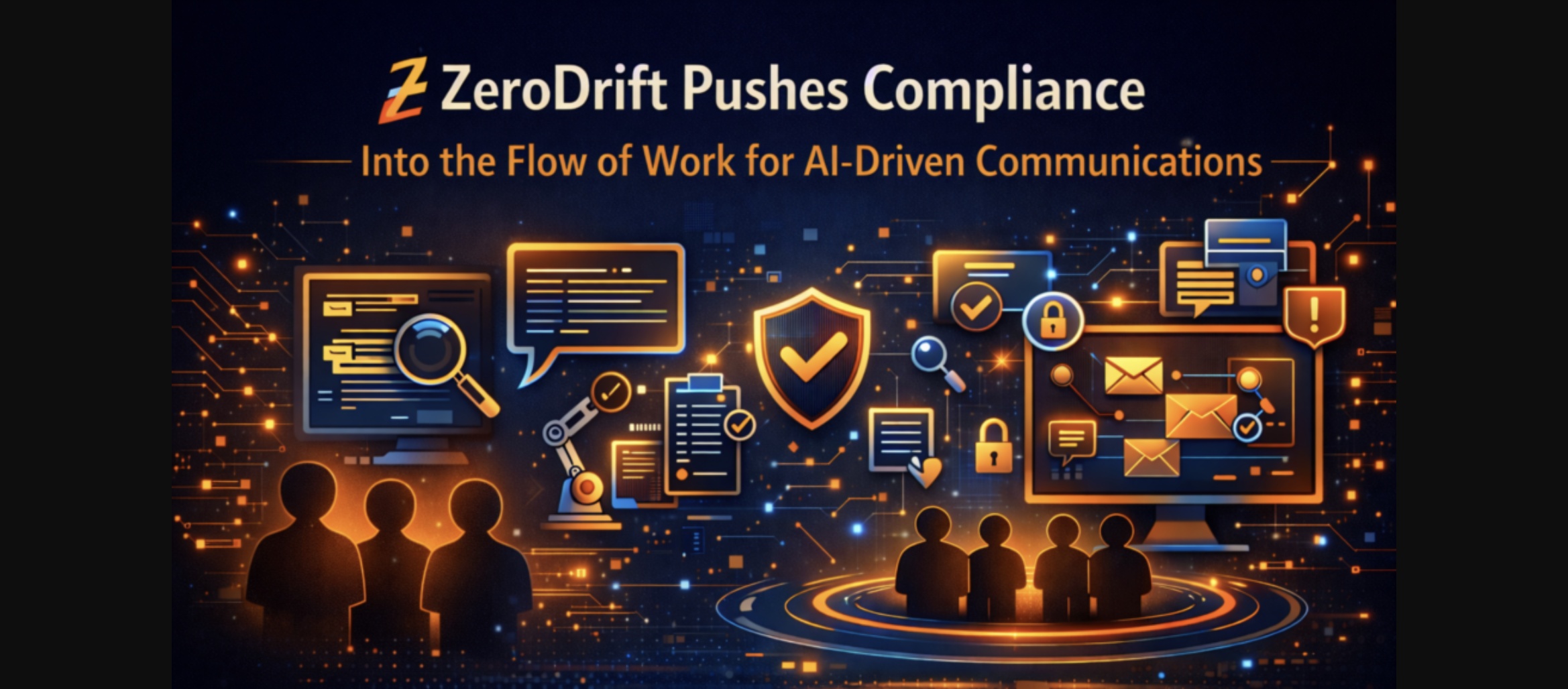
The product ZeroDrift is selling is a layer of discipline for the AI age. The company describes itself as a compliance firewall: it sits inline between an enterprise’s AI systems and the outside world, validating every outbound message, voice call and video against regulatory frameworks and internal policy in real time. Compliant communications pass through instantly. Non-compliant ones are caught, explained and corrected before delivery. The pitch, in the company’s own words, is that compliance is enforced before delivery, not reconstructed after the fact.
The architecture is the interesting part. Most AI-safety companies build guardrails into the model itself, training a system to behave. ZeroDrift does the opposite. Its system is triggered by conventional programs that deterministically apply known compliance standards such as SOC 2 or GDPR, flagging messages that appear to violate a regulated area. Only once a message is flagged does a large language model come into play, rewriting a compliant version of the same message. “We’re able to identify, deterministically, what are all the regulated areas, what’s the violation that’s being broken, and then we have LLMs that can do the rewrites,” Aroomoogan said.
That division of labor is deliberate. Deterministic rules are fast, reliable and auditable; a language model is none of those things. By keeping the model out of the critical path except when a rewrite is needed, ZeroDrift says its system runs with lower latency and more reliability than a conventional LLM, an advantage it touts over the big labs, OpenAI and Anthropic, whose models often sit underneath the very systems ZeroDrift is policing.
The immediate market is the obvious one: customer-facing AI chatbots in regulated industries. A bank’s chatbot that gives a customer a bad investment recommendation, an insurer’s agent that strays from policy language, a healthcare assistant that discloses patient data, each is a compliance incident waiting to happen, and each is the kind of thing ZeroDrift intercepts before it leaves the building. The company says it has gained traction with tier-one banks, asset managers and insurance companies, and that its traction has doubled month over month since launching early this year.
Aroomoogan sees a larger market beyond chatbots. He argues that as AI proliferates, most AI-generated messages will never be seen by humans at all, flowing through automated systems, trading pipelines, marketing engines and internal processes. Every one of those messages carries regulatory exposure, and none of them can be reviewed by hand. ZeroDrift’s pitch is that it can stand watch over all of them, at machine speed, enforcing SEC, FINRA, MiFID II, GDPR and HIPAA rules on every piece of AI output before it moves.
The timing helps explain the oversubscription. Enterprises are deploying AI faster than their compliance functions can keep up, and regulators are starting to ask pointed questions about who is accountable when an AI system says the wrong thing. Existing compliance platforms were built for the pre-AI world: they archive and reconstruct what was said after the fact. ZeroDrift’s argument is that enforcement, not archiving, is the new requirement, and that the gap between the two is where its business lives.
The founding team gives investors confidence that the company understands the buyers. Aroomoogan previously founded and led Accern, an early no-code NLP platform for financial institutions, which raised more than $60 million and was acquired in 2025; he has been named to Forbes’ 30 Under 30 in enterprise technology and AI. The team around him includes engineers who led core systems at Microsoft, including parts of Bing, and the Chrome OS enterprise effort at Google, plus a former global head of engineering at Goldman Sachs. Regulated enterprises buy from people who have worked inside regulated enterprises.
The risks are visible from the outside. If the major model providers build compliance guardrails natively into their APIs, ZeroDrift’s middleware position could be squeezed before it reaches scale. And the company’s own marketing concedes the harder truth of the business: the deploying organization remains legally liable for what its AI says, so ZeroDrift sells risk reduction, not immunity. Its customers are buying the argument that a deterministic watchdog, plus a rewrite model, is cheaper than a regulator’s fine and the reputational damage that comes with it.
The seed round is small relative to the market it is chasing, but that is the point of the product. ZeroDrift is not trying to build a foundation model; it is building a wrapper that any enterprise can drop in front of whatever model it already runs. The $10 million funds rule coverage across regulated industries, support for AI voice, video and agent communication, and the API layer that governs agents in production. If the compliance firewall becomes standard equipment for enterprise AI, the company’s timing will look very good indeed.