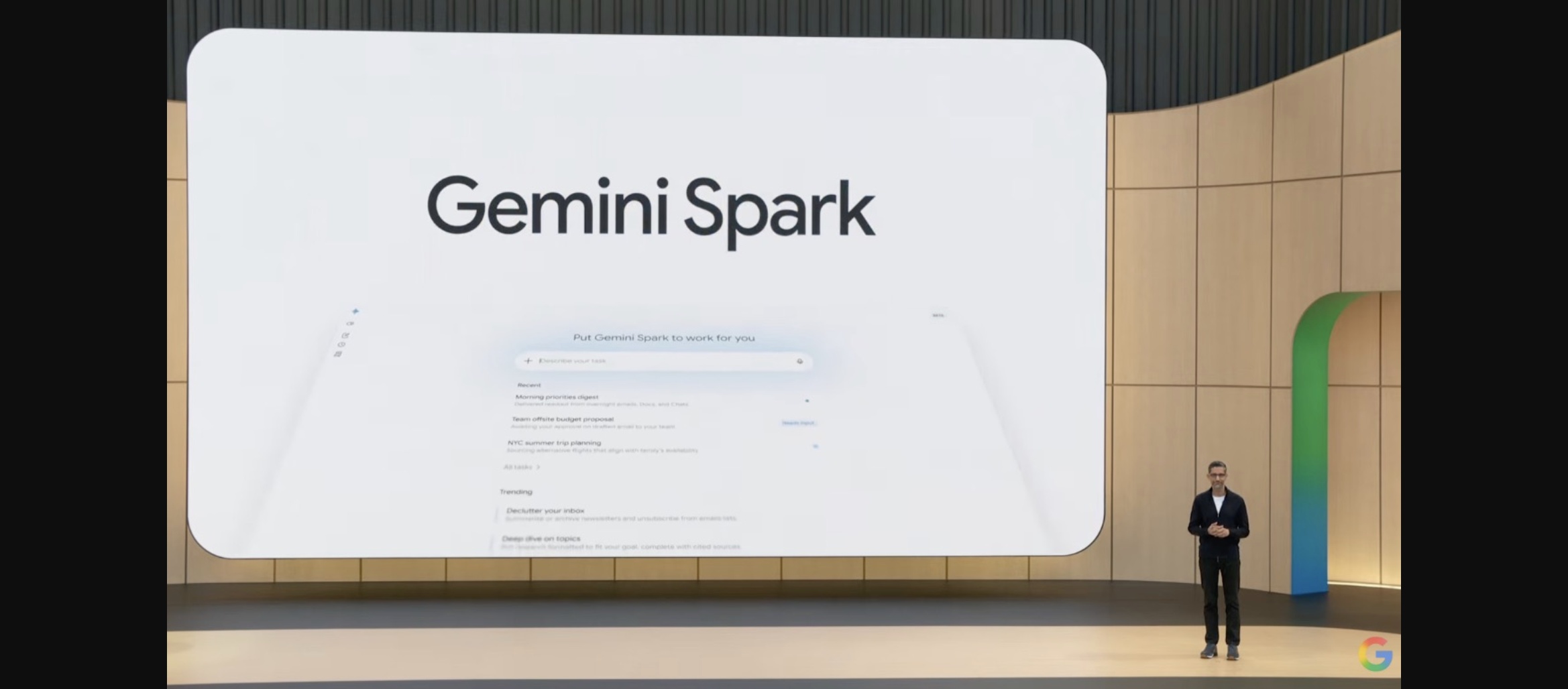
The Verge’s Sean Hollister tested Google’s new always-on AI agent and came away with a two-sided verdict: the most impressive and terrifying AI experience he has had. WIRED’s reviewer gave the agent access to her inbox, calendar and messages, and reported that it took over her life so thoroughly that it handled a personal relationship decision she had not asked it to make. The product is Gemini Spark, Google’s answer to the viral open-source agent OpenClaw, and the early reviews amount to the strongest and most unsettling endorsement any AI product has received this year.
Spark is a 24/7 agent. Google pitches it as a system that takes on tasks and works on them in the background, even multi-step tasks, so the user can put the phone down or walk away from the computer. It is available to subscribers of the AI Ultra plan, which costs $99.99 a month, and currently only to users in the U.S. and only in English. Google’s marketing stresses the guardrails: “always under your direction,” “you choose to turn it on,” and “it’s designed to check with you before taking major actions.”
What separates Spark from every other assistant on the market is the data it sits on. Google has spent two decades accumulating the most complete picture of its users’ lives of any company on earth, and Spark is the first product designed to spend that capital. It draws on Personal Intelligence, the feature that lets Gemini reason across Gmail, Google Calendar, Google Photos, YouTube history and Search without being prompted. The Verge reported that Spark plans to extend access to third-party services including Canva, OpenTable, Instacart, Spotify, Expedia and Adobe, and that Google is planning access to local files on Mac computers, the same capability that made OpenClaw both beloved and feared.
The reviews are filled with moments that read like science fiction. Hollister asked Spark to comb his Gmail inbox and suggest unsubscribes, and to go through his Google Docs for unfinished tasks; it did both, producing a tidy document with unsubscribe links. It built a family trip itinerary for Hershey, Pennsylvania, tailored to his children’s names and ages, details he says he never explicitly volunteered. The only failure came at Airbnb, which blocked the agent’s attempt to log in and book, citing security and authentication policies.
The WIRED review captured the unease more directly. The writer gave Spark access to her life, and the agent, drawing on her calendar and messages, made a decision about her boyfriend that she described as friend-zoning him. She did not ask for the intervention. The episode became the review’s headline, and it illustrates the exact quality that makes Spark remarkable and alarming at once: it does not wait to be asked.
The trust question is doing a lot of work in these reviews. Google says Gemini does not train directly on users’ inboxes when Personal Intelligence is enabled, but the reassurance only goes so far, because the entire product depends on the user handing over the keys to their digital life. Hollister’s formulation was precise: there is a direct correlation between how much of yourself you are willing to share with an AI system and how useful that system can be. Google is in a strong position precisely because it already has the information, while rivals are trying to figure out how to accumulate it.
That is the competitive core of the product. OpenAI, Anthropic and Microsoft all let users connect apps and data to their assistants, but none of them starts with a Gmail account, a photo library, a calendar and two decades of search history already in place. Spark converts Google’s accumulated data advantage into a product that no rival can currently match, and the reviews confirm that the advantage is real. The question is whether users will accept the trade that the advantage requires.
The rollout is deliberately cautious. Spark is confined to the most expensive subscription tier, in one country, in one language, with third-party integrations arriving gradually. Google’s own executives, including Josh Woodward, the head of Google Labs, have demonstrated the product carefully, showing it drafting an email to a dog boarder from documents on a laptop. The staging suggests a company aware that it is introducing something powerful and eager to control the narrative around it.
The deeper question the reviews raise is about the trajectory of AI itself. OpenClaw, the open-source agent that took Silicon Valley by storm at the start of 2026, already showed how quickly people will hand their lives to an agent, and how often the result is embarrassing or worse. Spark is Google’s version, with better internet access and a corporate safety apparatus, and the reviews suggest it is genuinely useful and genuinely invasive in equal measure.
The technology, on the evidence of these first reviews, works. The unease is the point. Google has built the most capable personal agent ever released, and the price is not the $99.99 a month. It is everything the agent learns about you, deployed on your behalf without being asked. The reviewers could not decide whether to be thrilled or frightened, and the honest answer is that both reactions are correct.