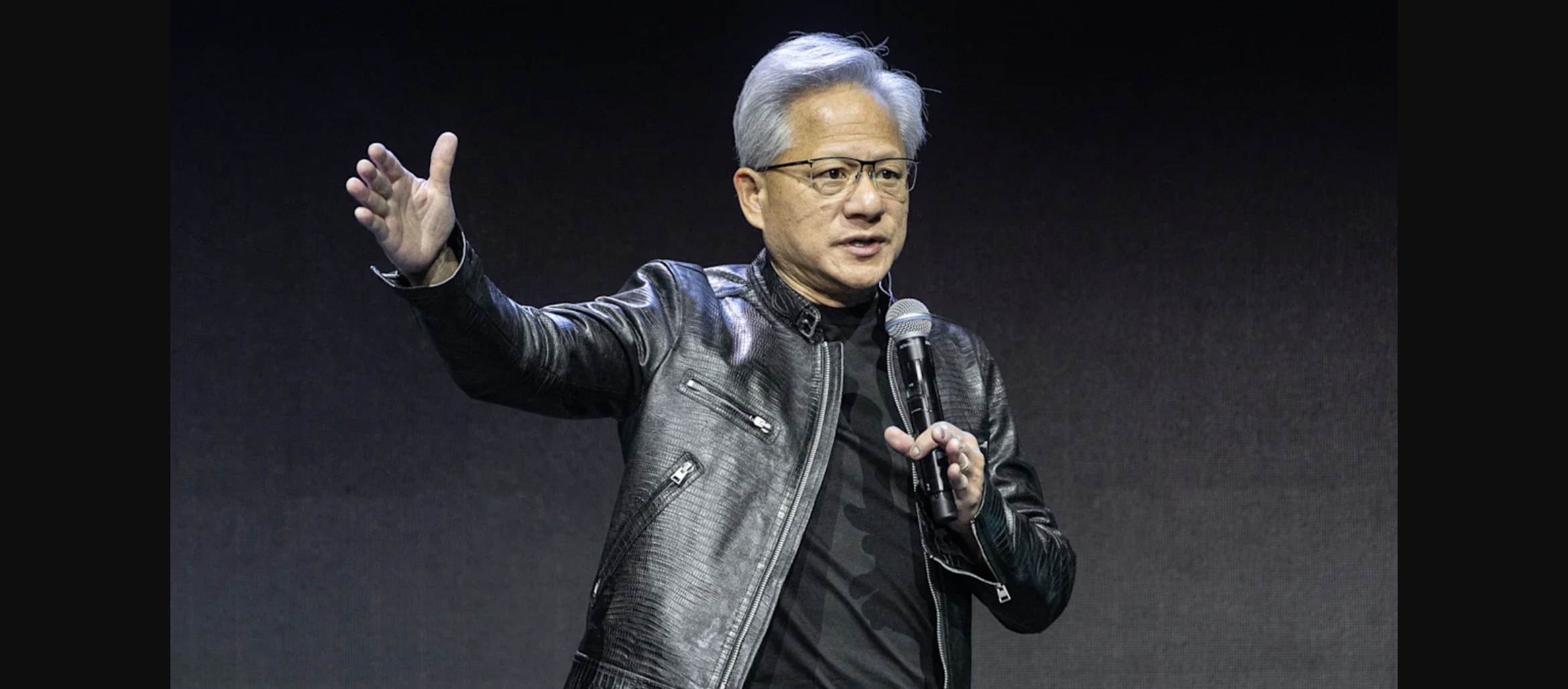
TAIPEI — The keynote began with a countdown and a crowd that had queued since before dawn, and Jensen Huang did not open with a slide. He walked onto the Computex stage holding a chip in his hand, letting the room photograph it before he said a word. The RTX Spark, built on TSMC’s 3-nanometer process with 70 billion transistors and 20 cores, is a computer by itself, Huang said. Then he listed the industries whose computers are about to change.
The Taipei launch was the second act of a product NVIDIA introduced in the United States this week, but the framing was different. In Taipei, Huang did not talk about laptops. He talked about the structure of the computing economy, naming seven industries that will be disrupted and nine that will benefit, a taxonomy delivered with the bluntness of a founder who believes he is announcing the future rather than predicting it.
At the top of the disruption list sit Intel and AMD. Huang’s argument was that the PC no longer needs an Intel processor inside, the arrangement known as the Wintel alliance that has defined the industry for three decades. An RTX Spark machine runs AI locally with the CUDA software stack that developers already know, and for the workloads that increasingly define a computer, the CPU’s old centrality is gone. Analysts said the pitch is not that Intel and AMD disappear, but that they lose the category that guaranteed them a seat in every machine.
The second disruption hits the cloud GPU rental market. For years, companies that could not afford their own AI hardware rented it from cloud providers by the hour, and the providers built a lucrative business as the toll booth of the AI boom. A chip that runs serious AI workloads on a desk, in a studio, or in a lab reduces the number of companies that need to rent, and Huang made no effort to soften the point. The toll booth, he said, is being bypassed.
The third and fourth disruptions are about work. In film and advertising production, Huang argued, the barriers that required a crew, a studio, and an equipment budget are flattening: one person with an RTX Spark machine can do the work that used to take five. At the same time, the entry-level jobs that supported that work, the assistants, the runners, the junior editors, are being automated by agents rather than hired. The two changes compound: the cost of production falls, and the workforce that used to absorb the entry level shrinks.
The fifth disruption is educational. Training programs that teach the old production methods, the courses, bootcamps, and certifications built around manual workflows, lose their value as the workflows themselves are automated. Huang’s point was not that education becomes unnecessary; it is that the content of education must change faster than institutions are used to changing it.
The sixth and seventh disruptions are hardware-adjacent. Qualcomm’s Arm-based PC processors, which have been marketed as the AI PC standard, face a chip that speaks CUDA natively, and the software ecosystem is the gap no hardware spec can close. Game consoles, meanwhile, have relied on the gap between console graphics and PC graphics; a PC chip that brings data-center-class AI to the desktop changes the equation for the next console generation, even if the immediate impact is years away.
The nine beneficiaries are the other side of the ledger. Film and advertising studios get the same capability at a fraction of the cost. Game developers get local AI for characters, worlds, and testing. Architects get simulation and rendering without a render farm. Independent software developers get a machine that runs models locally, which means their customers’ data never leaves the building, an argument that lands especially hard with companies that cannot send sensitive information to the cloud.
The privacy computing list is where the pitch gets specific. Law firms, medical practices, and research institutions all handle data that cannot be uploaded to a subscription service. A chip that runs models on premises turns privacy from a constraint into a feature, and Huang listed those industries by name. Enterprise automation, OEM manufacturers, upstream component suppliers, and the consulting firms that help companies deploy the systems round out the beneficiary list, a sign that a hardware transition creates as many winners as losers.
The business-model claim is the boldest part of the launch. Huang said RTX Spark will move 80 percent of daily AI usage from subscription to outright purchase, meaning the recurring revenue that AI companies and cloud providers have built their valuations on would be displaced by one-time hardware sales. The claim is a statement of intent as much as a forecast, and it is the clearest answer yet to the question of who controls the economics of AI at the edge: the chipmaker.
The crowd in Taipei applauded the chip, the specs, and the confidence. The industries Huang named will spend the coming year testing whether his map is accurate. What is already clear is that the launch was not a product event. It was a declaration about where the value in computing is moving, delivered from a stage in Taiwan, in front of the factories that will build it.