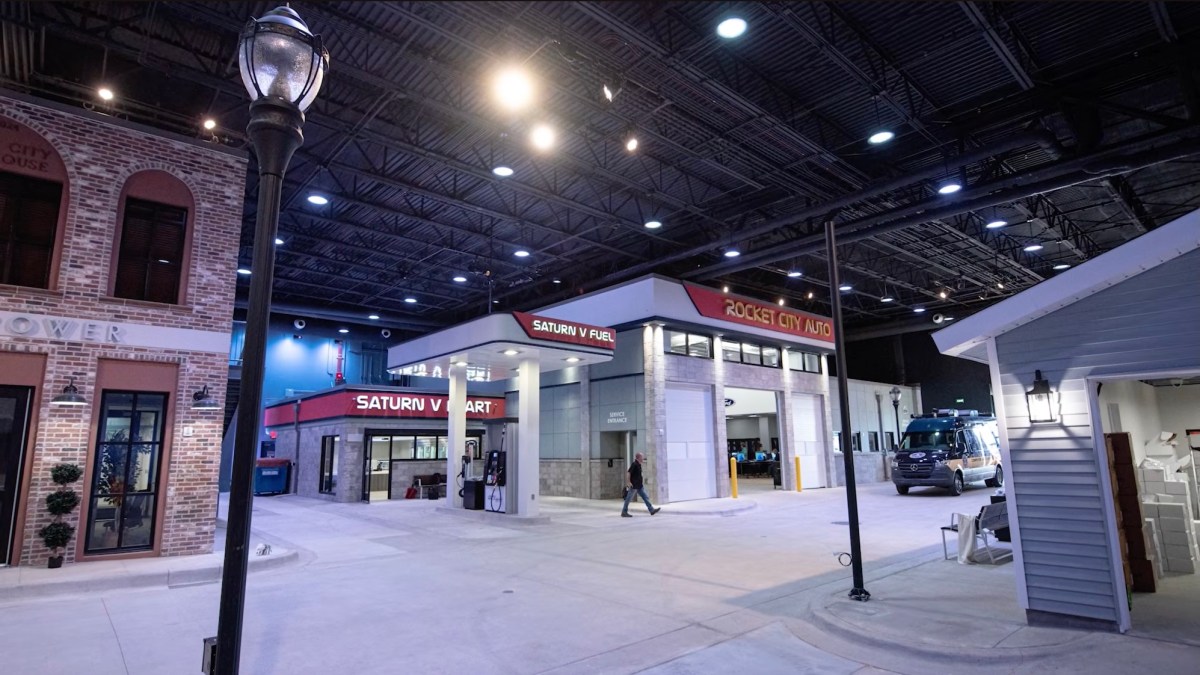
No one lives there, but the town has a hospital, a hotel and a power plant. The FBI built the 22,000-square-foot replica to rehearse something that is hard to rehearse anywhere else: a cyberattack in progress, with systems failing, people in the building and pressure on the responders. TechCrunch reported on the facility this week, and the numbers attached to it are striking. More than 1,400 people have been trained there so far.
The facility is a miniature town in the most literal sense. It contains the kinds of targets that real attackers have actually hit: a hospital, whose network holds patient records and life-support systems; a hotel, whose booking and payment systems are a classic ransomware target; and a power plant, the category of facility that sits at the top of every critical-infrastructure threat list. Trainees walk through simulated incidents that unfold in real time, with the same screens, the same alerts and the same demands for ransom that they would face in a genuine attack. Teams are split between defenders and attackers, and the exercises are graded on how the trainees respond under pressure, not on how well they explain the theory afterward.
The design reflects a change in how the FBI thinks about cybercrime. For years, the bureau’s training centered on investigation: how to trace an intrusion, preserve evidence and identify the attackers after the fact. The replica town shifts the emphasis to response: how to keep a hospital running while its network is being held hostage, how to decide whether to pay, how to coordinate with operators who may have no cyber training at all. It is training for the moment of crisis rather than the aftermath, and officials involved in the program said that distinction is the point.
The timing tracks the threat. Attacks on critical infrastructure have moved from hypothetical to routine. A ransomware attack shut down the Colonial Pipeline in 2021, forcing fuel shortages across the eastern United States and a payment of millions to the attackers. A hospital operator that processes a large share of American health claims was paralyzed in 2024, and health systems across the country have reported that ransomware is now their most common operational threat. Water utilities, small and lightly defended, have been hit repeatedly, including a 2021 attempt to poison a Florida town’s water supply through a hacked control system. Each of those incidents involved the kinds of organizations the replica town contains.
The FBI’s program is part of a broader federal buildout in cybersecurity. Agencies across the government have expanded their cyber workforces, standing up new units for everything from election security to industrial control systems, and the federal government has been running a sustained push to recruit and train cyber professionals across its ranks. The scale of the effort reflects a consensus that the defense of critical infrastructure can no longer be left to each operator alone, and that the government needs people who can walk into a compromised facility and operate under fire.
The training also carries a message to the private sector. Hospitals, utilities and other operators cannot build replica towns of their own, and the FBI’s willingness to train personnel from across law enforcement and, in some cases, from the private sector, is a recognition that the defenders are all in the same fight. The economics of ransomware explain the urgency: attacks now extract payments in the hundreds of millions of dollars in aggregate each year, and the cost of an interrupted hospital or a darkened city is far larger than the ransom itself. The 1,400 trained so far are a small number relative to the scale of the threat, but the program is young, and the bureau has signaled that the facility is a permanent investment rather than an experiment.
Analysts who study government cyber programs said the replica town is a useful marker of how far the federal approach has come. A decade ago, the government’s cyber response was fragmented across agencies, and training was largely theoretical. Today, the FBI is running physical exercises against realistic targets, with measurable throughput in the form of trained personnel. The shift from theory to rehearsal is the kind of change that shows up in incident response when it matters most.
There is a limit to what a fake town can teach. Real attacks have real consequences, and no simulation can fully reproduce the pressure of a hospital going dark. But the direction of the investment is clear: the government has concluded that cyber defense is a skill that must be drilled like any other emergency response, and it has built the facility to do the drilling. The town may be empty, but it was built for the day it stops being practice.