
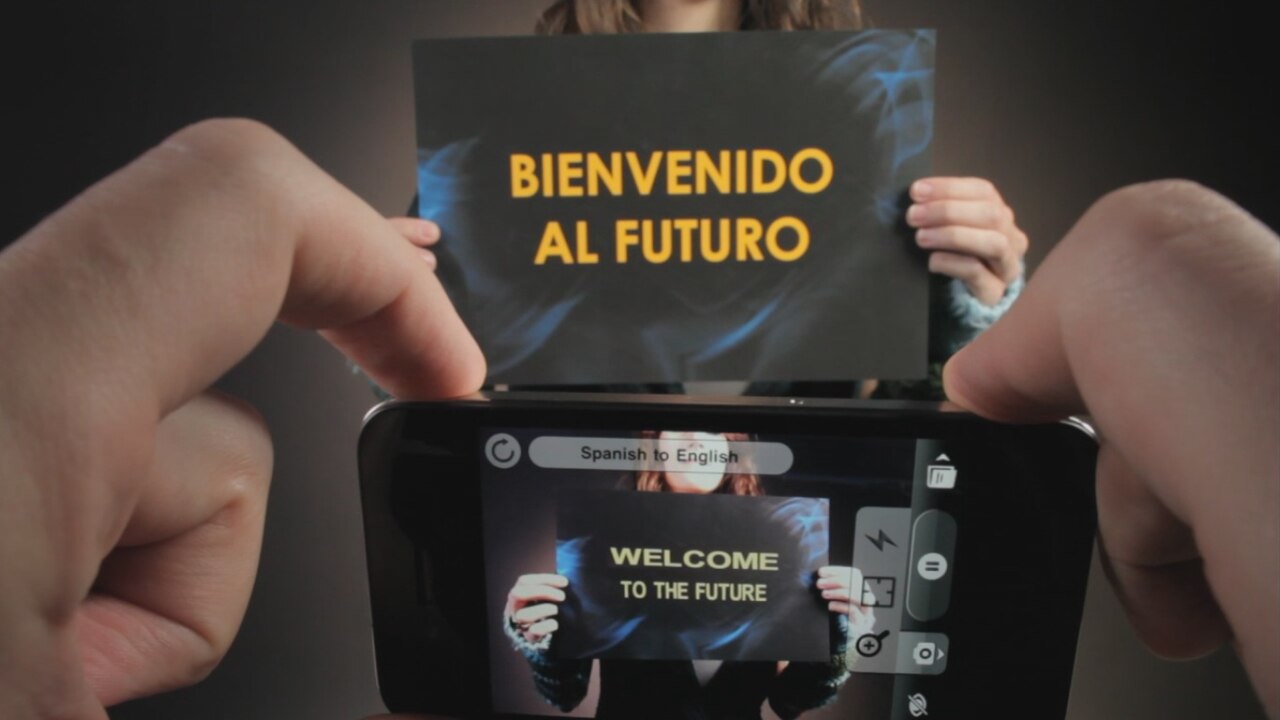
The scene is familiar to anyone who has attended a global conference: a speaker delivers a keynote in one language while a portion of the audience stares at phones, holding translation apps toward the stage in a hopeful approximation of comprehension. DeepL, the German AI translation company, has decided that experience is a business opportunity, and on Wednesday it announced the acquisition of the startup that has spent a decade solving exactly that problem.
DeepL said it has acquired Mixhalo, a San Francisco-based company that streams real-time, ultra-low-latency audio at concerts, sporting events, and conferences, and is bringing the team and technology into its platform. The deal, whose terms were not disclosed, also marks the opening of DeepL’s first office in San Francisco, a step the company described as an expansion of its fastest-growing market, the United States.
Mixhalo was founded in 2016 by two musicians and a technologist with an original pitch of improving the concert listening experience. It raised more than $39 million from investors including Fortress Investment, Founders Fund, Defy Partners, and Cowboy Ventures, and over the years it evolved into a platform for real-time audio at scale, used by clients including MLB, NASCAR, T-Mobile, and Verizon. The company’s technology delivers synchronized, high-fidelity audio to thousands of attendees simultaneously, and its translation product, Mixhalo Translate, already runs on DeepL’s voice engine.
The two companies were partners before they merged. Mixhalo Translate uses the DeepL Voice API to deliver real-time translations at major conferences, and the companies had built pilots together for customer support centers through platforms like Amazon Connect. “We launched Mixhalo to deliver the best audio to live audiences at any size,” said Vik Singh, Mixhalo’s co-founder, in a statement. “After testing technology from nearly all of the leading providers, DeepL was the only one that could deliver accurate translations at the speed we needed to achieve real fluency.”
For DeepL, the acquisition extends its product line from documents and meetings into live, large-scale environments. The company, headquartered in Cologne and last valued at $2 billion, built its business on text translation and writing tools used by more than 200,000 businesses, including nearly half of the Fortune 500. It launched voice-to-text translation in 2024 and a voice-to-voice suite this April aimed at multilingual meetings. Mixhalo brings the missing piece: the audio infrastructure to handle tens of thousands of simultaneous listeners with the low latency that live speech demands.
The quality metrics matter in a market that has grown crowded. An independent assessment by Slator this year gave DeepL Voice a quality score of 96.4 out of 100, with a 4 percent failure rate compared with a 17 percent market average for competing products from Microsoft Teams, Zoom, and Google Meet. DeepL’s chief executive, Jarek Kutylowski, said the acquisition lets the company show that technology working in real time and in person. “For us, Mixhalo will work as a solution and also a marketing use case,” he told TechCrunch.
The deal is part of a broader push by European AI companies into the American market, and it comes with a cautionary note about the company’s own trajectory. DeepL cut roughly 250 employees last month, a reduction that the company framed as a refocusing on its core products. The Mixhalo acquisition, announced weeks later, suggests where that focus is heading: real-time voice, delivered at scale, with the United States as the beachhead.
The competitive field is getting thicker. Mixhalo has competed with Wordly AI and Palabra, a company backed by Seven Seven Six, in the live-translation space, and the larger players — Microsoft, Google, Amazon — all offer some form of real-time translation bundled into their platforms. DeepL’s bet is that quality and specialization win over bundling, and that a company whose only product is language technology can outdo the giants whose translation features are attachments to other businesses.
The translation of live events is a small market today and a potentially large one tomorrow. International conferences, sports leagues with global audiences, and customer support operations all generate demand for instant, accurate translation that existing tools only partially serve. DeepL’s calculation is that owning the audio infrastructure — the pipes that carry the sound — gives it an advantage no competitor has assembled, and that San Francisco puts its engineers close to the developers building the next generation of voice products.
Kutylowski described the ambition in a sentence: the company is building the real-time language layer for communication, so people can understand each other naturally wherever they interact, whether in meetings, customer calls, or major international events. The Mixhalo deal is the first step in that direction at stadium scale. The company’s engineers in San Francisco will also sit closer to the enterprise customers — Nvidia, Cisco, Nasdaq, and others — that have made the U.S. its largest market, and to the developer ecosystem that will decide which voice platform becomes standard. For a German company known for conservative growth, the move into Silicon Valley and into live events is a deliberate widening of ambition, and the market will measure it in how many stadiums, boardrooms, and support centers adopt the combined platform by next season.



