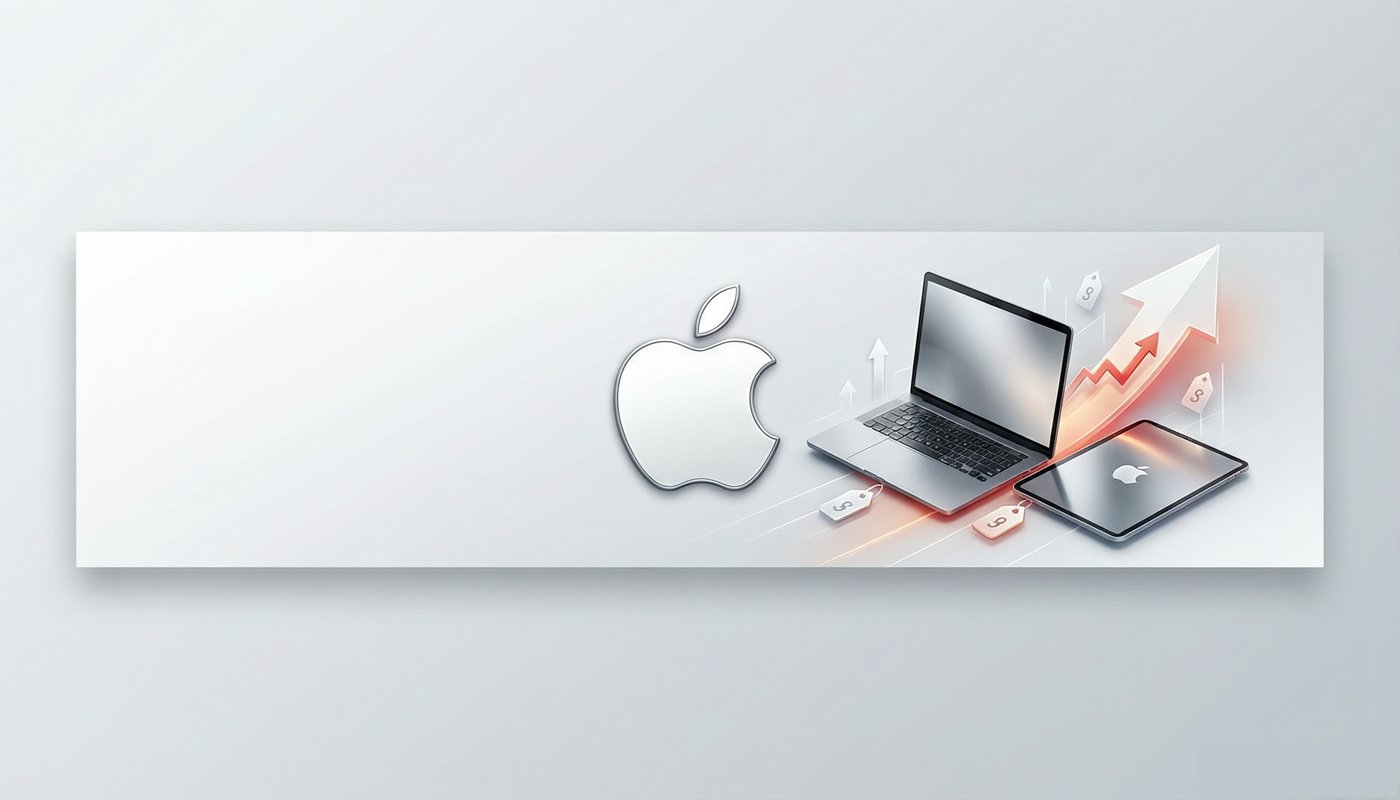
Apple’s online store went dark for a stretch on June 24, and the usual speculation followed: a new product launch, perhaps, or a maintenance window ahead of a release. When the site came back, the prices had moved. Apple had raised prices across its MacBook and iPad lines, according to Reuters, and the reason was the cost of the memory chips inside them.
DRAM and NAND flash prices have climbed for months as the AI boom consumed factory capacity. Memory makers including SK Hynix, Micron and Samsung have redirected production toward high-bandwidth memory for AI accelerators, pulling supply away from the conventional chips that go into laptops and tablets. The result is a shortage in exactly the components Apple buys in enormous volume.
The price increases are the most visible sign yet that the memory supercycle is reaching the consumer market. For several quarters, the pain of higher component costs was absorbed by server makers and cloud providers, whose customers had no choice but to pay. Apple, with gross margins above 45%, had room to swallow some of the increase. It has chosen to pass at least part of it on.
The move is unusual for a company that rarely adjusts prices mid-cycle. Apple typically holds prices steady and lets component cost swings hit its margins, which is why its gross margin guidance is watched closely by analysts. Raising prices across an entire product line suggests the memory increase is large enough to break that pattern.
For consumers, the timing is awkward. MacBook sales had been recovering as Apple’s own M-series processors drew buyers, and iPad demand had stabilized after years of decline. Higher prices risk slowing both, analysts said, particularly in Europe and Asia, where exchange rates have already pushed Apple’s prices above U.S. levels.
The company’s online store closure before the change had fueled speculation of new hardware, with 9to5Mac and others guessing at upcoming releases. Instead, shoppers returned to a store with the same products and higher price tags—an outcome few had predicted, and one that made the memory shortage tangible for ordinary consumers rather than just data-center buyers.
The dynamic behind the increases is familiar to anyone who watched the last memory cycle. When DRAM prices collapsed in 2023, makers cut capacity and investment; when AI demand surged, supply could not keep up. Memory is a notoriously cyclical business, and the current upswing has been amplified by the sheer volume of high-bandwidth memory that AI data centers consume. SK Hynix, the leader in that segment, now commands prices several times those of conventional DRAM, and its rivals have followed.
Terminal makers across the industry are feeling the squeeze. PC manufacturers warned through the past year that memory costs would force price increases, and server makers have long since passed along the increases to cloud customers. Apple’s move puts the consumer market in the same position: someone has to pay for the memory shortage, and that someone is the shopper.
The question is whether demand holds up. Apple’s installed base is loyal, and switching costs are high: leaving the Mac ecosystem means abandoning a decade of software and accessories. Analysts estimate that a mid-single-digit price increase on MacBooks would trim unit sales by only a few percentage points, a trade-off Apple appears willing to accept.
The longer-term risk is different. If memory prices stay elevated, Apple’s component bill stays elevated, and the company faces a choice between more price increases and thinner margins. Its services business, which carries much higher margins, can cushion the blow, but hardware remains the entry point for the entire ecosystem.
There is also a competitive angle. Windows laptop makers, facing the same memory costs, have already raised prices or cut features, and some have shifted to lower-cost configurations. Apple’s premium positioning gives it cover to raise prices without losing its core buyers, but it also hands rivals an opening among price-sensitive customers.
For the memory industry, the Apple price increase is a vindication of sorts. After years of being dismissed as a commodity business, memory makers now have pricing power that reaches all the way down the supply chain, into the pockets of consumers. The question investors are asking now is how long it lasts.
Apple has used its purchasing power to blunt such cycles before. The company has signed long-term agreements with memory suppliers and has been known to prepay for capacity during past shortages to lock in prices. Analysts said those tools have limits this time: with high-bandwidth memory consuming the industry’s best production lines, even Apple’s orders cannot create supply that does not exist. The price increases are the visible result.
For shoppers, the answer is arriving one price tag at a time. The MacBook on the shelf costs more than it did last week, and nothing in the supply chain suggests it will cost less anytime soon.