
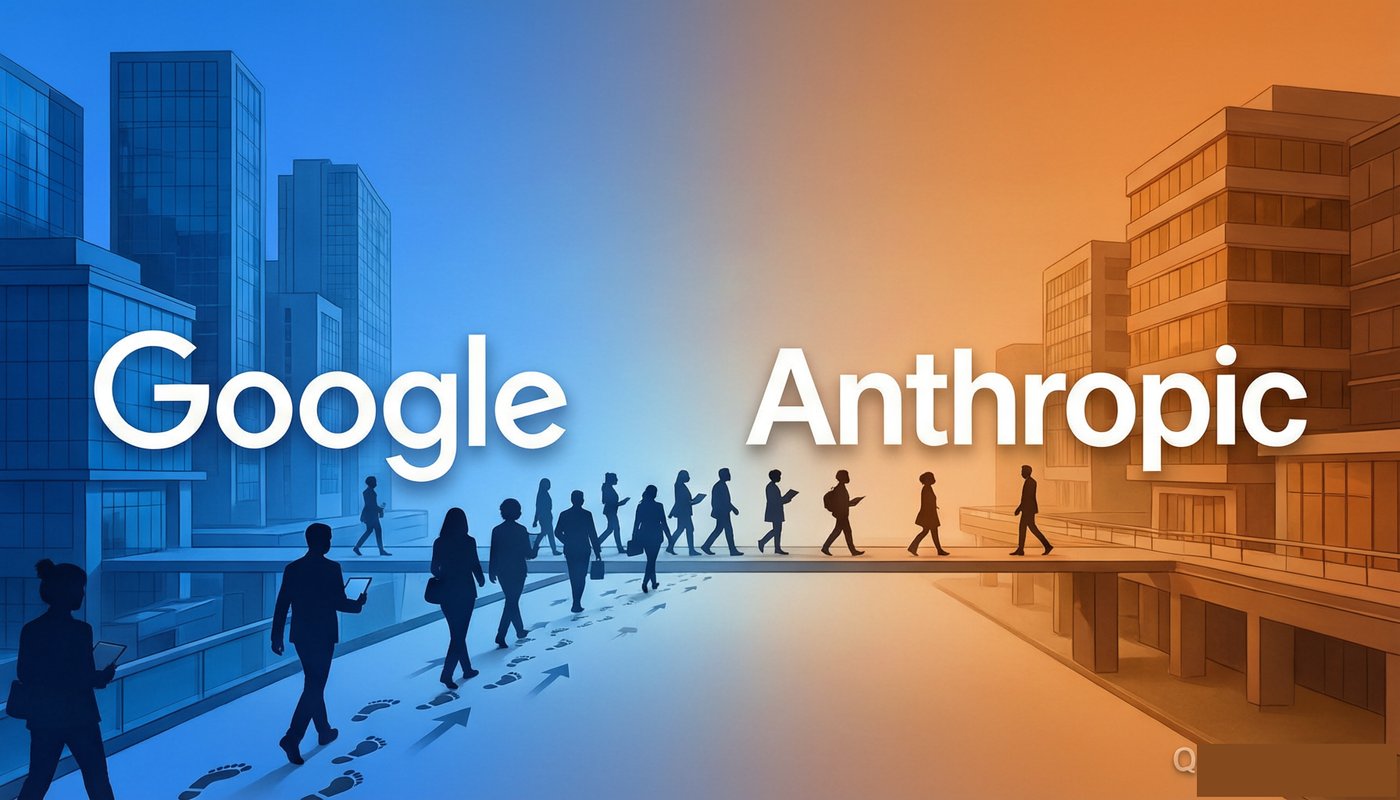
Two researchers who played key roles in Google’s Gemini AI models plan to join Anthropic, according to people familiar with the matter, in the latest sign that competition for top AI talent is intensifying ahead of a wave of public listings.
Jonas Adler and Alexander Pritzel, both viewed inside Google as important contributors to the Gemini program, are preparing to leave for Anthropic, the people said. Mr. Adler worked on Google’s AI coding efforts, while Mr. Pritzel was involved in training AI systems, according to a person close to the situation.
Their departures, if confirmed, would add to a steady flow of researchers out of Google’s AI labs. Google has lost a string of prominent AI figures since the field exploded into public view, and it has also hired aggressively to rebuild. The Gemini program, which powers Google’s flagship AI products, has been a particular focus of both recruitment and retention efforts.
The moves come as Anthropic prepares for an initial public offering that bankers and investors expect to be among the largest in technology. The company, which builds the Claude family of AI models, was valued at roughly $180 billion in its most recent major funding round last year, and people familiar with the discussions say the listing is expected to command a higher figure. It has been hiring across engineering, research and business roles, and its compensation packages have become a benchmark for the industry.
Anthropic has made no secret of its ambitions. The company has said it plans to spend heavily on computing capacity and talent, and it has positioned Claude as an alternative to OpenAI’s GPT models for enterprises that want choice in their AI suppliers. Adding researchers with experience on a rival’s flagship model is a direct way to accelerate its roadmap.
For Google, the losses are a cost of doing business in AI. The company’s research labs produced much of the foundational work in modern AI, and its Gemini models are central to its strategy of weaving AI into search, cloud and consumer products. When key contributors leave, the risk is not just the loss of their work but the signal it sends to others in the lab.
Talent poaching in AI has become an arms race. Researchers with experience training large models can command compensation in the tens of millions of dollars, including equity that could appreciate sharply in a public listing. Startups and established companies alike are competing for a pool of talent that remains small relative to demand.
The two researchers’ specific contributions were not disclosed in detail. People familiar with Google’s organization said Mr. Adler was known for work on AI coding tools, a field that has become one of the most commercially important in AI as companies use models to write software. Mr. Pritzel’s work on training systems touches the core of how models learn.
Neither Google nor Anthropic commented publicly on the moves. Their roles at Anthropic could not be learned, and it is possible the plans change, the people familiar with the matter said. AI researchers have been known to negotiate offers from multiple companies before deciding.
The broader backdrop is a wave of consolidation and hiring across the AI industry. OpenAI, Anthropic, Google, Meta and a roster of startups are all spending heavily on talent as they race to ship the next generation of models. The competition has pushed salaries up and made poaching routine.
For Anthropic, the hires fit a pattern of expansion ahead of its listing. The company has added executives, expanded into Europe and built out its data-security offerings, all moves that make it a more complete story for public investors. Research talent is the piece that underwrites the product roadmap.
For Google, the response has been to make counteroffers and to promote the advantages of working at a company with nearly unlimited compute resources. Its research organization remains one of the largest in the industry, and it has shown it can absorb departures without slowing its product cadence.
Google has been here before. The company’s AI labs have seen several high-profile exits since the field’s boom began, and it has responded by merging research groups, promoting internal leaders and giving top researchers more autonomy and resources. The departures have not stopped, but neither has Google’s product momentum: Gemini now runs across search, cloud and consumer devices, and the company continues to spend more on AI research than any rival.
Anthropic’s hiring has been aggressive by any measure. The company has grown from a small research outfit into an organization with thousands of employees, recruiting from OpenAI, Google and Meta as well as from universities. Its offers are known in the industry for combining cash, restricted stock and the promise of working on models at the frontier of capability, and it has shown it will pay whatever the market demands for the people it wants.
The moves also underscore how much of AI’s future rests on a small number of individuals. A handful of researchers can shape a model’s architecture, its training approach and its capabilities. When they move, the industry notices—and the competition to attract the next generation of them only grows.



