
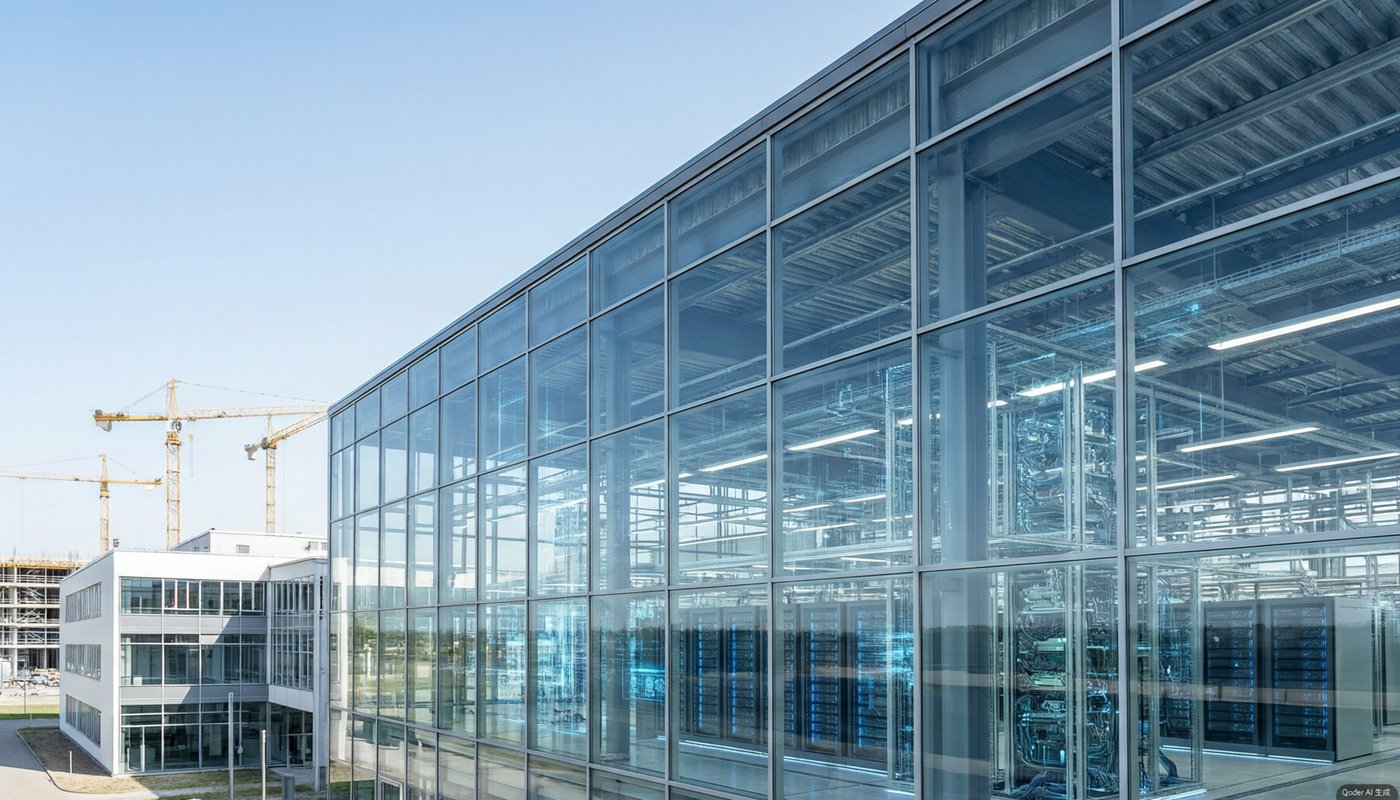
Construction crews will begin work this month on a new Siemens supplier facility in Offenbach, outside Frankfurt, one of three projects the German industrial group announced on July 1 as part of a 300 million euro investment in its home market. The company is expanding capacity for technologies it expects to be in short supply: the electrical equipment that powers data centers and the grid components that energy transitions depend on.
The Offenbach facility, scheduled to begin operations in the spring of 2027, will make components for Siemens’ electrification business, which sells the switchgear, power distribution and cooling systems that AI data centers consume in enormous quantities. Siemens is also expanding two existing factories in Frankfurt, and the company said the projects would create 700 new jobs by the end of 2030.
The investment is a bet on a specific and measurable boom. Data centers under construction around the world need electrical infrastructure worth billions of dollars, and the companies that supply it have become some of the most valuable in the industrial sector. Siemens has positioned its electrification and automation businesses at the center of that demand, and its order books in power distribution have grown faster than the rest of the company.
Germany is an unusual place to make that bet. The country’s industrial sector has struggled with high energy costs, a shortage of skilled workers and a sluggish economy, and manufacturers have been reluctant to commit large sums to domestic capacity. Siemens’ decision to invest in its home market, rather than in cheaper locations abroad, signals that the company sees German production as an advantage for the products it is making.
The proximity argument is straightforward. Data center operators in Europe want equipment built close to their facilities, both to shorten delivery times and to meet local content requirements that are becoming common in public-sector contracts. Frankfurt is one of Europe’s largest data center hubs, and a plant on its doorstep can deliver in days what competitors ship in months.
The company’s timing also reflects a broader shift in German industrial policy. Berlin has been pushing to rebuild the country’s manufacturing base around climate technology and digital infrastructure, and has used subsidies and faster permitting to encourage investment in exactly the areas Siemens is targeting. The projects announced this week did not require government support, executives said, which makes them a vote of confidence in the market rather than in a subsidy program.
The scale of the demand is the reason Siemens is expanding at all. A single large data center campus can consume enough power to supply a midsize town, and the electrical equipment that feeds it, switchgear, transformers, uninterruptible power systems and cooling controls, accounts for a growing share of project costs. Siemens has said its electrification order backlog is at record levels, and the company has been allocating capacity between grid customers and data center developers.
The jobs attached to the investment matter politically. Germany’s industrial workforce has been shrinking as companies move production abroad, and every announcement of new factory jobs is seized on by politicians who are under pressure over deindustrialization. The 700 positions Siemens plans to create by 2030 are modest in the context of the group’s global workforce, but they arrive at a time when any manufacturing job creation is treated as significant.
The investment is not without risk. Data center construction is cyclical, and the current boom could slow if AI spending disappoints or if power constraints limit new facilities. Siemens has been here before, expanding capacity in previous technology cycles only to idle plants when demand softened. The company’s managers argue that this cycle is different, because the investment is spread across data center power and grid infrastructure, two markets with different demand drivers.
Competitors are making similar calculations. ABB, Schneider Electric and Eaton have all announced investments in data center power equipment, and grid-gear makers across Europe are expanding. The race has pushed up prices for switchgear and transformers, and lead times for some components stretch more than a year. In that environment, owning production capacity is a competitive advantage, not just a cost line.
Analysts said the projects reflect a broader rethinking of where industrial capacity belongs. For decades, electronics manufacturing flowed east, to cheaper labor and faster supply chains. The equipment that makes data centers work is heavier, more regulated and more service-intensive, and for those products, proximity to customers matters more than wage costs. German plants are expensive, but they sit at the center of Europe’s largest market.
For Siemens, the 300 million euros is a statement of intent. The company is betting that the electrical infrastructure of the AI era will be built in Europe, and that it can own the market from a German base. The Offenbach facility will not open until 2027, and the market will have moved by then. But the ground being broken this month is the ground the company expects to stand on for the next decade.



