
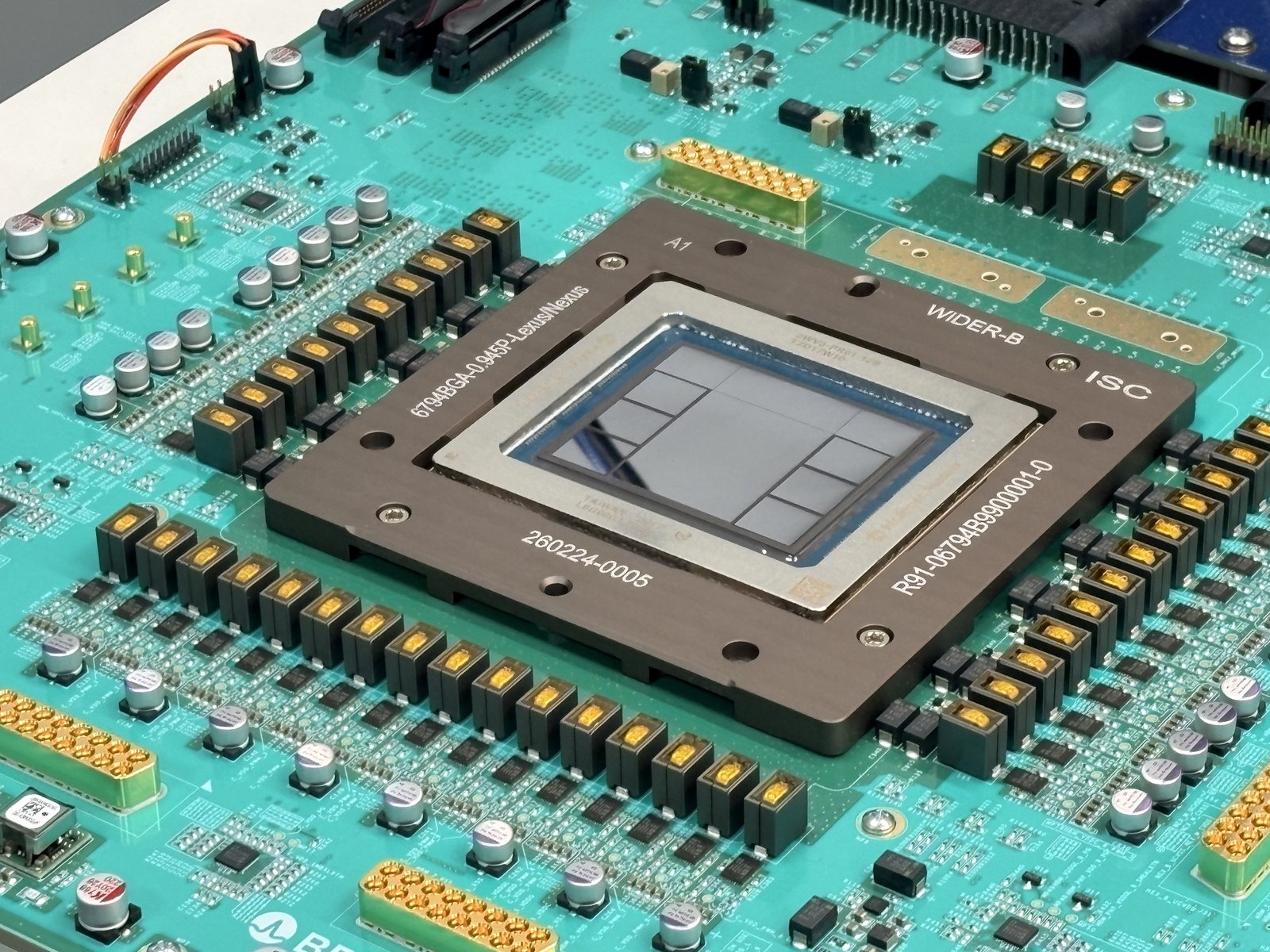
The construction site outside the city limits will soon hold a new kind of American factory, one built for the last steps of the chipmaking process. King Yuan Electronics, the Taiwanese testing and packaging specialist known as KYEC, said it will invest $1.4 billion in new U.S. facilities, adding capacity for the chip testing and packaging services that have become the quiet bottleneck of the AI supply chain.
The investment extends a pattern that has transformed the geography of the semiconductor industry. TSMC has built fabs in Arizona, Samsung has committed to its Texas complex, and the logic that took wafer fabrication to American soil is now pulling the downstream stages of the supply chain along with it. KYEC’s project is among the largest commitments yet from the testing and packaging segment, the slice of the industry that most consumers never see but every chip must pass through.
The demand pull is coming from the top of the market. KYEC counts Nvidia among its major customers, and the company’s expansion follows the AI chipmaker’s own push to diversify its supply chain out of Asia. The logic is simple: if the most advanced chips are increasingly made in the United States, the testing and packaging that turns bare dies into finished products needs to be close by, and the companies that provide those services are following their customers across the ocean.
KYEC is an established name in a segment that rarely makes headlines. Founded decades ago and based in Taiwan, the company operates testing and packaging facilities across Asia and has become one of the largest independent houses in a business dominated by a few big players. The U.S. project is its most ambitious move outside Asia, and the company’s decision to commit $1.4 billion to American soil reflects both the pull of its largest customer and the push of an industry that has concluded its critical capacity is too concentrated.
The economics of the move are complicated by the nature of the work. Testing and packaging are lower-margin, more labor-intensive stages of the semiconductor industry than design or fabrication, and they have historically clustered in Asia for reasons of cost and accumulated expertise. What changed is the customer: Nvidia and the other major chip designers are willing to pay for geographic diversification, and the U.S. government has been willing to subsidize it.
The incentive structure has been central to the shift. American industrial policy, built around the CHIPS Act and its successor programs, has dangled billions in support for companies that bring semiconductor capacity to U.S. soil, and the testing and packaging segment has been explicitly included in the effort. For KYEC, the combination of customer demand, government incentives and the strategic logic of proximity made the $1.4 billion commitment a defensible bet.
The project also reflects a broader reordering of the industry’s risk calculations. The pandemic-era chip shortages and the subsequent geopolitical tensions taught the semiconductor world that concentrated supply chains are fragile, and the response has been a movement that analysts call friend-shoring: shifting production to politically aligned countries rather than purely cost-optimal ones. The movement began with fabrication and is now working its way down the value chain, and KYEC’s project is evidence that the testing and packaging stage has arrived at the same conclusion.
For Nvidia, the benefits are concrete. The company has been working to thin the geographic risk in its supply chain, and a U.S.-based testing and packaging partner reduces the distance, the logistics and the vulnerability that come with shipping chips around the world for their final steps. The move does not eliminate the concentration of the industry in Asia, but it does spread the risk across more geographies, and every step of that spread makes the AI supply chain harder to disrupt.
The industry-wide effect will be measured over years. Testing and packaging capacity is expensive to build and slow to expand, and the U.S. push will take time to deliver meaningful volume, but the direction is set: the last stage of the chipmaking process is going the way of the first, following the customers and the subsidies to American soil. The companies that positioned themselves early, KYEC among them, will be the ones with capacity in place when the demand arrives in force.
The final steps of chipmaking have become the industry’s newest bottleneck. Advanced packaging, the process of assembling chiplets and stacking memory beside processors, has emerged as a constraint on AI chip supply, and testing capacity has struggled to keep pace with the flood of new designs. A U.S. facility that combines testing and packaging addresses that constraint from a new geography, and the project’s significance lies less in its size than in its location: another link in the chain, moved closer to the customer and the government incentives, and further from the industry’s old center of gravity.
The project shows how the AI trade has changed the semiconductor industry’s sense of place. A Taiwanese company spending $1.4 billion on American test floors, for chips designed in California and fabricated in Arizona, is the supply chain of the future arranging itself in real time. The facility will take years to build, and its first finished chips will arrive quietly, tested, packaged and ready, a small monument to the industry’s decision that its most critical products should no longer depend on a single corner of the world.



