Reports that Tesla Inc. was weighing a spinoff of its China business to clear the way for a merger with SpaceX pushed the company’s shares around this week, until Elon Musk moved to shut the speculation down. “Never been part of any discussion,” he wrote on X.
The reports, carried by Barron’s and Quartz among other outlets, added a new element to merger talk that has circulated for years. Previous versions of the story focused on the logic of combining Musk’s two most valuable companies. This version put China on the table, and that is what made it new.
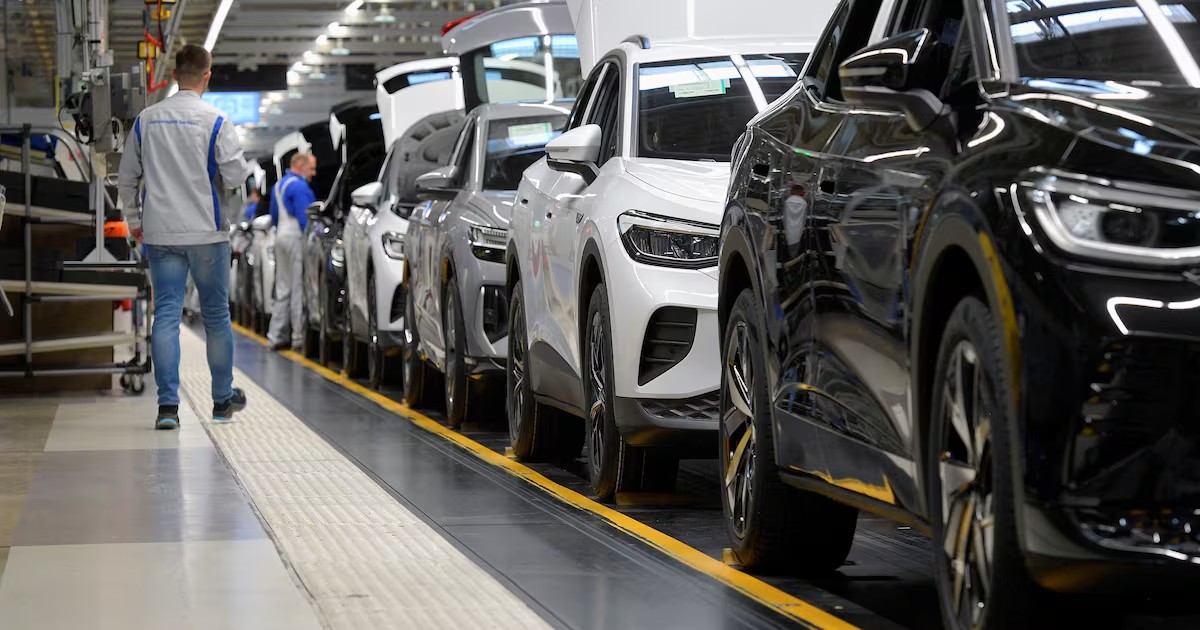
China is the hardest part of the puzzle. Tesla’s Shanghai factory is the company’s largest manufacturing site outside the United States and the hub of its exports to Europe and Asia. Any transaction that moves Tesla’s assets into a combined company with SpaceX would raise questions about how Chinese regulators treat the transfer, and about the geopolitical exposure that would come with it.
The merger logic has never been hard to state. Tesla brings a profitable car business, a large balance sheet and a retail brand; SpaceX brings the fastest-growing private valuation in history, a government customer base and a moat in launch. A combined company would let Musk redeploy Tesla’s cash flow into SpaceX’s growth without going through capital markets, and it would give investors a single vehicle for both stories.
What has always been missing is a reason to do it, and a path through the obstacles. SpaceX’s government contracts, including the $1.6 billion Space Force award disclosed this week, come with scrutiny of ownership and control, and a merger that dragged Tesla’s China assets into the picture would test that scrutiny in ways no one has modeled publicly.
The denial did not address the merger itself. Musk said only that the China spinoff had “never been part of any discussion,” leaving the broader speculation intact. On X, where Musk has millions of followers and where his companies’ announcements often appear first, the statement was read as a targeted correction rather than a blanket denial.
The same day, the news cycle handed Tesla a different kind of problem. U.S. safety regulators opened an investigation into suspension failures in about 1.2 million Tesla vehicles, according to the National Highway Traffic Safety Administration. The probe adds to a list of regulatory questions the company has faced this year, from automated-driving features to the way it handles safety data.
The combination captured the two forces working on Tesla’s stock. The capital story, built on Musk’s companies and their ambitions, moves the shares up when investors believe in the next transaction. The product story, built on recalls and probes and delivery numbers, pulls them back down when regulators or the market lose patience.
Analysts were skeptical that a China spinoff was real. A sale of the Shanghai operations would surrender Tesla’s only fully owned factory outside the U.S. and its most efficient cost base, and would do so at a moment when Chinese electric-vehicle makers are gaining share at home. The logic of doing that to facilitate a merger, they said, is thin, which is part of why Musk’s denial landed as it did.
The suspension investigation is still in its early stages. The agency’s inquiry covers roughly 1.2 million vehicles, according to the announcement, and focuses on reports of failures in the suspension system. Tesla has faced a series of safety reviews in recent years, and each has followed a similar pattern: the stock dips on the announcement, recovers as details emerge, and the company disputes the findings while cooperating with the review.
The China question will not go away regardless of the merger talk. Tesla’s share of the Chinese electric-vehicle market has slipped as domestic rivals have launched cheaper models with comparable features, and the Shanghai plant, once the company’s growth engine, now operates in a market where Tesla is defending share rather than taking it. Any corporate transaction involving those assets, even a hypothetical one, forces investors to price in that reality.
The week’s events also illustrated the information dynamic around Musk’s companies. Speculation about mergers and spinoffs moves the stock before any party confirms it, and Musk’s denials, delivered in a single post, carry more weight than any statement from either company’s investor relations office. That arrangement has served Musk well, but it cuts both ways: the same channel that settles rumors can start them.
For now, the merger remains what it has been for years: a story that circulates, moves the stock, and gets denied. What changed this week is that the story now has a version in which China plays a role, which means the next round of speculation will be harder to dismiss, and the regulators watching Musk’s companies from both sides of the Pacific will be reading along.