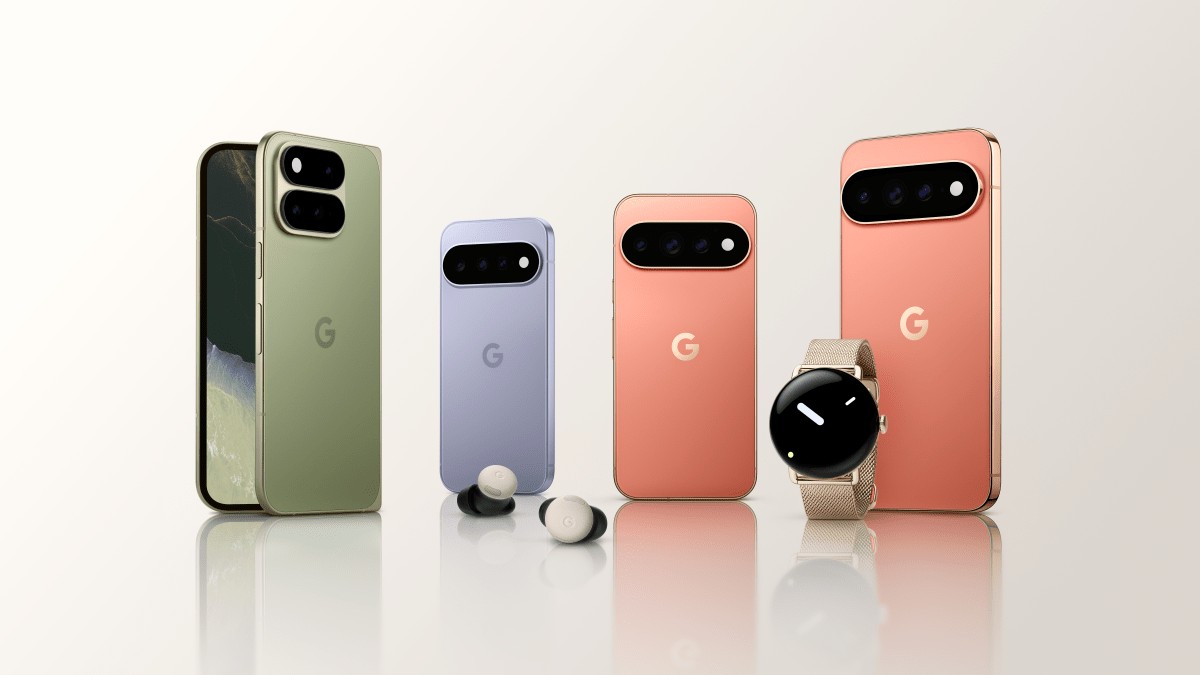
Google’s new Pixel phones cost more, hold more memory, and come with a tracker that looks a lot like Apple’s. The company unveiled the Pixel 11 line at its Made by Google event Monday, raising the starting price by $100 from the previous generation, bumping base storage to 256 gigabytes, and introducing a $29 item tracker called Pixel Tag that runs on its own Find Hub network.
The tracker is the event’s quietest product and its most pointed one. At $29, the Pixel Tag undercuts Apple’s AirTag, and it connects to the Find Hub network Google has been building across Android devices. The accessory turns Google’s sprawling device ecosystem into a finding network — and hands the company a direct challenge to Apple’s lock on the accessory market that grew up around the iPhone.
The phones carry the weight of the lineup. Three Pixel 11 models were announced, spanning the mainstream and the premium tiers, and all three start at higher prices than their predecessors. Google has been moving the Pixel brand upmarket for two years, and the 256-gigabyte base storage is the latest step: the company is betting that customers will pay more for phones that do not run out of space, rather than offering cheap configurations and hoping they upgrade.
The Pixel Watch 5, priced at $399, adds blood-pressure monitoring and an insulin-resistance indicator, pushing the wearable deeper into health territory that Apple has mapped but not fully occupied. The watch positions Google against the Apple Watch with a narrower feature set and a lower price, and the health additions give it a reason to exist beyond notifications.
The event’s through-line is AI. Google has spent the past year talking about models; the Pixel 11 event was about putting them to work in devices. The phones lean on the company’s on-device Gemini assistant for photo editing, translation and summarization, with features designed to show what a model running locally can do when the network is not involved. The shift in emphasis is deliberate: Google’s hardware division has been under pressure to show that the company’s AI leadership produces products people buy, not just benchmarks people read about.
The price increases will test that proposition. The Pixel line has been the value option among premium Android phones for years, and each step up in price moves it closer to the territory occupied by Samsung’s Galaxy line. Google is betting that its AI features, now bundled with the hardware, justify the premium — and that the Find Hub network, the watches and the accessories create the kind of ecosystem stickiness that has kept Apple customers loyal.
Analysts said the lineup is Google’s most complete statement about its hardware strategy to date. The phones, watch and tracker are designed to work together in ways that the parts alone cannot, and the accessories — particularly the sub-$30 Pixel Tag — are priced to seed the ecosystem with as many devices as possible. The hardware business is small next to Google’s advertising revenue, but it is the place where the company’s AI ambitions become physical, and the event was built to make that connection.
The AI features themselves will face the same test as the prices. On-device models are faster and private, but they are also smaller than the cloud models Google advertises, and the gap between the demo and the daily experience has been the weakness of every AI phone launch so far. Google is betting that the Pixel’s integration — the assistant, the camera and the health sensors tuned to the same silicon — delivers what a generic Android phone cannot. The bet is reasonable; the proof will be in the reviews and the sales.
The accessory strategy carries its own stakes. Item trackers are a small product in a small category, but they are the cheapest way to test whether Android users will adopt a finding network built by Google rather than by any individual phone maker. A $29 tag that works across every Android phone, whatever the brand, is the kind of product that can make the network feel universal in a way that a phone launch cannot. The price is set to encourage impulse buys, and the network is built to make them stick.
The risks are the same ones Google has faced with every Pixel launch. Supply-chain costs are rising, and the price increases arrive at a moment when consumers are stretching budgets. The health features will face the usual questions about how claims are worded and verified.
For now, Google has answered the question of what it wants to sell: an AI-first device family with an ecosystem around it, priced for a market that has shown it will pay for Apple’s version of the same idea. The Pixel 11’s task is to prove that Google’s version deserves the same money. The hardware is out, the prices are set, and the tracker is waiting at $29 for anyone who wants to test the network.