
Counterpoint Research’s second-quarter shipment data, published Aug. 14, shows a shift in the memory industry that had been coming for years: Yangtze Memory Technologies, the Chinese NAND flash maker, rose from sixth to third place in global NAND shipments, overtaking Micron and Kioxia in a single quarter.
YMTC now trails only Samsung, with roughly 25 percent of the market, and SK Hynix, which owns the NAND business it acquired from Intel. The company’s climb was powered by domestic demand in China, where smartphone makers, PC vendors and server builders have shifted procurement to local suppliers, and by aggressive pricing that made its products hard for international buyers to refuse.
The rise is a test case for how export controls shape the chip industry. YMTC was added to U.S. trade restrictions in 2022, cutting it off from advanced American equipment and technology, yet the company has continued to expand production using the equipment it already had and supply chains it built with Chinese and other partners. Its capacity growth since the restrictions has been steady, analysts said, a fact that undercuts the argument that sanctions alone can stop China’s memory ambitions.
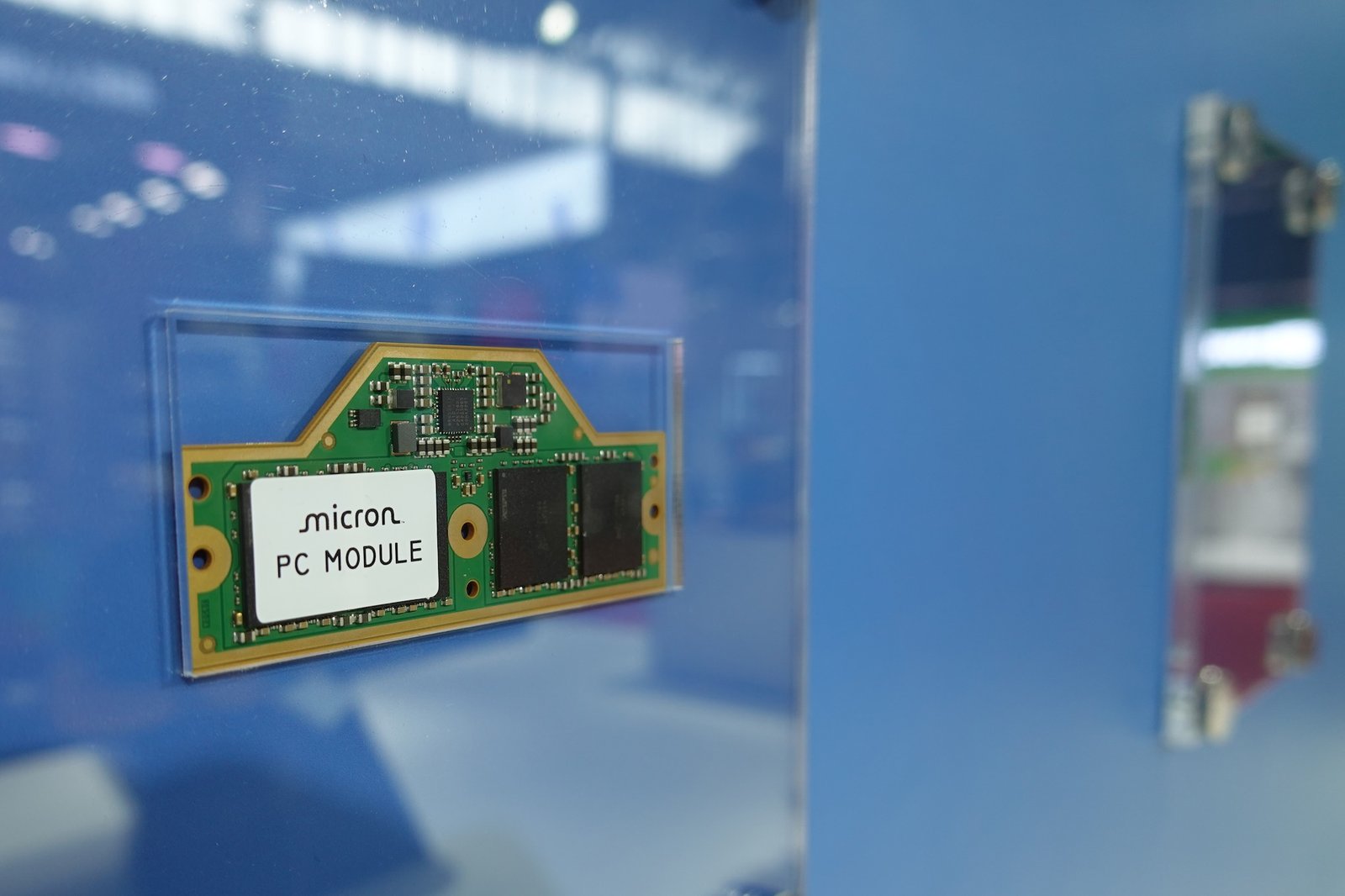
The market impact is most visible at Micron. The American company derives roughly 80 percent of its revenue from DRAM, including the high-bandwidth memory that AI accelerators demand, so losing NAND share to YMTC inflicts limited short-term damage. Micron’s DRAM business, particularly HBM, is sold out for the foreseeable future, and the company’s results have reflected that. But the NAND share loss is a structural trend: Chinese suppliers now take a growing slice of the commodity memory market, and every percentage point they gain is one less for the incumbents.
Kioxia, the Japanese company that was formed from Toshiba’s memory business, has felt the pressure more directly. NAND is Kioxia’s only product, and losing third place to YMTC concentrates its exposure at a difficult moment. The company has considered merging with Western Digital’s memory unit in the past, and industry analysts said the new competitive pressure could revive those talks, as NAND consolidation becomes a survival strategy for smaller players.
The pricing dynamics tell the same story. NAND flash prices recovered from a brutal downturn over the past year, but analysts say the recovery would have been stronger without YMTC’s capacity additions. Chinese suppliers tend to price below international competitors to win sockets, and their share gains come at the expense of margins across the industry. The incumbents’ response has been to emphasize higher-value products: enterprise SSDs, automotive storage and the fast-growing market for AI training data storage.
YMTC’s own technology has also improved. The company’s latest products, built on its proprietary Xtacking architecture, compete on density and performance with leading-edge NAND from Samsung and SK Hynix, analysts said. The design advantage is real: by stacking the memory array and the peripheral circuits separately, Xtacking achieves densities that let YMTC sell competitive products without access to the newest equipment.
The geopolitical dimension complicates every business decision. U.S. policy has sought to slow Chinese memory advancement, and officials have debated further restrictions on the equipment and materials that Chinese fabs use. YMTC’s rise to third place suggests the current measures have limits, and its continued growth will feed the argument that export controls need to be tightened, even as its customers argue the controls mainly hurt American suppliers who have lost Chinese orders.
For the memory industry as a whole, YMTC’s ascent changes the competitive math. Samsung and SK Hynix now face a Chinese rival with domestic demand, government support and improving technology, the same combination that reshaped the solar panel and display industries. Analysts said the NAND market is heading toward the structure of DRAM, where a handful of players control supply, but with China holding a seat at the table.
The company’s customers in China have been equally important. Domestic smartphone makers have moved the bulk of their NAND procurement to YMTC, and Chinese server and PC vendors have followed, a shift accelerated by government guidance favoring local suppliers. That captive demand gives YMTC a stable base that international rivals do not enjoy, letting it price aggressively in export markets without risking its core business. Analysts said the combination of domestic demand, state support and export pricing makes YMTC structurally different from the Chinese chip companies that have failed in the past.
The quarterly shipment ranking is one snapshot, and rankings can move again as prices and demand shift. But the direction is clear. Counterpoint’s data shows YMTC passing two established Western and Japanese suppliers in a single quarter, and the trend line behind it points one way. The question for Micron, Kioxia and the rest of the industry is no longer whether Chinese NAND will matter; it is how much of the market YMTC will take before the cycle turns again.



