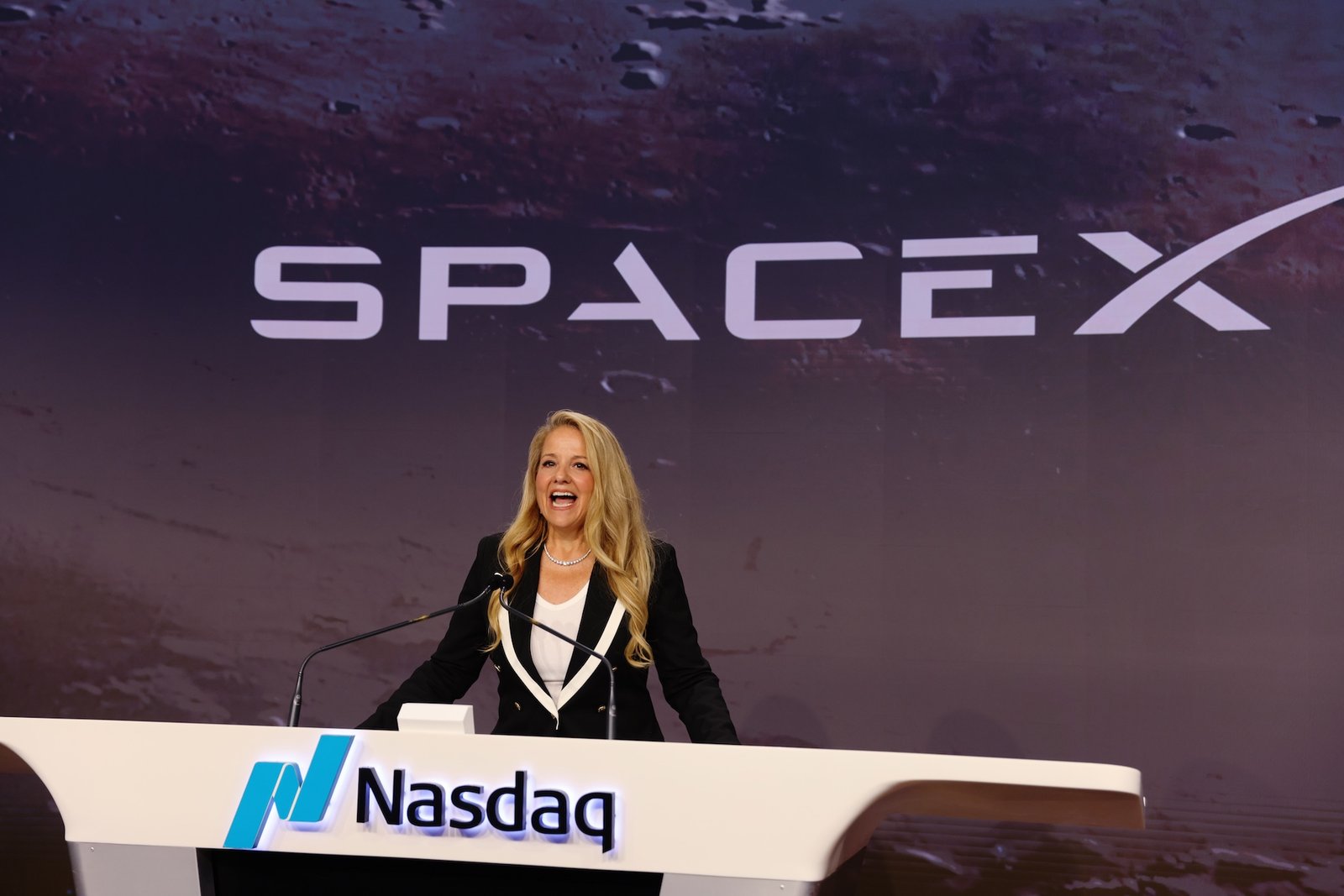
The deal was announced in mid-June and closed in two months, an unusually short window for a transaction of its size. On Aug. 14, SpaceX said it completed its all-stock acquisition of Anysphere, the company behind the AI coding tool Cursor, at a price of $60 billion.
The transaction is the largest acquisition of a startup in the history of venture capital, eclipsing deals that took a year or more to clear regulators and shareholders. This one moved at the speed of a software merger: a signed agreement, a shareholder vote and a closing, with no antitrust fight and no financing contingency, because no cash changed hands.
The all-stock structure explains part of the speed. Anysphere’s investors and employees received SpaceX equity, which has traded up sharply since the company’s public listing earlier this year, and people familiar with the deal said the offer valued Anysphere at roughly $60 billion when the terms were struck. For the sellers, the deal converts a private AI startup into shares of a company whose valuation has climbed past $1.8 trillion, an exchange many founders found hard to refuse.
For SpaceX, the acquisition fills a specific gap in an expanding portfolio. The company merged its xAI business into SpaceX in July, renaming the combined AI unit SpaceXAI, and executives have said the next step is building products that put AI to work inside the company’s own operations and beyond. Cursor, whose coding assistant is used by developers at major software companies, gives SpaceXAI an immediate distribution channel and a team that has proven it can build tools developers pay for.
The coding-agent market has become one of the most competitive corners of the AI industry. GitHub’s Copilot, Anthropic’s Claude Code and a cluster of startups all sell AI assistants that write, review and fix software, and Cursor has held its position at the top of the pack by combining a polished editor with aggressive model integrations. Under SpaceX ownership, Cursor is expected to keep those integrations, a decision that would let the tool route customers to whichever model performs best, including rivals’ models.
Musk’s AI strategy has been consolidating for months. The July merger of xAI into SpaceX created a single entity with the rocket company’s balance sheet and the AI lab’s technology, and the Cursor acquisition extends that logic one step further. Analysts said the pattern points to a company assembling the pieces of an AI stack: models from the former xAI, a developer-facing product from Cursor, and the massive compute and data advantages of SpaceX’s own infrastructure.
The timing also mattered. SpaceX passed its first post-IPO lockup test last week, when early investors and employees became free to sell a portion of their shares, and the stock held steady through the expiration. Executives described the Cursor closing as a statement of intent: the company is using its currency, the shares, to buy assets while they are available, rather than hoarding equity for a rainy day.
Cursor’s founders, who built the company on the argument that AI would change how software gets written, now report into a conglomerate whose primary business is launching rockets. The cultural fit is less strange than it sounds, people close to the deal said. Both companies are engineering-heavy, both move fast, and both operate with a tolerance for risk that public-company peers find unusual.
The deal also reshapes the competitive math in AI coding. Microsoft, which owns GitHub and integrates Copilot across its developer tools, now faces a rival backed by the full weight of SpaceX’s balance sheet. OpenAI, whose models power parts of Cursor’s product, must decide whether to keep supplying a tool owned by a company that competes with it elsewhere. The acquisition puts those relationships under a microscope, analysts said.
For Anysphere’s investors, the two-month sprint from announcement to closing produced one of the largest venture outcomes on record. Early backers who funded the company when it was worth hundreds of millions now hold SpaceX stock valued at multiples of their original investments. The deal’s speed, in a market where big acquisitions often die in diligence, is itself a signal of how much bargaining power the buyer held and how eager the sellers were.
The developer community’s reaction has been mixed but muted. Cursor users, who tend to be vocal about ownership changes, have largely waited to see whether the product changes under new management. The company has said Cursor will keep operating from its existing offices with its existing leadership, a promise that addresses the concern that a large acquirer would absorb the team into its own structure. Whether the tool keeps its reputation as the independent alternative to GitHub’s Copilot depends on how much freedom SpaceX grants, people close to the deal said.
The closing leaves SpaceX with a new business line and a new set of questions: how quickly Cursor’s revenue can be scaled inside a larger company, whether its developer community accepts ownership by a rocket maker, and where the AI unit’s next acquisition lands. Musk has said he intends to keep building the AI business aggressively. Two months from announcement to closing suggests he is not waiting for anyone.