
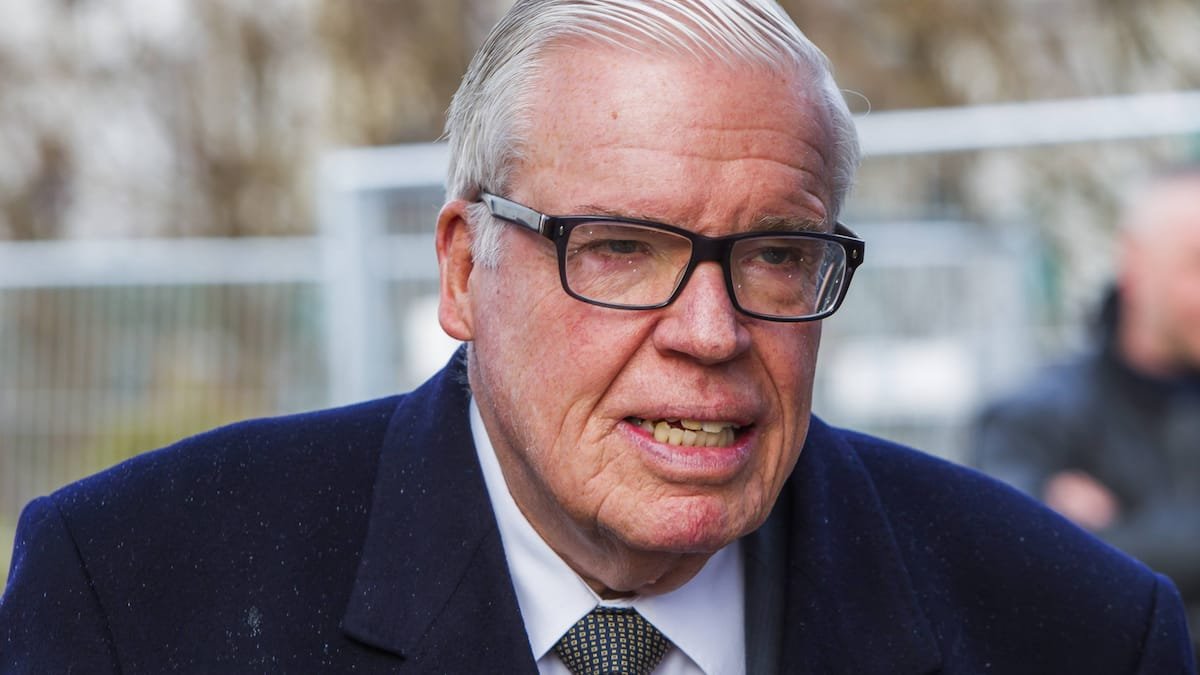
For a fortune of 42.2 billion euros, the paperwork was remarkably quiet. Klaus-Michael Kuehne, the German-born shipping magnate who built Kuehne+Nagel into one of the world’s most successful air- and sea-freight forwarders, has died in Switzerland with no children. According to a report Tuesday from Spain’s EFE news agency, his estate is passing to a charitable foundation established decades ago, and it is doing so without an inheritance-tax bill.
The bequest, roughly 49 billion dollars at current exchange rates, makes the recipient one of the wealthiest charitable foundations in Europe in a single stroke. The transfer also closes a succession question that had hung over one of the continent’s largest privately held fortunes for years.
The absence of a tax bill is a Swiss detail with outsize consequences. Switzerland leaves inheritance tax to its cantons, and the cantons differ sharply: a handful impose no inheritance tax at all, while most of the rest tax transfers to recipients who are not close relatives at rates that climb steeply. Mr. Kuehne lived in one of the no-tax cantons, which is why one of the largest private fortunes to change hands in Europe this year is doing so without a levy from the state where he made his home.
The choice of residence shaped everything that followed. Mr. Kuehne had made Switzerland his home for many years, arranging his personal affairs under a legal system with no federal inheritance tax and in a canton that collects none on estates. Germany, his birthplace, watched that arrangement from a distance; his business interests there remained vast, but his personal tax affairs were settled where he lived, not where he was born.
His business life followed a different rulebook. Mr. Kuehne’s grandfather helped found Kuehne+Nagel in Hamburg in 1890, and the family firm was his base for seven decades of deal-making. In the description of those who followed his career, he devoted himself to buying and rescuing companies in trouble, an approach that built the forwarder into a global power in air and ocean freight as world trade expanded in the decades after the Second World War.
The rescues extended well beyond his own company. Over the years he accumulated large stakes in three other transport giants, among them Hapag-Lloyd, one of the world’s largest container-shipping lines, and Lufthansa, Germany’s flag carrier. Both companies knew Mr. Kuehne as the kind of shareholder who appears in a crisis. When Hapag-Lloyd staggered through the financial crisis of 2008, he was part of the Hamburg investor group that kept the line afloat. When the pandemic emptied Lufthansa’s planes in 2020, he raised his stake and backed the airline’s rescue.
The pattern made him one of the most consequential figures in German transport and, for stretches, Germany’s wealthiest man according to the country’s business-press rankings. His public profile never matched his balance sheet. He gave few interviews, avoided the social circuit, and let his holdings speak for him, which made each of his rare public statements an event in the German business press.
The recipient of the estate has existed for decades, and that history matters for how the gift will be received. A foundation created on a deathbed would raise questions; one that has operated for years has governance, programs and a track record. What changes now is scale. The trustees must decide how fast to put 42.2 billion euros to work, how much to spend each year, and how to build the staff and controls that a balance sheet of that size demands.
For the companies he controlled, the estate’s destination changes little in day-to-day terms. Kuehne+Nagel, Hapag-Lloyd and Lufthansa all have management and boards separate from his personal holdings, and the shares now passing to the foundation will be held by an owner with a long horizon and no family members pressing for dividends.
The tax treatment will draw the most attention, because it shows how much the rules can vary within a single country. Had he lived in one of the cantons that levy inheritance tax, the bequest to a foundation could have attracted a bill running into the hundreds of millions; in his canton, the transfer passes untouched, and the federal government collects no inheritance tax at all. Wealth planners across Europe will study the arrangement as a template, and tax authorities will study it for the same reason.
For a man who spent his career rescuing companies, the last transaction was the simplest: one fortune, one beneficiary, no heirs and no tax bill. Whether that arrangement survives public scrutiny is another matter. Foundations of this size tend to become public institutions whether they want to or not, and the charity that just received 42.2 billion euros will now have to explain, year after year, what it does with the money.



