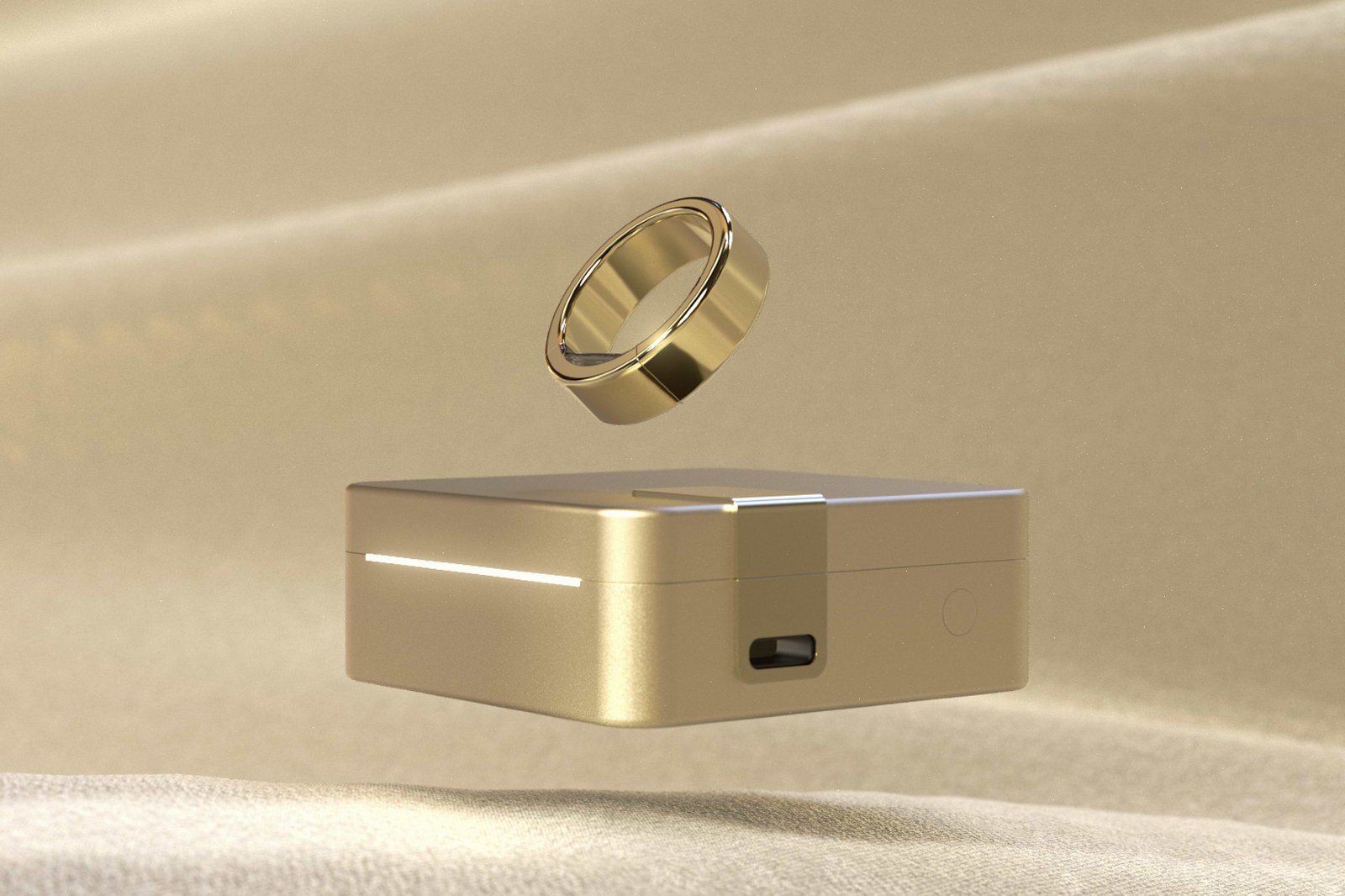
The smart ring was born as a health device, a quiet band of sensors that tells its owner how they slept and how hard they trained. Qualcomm is investing in a version of that product with grander ambitions. The chip maker’s investment arm participated in a $70 million funding round for Ultrahuman, the Indian smart-ring company, at a valuation of $365 million, with the diagnostics company Labcorp also joining. Ultrahuman says it plans to put Qualcomm chips in its rings so that software can run directly on the device.
The technical shift is the substance of the deal. Today’s smart rings are mostly sensors with a wireless link: they gather data and send it to a phone, where the processing happens. Ultrahuman wants to move that processing onto the ring itself, using a Qualcomm processor powerful enough to run software locally, and the company talks about the device as a platform rather than an accessory. In its telling, the ring of the future is a small computer worn on the finger, capable of acting as a game controller, a car key or an interface for AI.
The financing values that vision at $365 million, a figure that says less about Ultrahuman’s current business and more about where investors believe the category is going. The company’s annualized revenue has reached about $140 million, according to people familiar with its finances, and it has sold roughly 800,000 rings, a base large enough to prove the product works but small enough to leave the market wide open. The round gives Ultrahuman the capital to compete with Oura, its larger rival, which filed for an initial public offering the same week.
The timing of the two events was not coordinated, but the contrast was impossible to miss. The smart-ring market’s two most prominent companies moved on the same days: Oura toward the public markets and Ultrahuman toward a strategic partnership with one of the world’s largest chip makers. The pairing frames the category’s central question: whether smart rings will remain specialized health devices, which is Oura’s core, or become general-purpose computers on the finger, which is Ultrahuman’s pitch.
Qualcomm’s interest is easy to understand. The company has dominated the market for chips in phones, but the phone market has stopped growing, and Qualcomm has spent years looking for the next device that will carry its processors. Smart rings, if the category grows as its proponents expect, would add a new class of wearable to the world’s computing fleet, and Qualcomm wants to be inside them the way it is inside phones. Its investment in Ultrahuman is a bet on the ring becoming a mainstream platform rather than a niche accessory.
The company’s investment chief described the logic in terms of where AI is heading: toward devices that are always with the user, sensing the environment and ready to respond, rather than devices that require the user to come to them. The ring fits that description better than almost any other form factor, worn constantly, touching the skin, always available. Qualcomm’s language about ambient and personal AI is a description of a future in which computing disperses from the pocket to the body, and the ring is one of the first places that future could take hold.
The partnership with Labcorp points to a different ambition. Labcorp, one of the largest diagnostics companies in the United States, processes billions of laboratory tests a year, and its interest in Ultrahuman suggests the medical establishment is beginning to take continuous health data seriously. A ring that measures physiological signals day and night could eventually feed data into clinical decisions, and a diagnostics company that owns a piece of the sensing device would be positioned for that shift.
Ultrahuman’s road has not been smooth. The company has fought a patent dispute with Oura that at one point kept its products out of the U.S. market, and the legal fight has cost it time and money in the category’s most important geography. The resolution of that dispute, and the timing of Ultrahuman’s renewed U.S. push, will matter as much to its future as the new chips it plans to install.
The competitive response from Oura will be closely watched. Oura has its own advantages: a decade of brand building, a research base and a head start in the medical community, and its IPO will give it public-market capital to defend its position. If rings become computers rather than health devices, Oura will need its own answer to on-device processing, and the company’s roadmap will show whether it intends to match Ultrahuman’s platform ambitions or hold its ground as a specialist.
The deeper bet, shared by Qualcomm, Labcorp and Ultrahuman’s other investors, is that the ring becomes one of the primary interfaces of the AI era. The products that win in technology tend to be the ones that are always present, and the finger offers a combination of constant contact and unobtrusiveness that the wrist never quite achieved. The $70 million round is a down payment on that theory, and the rings Ultrahuman ships with Qualcomm processors inside will be the test of whether the finger is ready to become a computer.