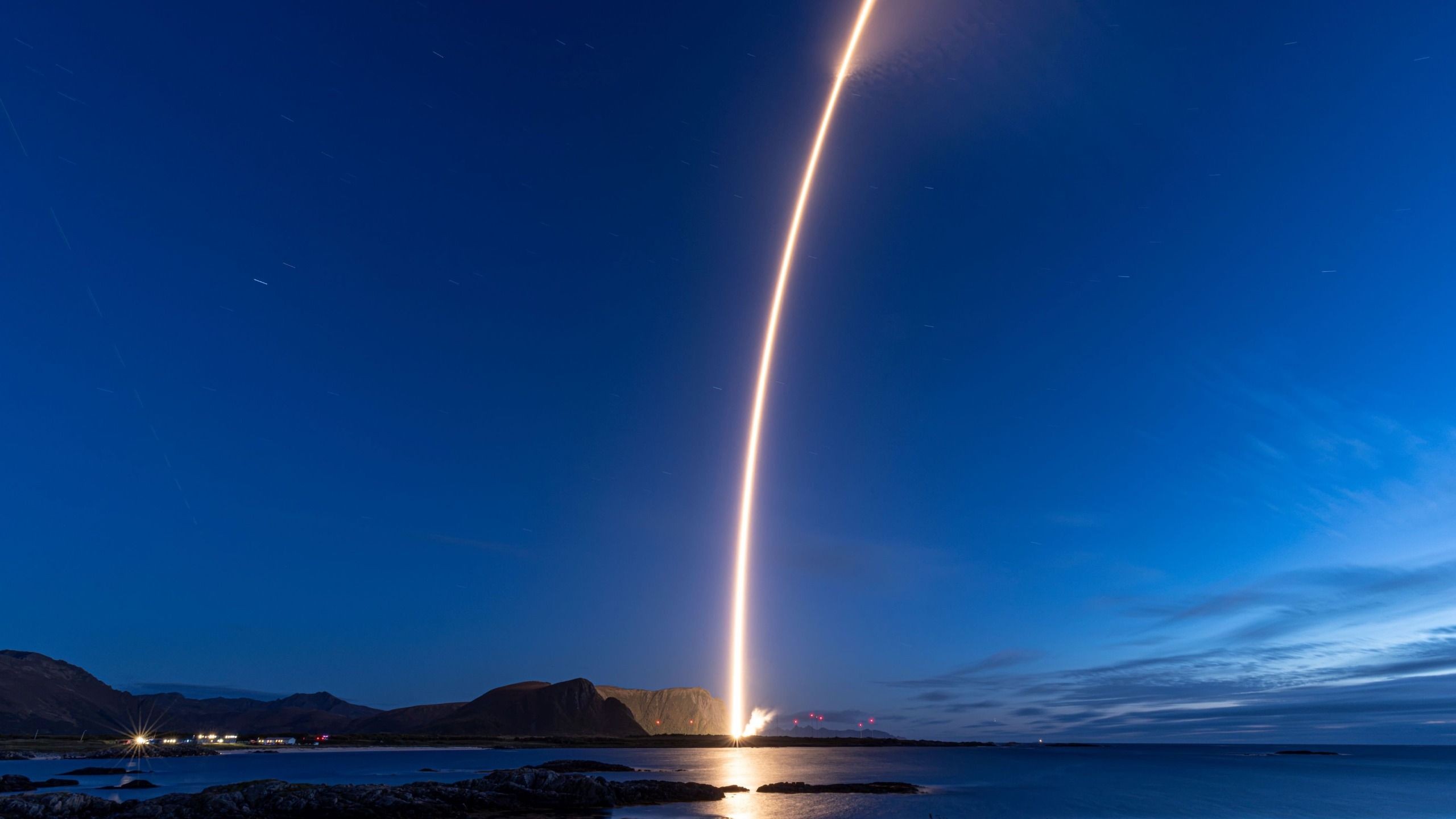
The sky above Andøya was still light when the rocket climbed off the pad. Spectrum, built by the German startup Isar Aerospace, lifted off from the Andøya Spaceport in northern Norway on the evening of Sept. 6 and delivered its payload to low-Earth orbit, becoming the first commercial rocket from a private European company to reach space from the continent itself. The European Space Agency congratulated the company, and the industry spent the night absorbing what the flight meant.
The launch carried five small satellites and a scientific experiment, modest cargo by the standards of the space business but freight that would previously have had to fly on a foreign rocket from a foreign launch site. Isar said the payloads were deployed as planned, completing the mission the company had named with an optimism that now looks justified.
The success did not come on the first try. Spectrum’s debut flight in March 2025 ended about half a minute after liftoff, when the rocket lost control and fell into the sea, a failure the company said it investigated, fixed and rebuilt around. The second flight reached orbit, a trajectory that has defined most of the commercial space industry: startups fail on the first attempt more often than not, and the ones that matter are those that survive their own explosions.
Isar’s origins are modest. The company was founded in 2018 by a small group of graduates from a German university, a few years before Europe’s launch industry became a subject of urgent policy debate. Its rocket is designed for the small-satellite market, capable of lifting around a ton to low orbit, and the company says it has five more vehicles in production and launch capacity sold through the end of the decade.
The achievement is as much about Europe as about Isar. The continent has spent the past decade watching its satellite launch orders go to SpaceX, whose reusable rockets have made American launch services cheaper and more reliable than anything Europe could offer. European governments have paid for their own institutional rockets, but those launch from French Guiana in South America, and the dream of launching from European soil at European prices has been deferred year after year.
The company’s chief executive said the industry was desperate for launch capacity, a word that captures the mood of European satellite operators who have waited years for a domestic alternative. Governments, too, have become buyers with strategic motives: defense agencies and their contractors want assured access to space that does not depend on American rockets or American permission, a concern that has grown sharper as space has become a theater of great-power competition.
Europe’s institutions have responded with programs meant to seed the new industry. Isar is part of the European Launcher Challenge, an initiative that requires participants to reach orbit before a deadline in 2027, and the flight makes it the first entrant in the program to deliver. The ESA’s congratulations carried a policy undertone: the agency that spent decades building Europe’s institutional launchers is now cheering for the startups that may replace them.
Success also changes Isar’s own position in the market. The company has raised hundreds of millions of euros from investors betting on European launch demand, and a second failure would have made its next financing round a test of faith. Orbit changes the conversation: customers now pay for a proven vehicle, and governments negotiating over launch contracts no longer have to discount the risk of a startup that has never delivered.
The commercial meaning of the flight extends beyond Europe. For years, customers with small satellites have had effectively two choices: a ride on a large American rocket or a share of a rideshare mission scheduled on someone else’s timetable. A European provider with its own pad and its own manifest gives those customers a third option, and the threat of competition is itself a force in the launch market, where prices have fallen fastest when customers could walk away.
The road ahead is long. Reaching orbit once proves a design; it does not prove a business, and the history of launch startups is littered with companies that flew beautifully and then could not fly often enough or cheaply enough to survive. Isar’s next challenge is cadence, turning a single successful flight into a repeatable schedule, and the company’s claim that its production line is already moving suggests it understands the assignment.
For Europe, the flight closes a chapter that opened with dependence. The continent that invented modern rocketry, then outsourced its access to space to a single American company, now has a private launch industry of its own, with Isar in the lead and rivals behind it. One successful launch does not restore European independence in space, but it changes the arithmetic of the argument, and the customers who have been sending their satellites across the Atlantic now have a reason to look north, to a pad inside the Arctic Circle where a German rocket finally made it to orbit.