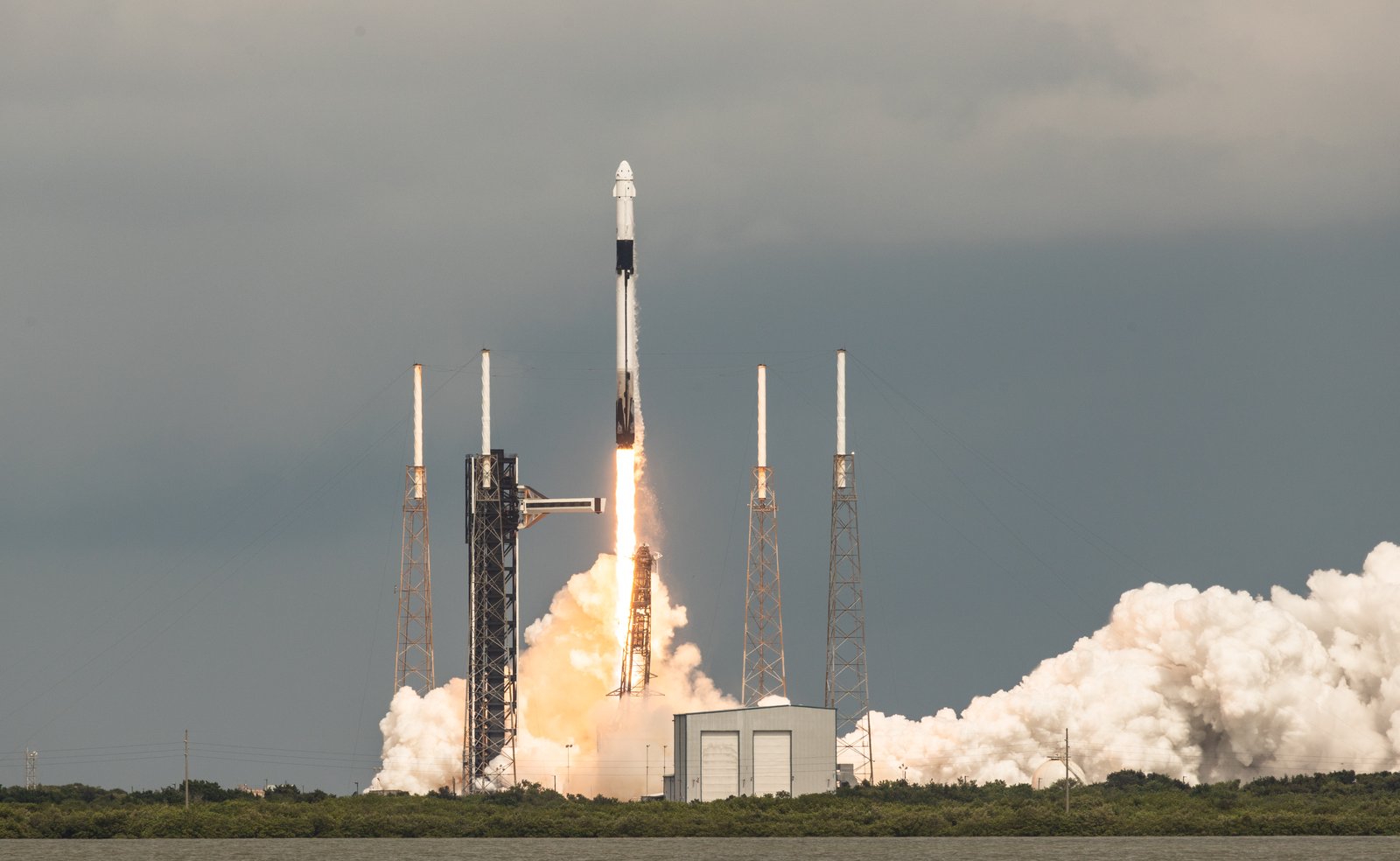
At 11:37 a.m. Eastern on September 10, a window opened over Vandenberg Space Force Base in California. Within it, a Falcon 9 lifted off carrying USSF-153, a classified mission for the U.S. Space Force, with a payload described only as an undisclosed number of low-Earth-orbit satellites.
The three-hour launch window was the day’s opening shot in a cadence that has become routine for SpaceX. The booster on this flight, designated B1081, was making its twenty-seventh trip to space, and it was scheduled to land on a recovery ship in the Pacific Ocean after pushing the payload toward orbit.
Twenty-seven flights on one rocket was once unthinkable. When SpaceX first began recovering boosters, reusing them a handful of times was the goal. Now the company sends the same first stage up again and again, a practice that has driven down the cost of each launch and turned a manufacturing problem into a logistics one.
USSF-153 is part of a quieter side of SpaceX’s business. The company’s name is most associated with Starlink, the satellite-internet constellation that now numbers more than eleven thousand satellites in orbit. But national-security launches like this one have become a steady and growing share of the manifest.
This flight was SpaceX’s 104th Falcon 9 mission of the year, and 80 of those have been devoted to building out Starlink. The rest are split among commercial customers, NASA and the military, a portfolio that gives the company a reliability few competitors can match and revenue that does not depend on any single customer.
To put the number in context, no other rocket in the world flies anywhere near that rate. Rivals measure their annual launches in the tens, while SpaceX measures its own in the hundreds. That gap is the company’s most durable advantage, and it compounds: each flight feeds data back into the fleet and lowers the cost of the next.
Starlink itself has become a factor in national security, with the military among its customers and its terminals in use by government agencies around the world. The constellation that dominates the company’s launch manifest is also part of its standing with the Pentagon, which has come to rely on the connectivity it provides.
The military work is attractive for reasons beyond the fees. National-security launches carry the government’s stamp of trust, and the classified missions, whose details are never fully disclosed, are the clearest sign that the Pentagon has confidence in the vehicle. That confidence is built one flight at a time.
SpaceX’s relationship with the military has deepened over the years. What began as a challenger winning a share of Air Force launch contracts has grown into a position in which the company carries some of the country’s most sensitive payloads, and its rockets have become part of the infrastructure the military counts on.
The contrast with the company’s early days is sharp. SpaceX spent years trying to break into a launch market dominated by a government-favored incumbent, arguing that lower costs and faster schedules could serve the same needs. The 104th launch of the year, most of it commercial and much of it military, is the argument made concrete.
Vandenberg has become a second home for the company’s west-coast launches, handling flights to polar and low-Earth orbits that Cape Canaveral cannot serve as well. The base has seen its launch tempo rise as SpaceX’s Starlink work and government missions have multiplied.
The classified payload of USSF-153 will not be described in public, and that opacity is part of the point. The Space Force is building out its own constellation of small satellites, the kind of distributed architecture that is harder to disrupt than a few large spacecraft, and launches like this one are the steady drumbeat of that buildup.
Analysts said the mission reflects the military’s shift toward smaller, more numerous satellites that can be launched quickly and replaced cheaply. That shift favors a launch provider that can fly often and at low cost, which is precisely what SpaceX’s reusable fleet delivers.
The booster’s twenty-seventh flight is more than a technical curiosity. Each successful reuse validates the economics that underpin SpaceX’s dominance, and each one reduces the cost of the next. The recovery attempt on this flight, like the ones before it, is an investment in a machine that pays for itself many times over.
For the Space Force, the launch is one more node in a constellation it has not publicly detailed. For SpaceX, it is another line in a manifest that grows busier each year. Both parties need the other, and both now operate on a schedule that treats a launch a week as unremarkable.
The window opened in the morning and closed three hours later, and somewhere in the Pacific a ship waited to catch the returning booster. The satellites aboard are now on their way, their purpose classified, their delivery another entry in a record that is rewriting what a launch company can do in a single year.