The form went up quietly before Tesla’s September 3 event in Austin, asking businesses whether they wanted to buy robotaxi fleets, mobility hubs or charging infrastructure. By September 9, the company said the response had reached tens of thousands of submissions, enough that the team was working through them in batches.
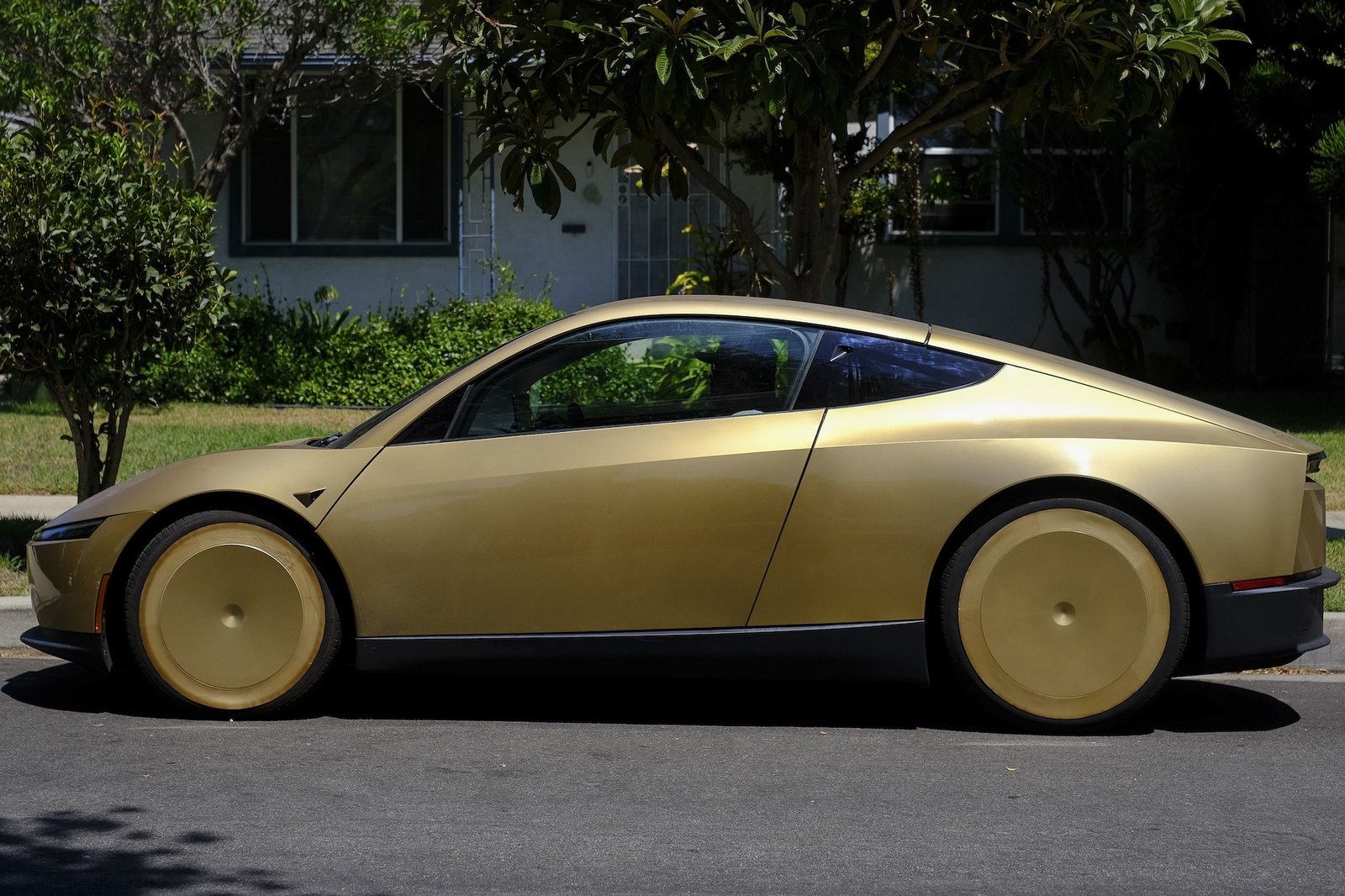
Eric Earley, Tesla’s head of Cybercab engineering, confirmed the figure on X, saying the interest forms would take time to sort into near- and medium-term plans. The volume is a measure of demand, but it also put a spotlight on a question regulators have been asking for a week: how exactly does Tesla plan to put a car with no steering wheel, no brake pedal and no mirrors on public roads?
The National Highway Traffic Safety Administration opened an audit inquiry on September 3 covering about 1,000 Cybercabs. The agency wants Tesla to explain its basis for self-certifying that a vehicle missing the controls federal standards have always assumed is compliant with Federal Motor Vehicle Safety Standards.
Tesla has relied on self-certification, the process by which an automaker declares its own compliance without waiting for the agency to pre-approve a design. NHTSA has now asked the company to show its work, according to people familiar with the matter, a request that sits at the center of the dispute.
The contrast with Tesla’s rivals is stark. Amazon’s Zoox took a different path in July, going through a formal exemption process before it received approval to deploy up to 2,500 purpose-built robotaxis a year. Zoox’s vehicle also lacks a steering wheel, but the company asked permission rather than asserting compliance on its own.
Tesla has argued that the Cybercab is safe precisely because it removes the human, and that the controls being eliminated are the ones responsible for most crashes. The company’s design removes the parts that fail when people make mistakes, the reasoning goes, and software handles the rest.
The audit lands as the robotaxi market has begun to shake out. Waymo, the Alphabet unit, runs commercial services in several cities and has logged more than two hundred million driverless miles. Tesla is arriving late, and its bet has been that a lower-cost vehicle built at scale can undercut rivals who retrofit existing cars with expensive sensor stacks.
Regulators have not been the only ones asking questions. The Austin Fire Department has voiced a more practical worry: if a Cybercab with no steering wheel stalls in the middle of a road, first responders cannot simply hook it to a tow truck and drag it clear the way they would a conventional car.
The concern points to a gap between the vehicle Tesla is building and the world it will operate in. Emergency procedures, insurance rules and parking laws were all written around cars with a driver behind a wheel, and a car without one lands awkwardly inside every one of those systems.
The interest forms add another layer to the picture. Tesla has told businesses it can supply not just the cars but the infrastructure around them, including hubs where fleets charge and park. The Austin event was framed as the start of a commercial robotaxi service, and the forms are the funnel for the fleet sales behind it.
Elon Musk has said for years that Tesla’s future lies not in selling cars to individuals but in operating a network of autonomous vehicles that earn money around the clock. The Cybercab, a two-seat vehicle built for short trips, is the hardware for that bet, and the interest forms are the first hard evidence of buyer appetite.
Analysts cautioned that the tens of thousands of submissions do not equal tens of thousands of orders. A form is an expression of interest, not a contract, and Tesla has not disclosed how many inquiries have converted into deposits or signed commitments. The number is directional, not settled.
The regulatory fight is the more serious obstacle. If NHTSA concludes that Tesla’s self-certification was not valid, the company could be forced to halt deployment, redesign the vehicle or seek the same exemption process its rivals used. Any of those outcomes would push the robotaxi timeline further out.
Tesla has clashed with regulators before over self-driving claims, and the company has tended to treat the rulebook as a lagging indicator of technology rather than a fixed constraint. The Cybercab audit is the clearest test yet of how far that posture can stretch when the car itself no longer resembles what the rules describe.
For now, the company is moving ahead as though the certification will hold. It is sorting the interest forms, planning production and preparing for a service that would mark the first time Tesla operates vehicles it sells to fleet owners rather than to drivers.
Whether that service launches on Tesla’s schedule depends on the agency now reviewing its paperwork. The demand side appears to be there, measured in tens of thousands of forms. The supply side, and the legal right to run a car with no controls on public roads, is still being decided.