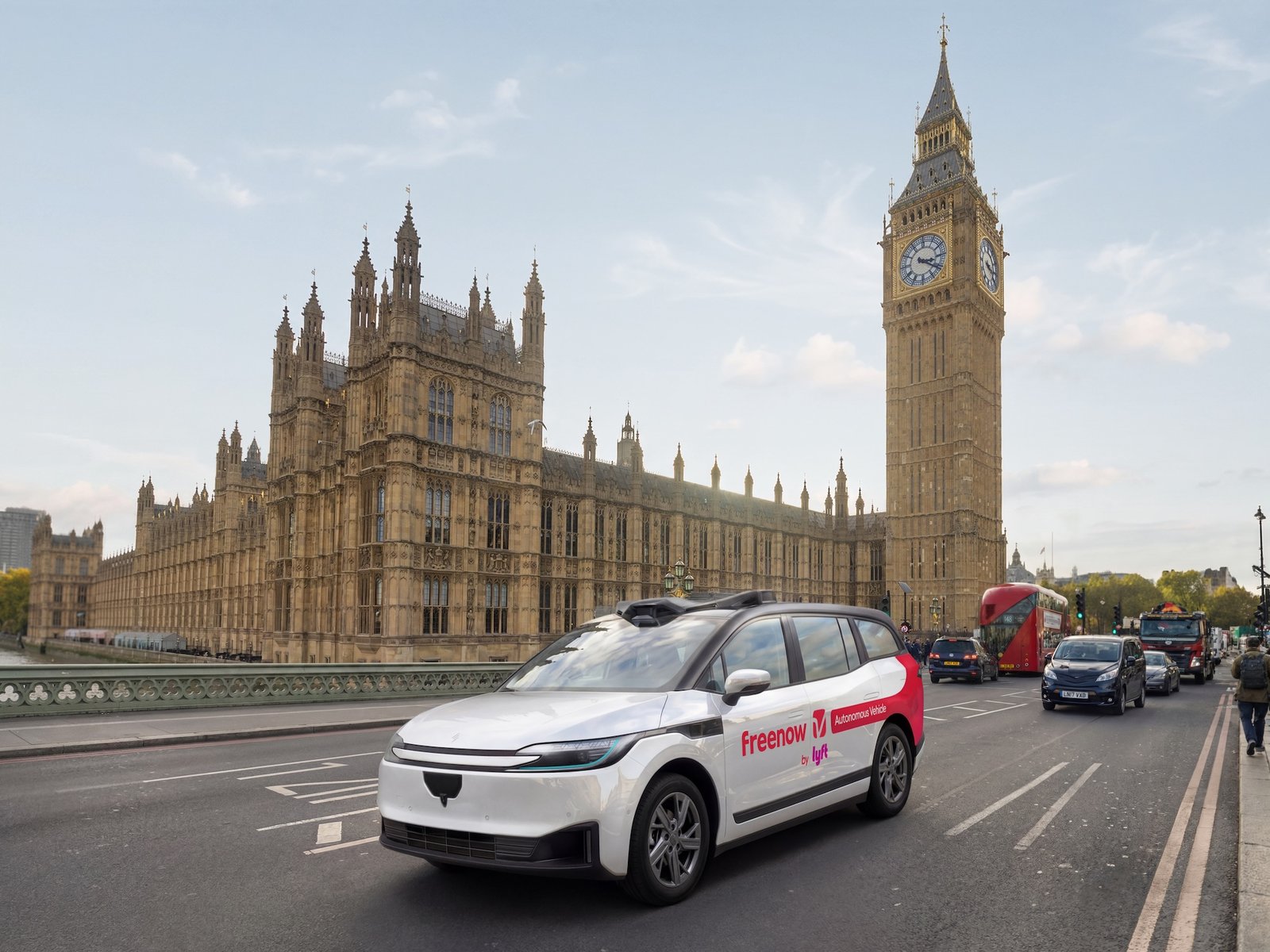
A rider in Nashville who opens the Lyft app and taps a destination may now find a car pulling up with no one behind the wheel. On September 9, Waymo’s driverless vehicles went live inside Lyft’s app, making Nashville the first city where Waymo dispatches through both its own app and a rideshare partner’s network at the same time.
The two companies said the launch lets a Lyft user be matched to a Waymo Jaguar I-Pace when the requested trip falls inside the service area, and the rider can switch the option off if they prefer a human driver. The vehicles are already running on Nashville streets through Waymo’s own app; the Lyft integration adds a second front door to the same fleet.
The arrangement splits the work along lines each company knows well. Waymo provides the self-driving system and the cars. Lyft’s subsidiary Flexdrive handles the charging, cleaning and day-to-day operations, the unglamorous work that keeps a robotaxi fleet running. In October, Flexdrive opens a dedicated 80,000-square-foot facility near Nashville’s airport to support the service.
The fleet will start small. The companies said the Nashville fleet would scale toward a target in the low triple digits, a modest number compared with the networks Waymo runs in cities such as Phoenix and San Francisco. The point of the partnership is less the size than the distribution, a second channel through which riders can summon the cars.
For Lyft, the deal is a way to keep a stake in autonomous vehicles without building them. The company tried to develop its own self-driving technology years ago, then sold the unit to a Toyota-backed group in 2021 and shifted to partnering. Lyft has said it wants to be the network that connects riders to whatever autonomous fleets emerge.
For Waymo, the partnership is insurance on the demand side. The company’s earlier relationship with Uber cooled, and having Lyft as a committed partner means Waymo is not dependent on a single rideshare network, or on riders downloading its own app, to fill its vehicles.
The numbers show what is at stake. Waymo now completes more than 500,000 paid trips a week and has logged more than two hundred million driverless miles. That scale is the product of years of slow expansion, and every additional city and partner extends a lead that competitors have found expensive to close.
Analysts said the two-sided dispatch model is a first for the industry and worth watching. Running a fleet through two apps at once raises questions about pricing, driver-earnings effects and how trips are prioritized between Waymo’s own riders and Lyft’s. Neither company detailed how the economics will be split.
Lyft has said it will lean on its network of roughly forty million riders to give Waymo volume it would otherwise have to buy with marketing. In exchange, Lyft gets a product no competitor can offer today at scale, a fleet of driverless cars that never takes a shift off.
The launch also signals how the robotaxi market is settling into shape. Waymo has chosen to expand methodically, city by city, rather than promising nationwide coverage overnight. Partnerships like the one with Lyft are the mechanism that lets it enter new markets faster than it could by building local operations alone.
For regulators, the Nashville expansion is another data point in a debate that is moving city by city. Waymo has had to win approval in each market where it operates, and the safety record it cites, built over hundreds of millions of miles, is its main argument for more of that approval.
Nashville was chosen for reasons that go beyond policy. The city’s geography and demand patterns suit short urban trips, and the airport connection, backed by the Flexdrive facility, gives the service a high-volume anchor that feeds steady rides. The companies are betting the city can be a template for other mid-sized markets.
What remains open is how far the dual-app model will spread. If it works in Nashville, the companies are likely to push it into other cities where both already operate, and to use it as the blueprint for markets where Waymo has not yet launched its own app at all.
The immediate effect is modest: a small fleet, one city, one new button in an app. But the structure behind it is larger. Waymo has built the technology and Lyft has built the demand, and for the first time the two are wired together in a way that could be repeated across a dozen cities.
Neither company has said how quickly the Nashville fleet will grow or whether riders will see meaningful wait times during the ramp-up. For now, the launch is a proof of concept, a demonstration that a robotaxi company and a rideshare company can share a city and a customer base without sharing a steering wheel.