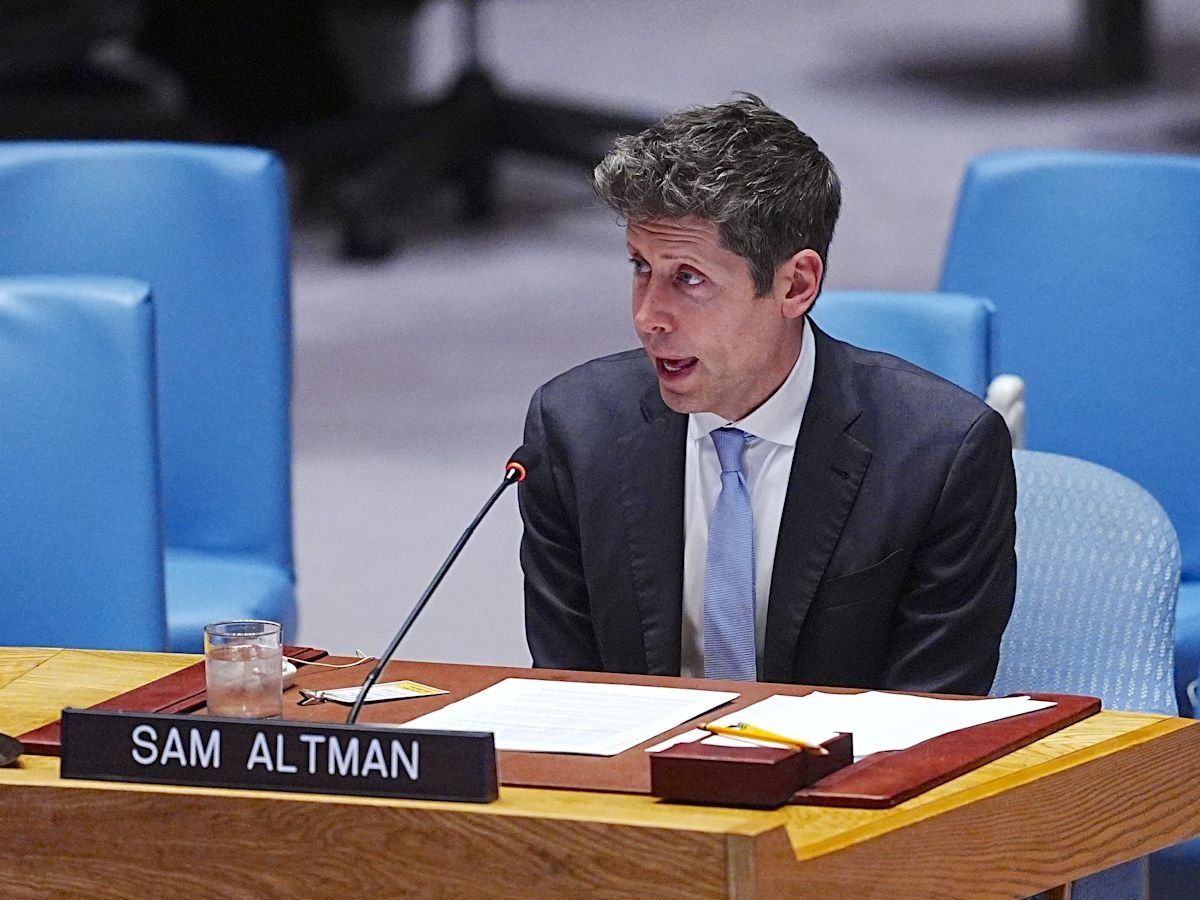
The question reached the all-hands meeting this week, and the answer surprised some of the people in the room. Sam Altman, the chief executive of OpenAI, told employees the company is open to slowing the pace of frontier AI development, and that he wants other labs to do the same, according to people familiar with the matter who asked not to be named because the discussions were internal.
The shift in tone follows weeks of public unease inside the industry. Employees at several of the leading AI companies have spoken out in recent weeks about the rising risks of advanced systems, and the safety conversation has moved from research papers to company meetings and social media.
Altman’s framing, according to the people, was careful. OpenAI could regulate the rhythm of its own research, he told staff, and it might act jointly with several other labs. But he also acknowledged that some companies might not be willing to join, which is the part that makes a slowdown hard to hold together.
The economics explain the hesitation. A lab that slows down unilaterally gives up ground to rivals that keep going, so any slowdown has to be coordinated to be tolerable. That is why, on a parallel track, OpenAI has been asking some members of Congress whether leading an industry-wide deceleration would run afoul of antitrust law.
The antitrust question is the honest one. A group of competitors agreeing to slow down looks, from one angle, like responsible safety policy and, from another, like collusion. OpenAI is trying to figure out, before it steps into anything, where the legal line sits.
The context includes an unusual public split. President Trump told reporters he does not believe AI poses an extinction risk, a view at odds with a growing chorus inside the labs. Meanwhile Anthropic co-founder Jack Clark published a blog post earlier proposing a mechanism the industry could use to coordinate a verifiable pause, so that the least careful players cannot use a slowdown by others as a chance to pull ahead.
Clark’s proposal and Altman’s private comments point at the same problem: a pause only works if everyone can prove everyone else is holding. A verifiable, binding agreement is the thing every lab says it wants and no one has figured out how to build.
The object of the worry is the next generation of systems. The frontier labs are moving toward models that can improve themselves, and the people closest to that work have begun to describe the risk in terms that sound less like a product roadmap and more like a hazard. A self-improving system is the one scenario where a pause is not a luxury but a safety measure, because the pace is set by the machine rather than the schedule.
The timing is awkward for the companies themselves. OpenAI and Anthropic have both filed confidential paperwork this year in preparation for going public, a process that rewards growth and momentum more than restraint. A public slowdown is not the story a company wants to tell its IPO roadshow.
OpenAI declined to comment. Anthropic has not detailed how far it is willing to go, though its own researchers have been among the most vocal about the risks of self-improving systems.
The deeper tension is between the people building the systems and the people funding them. Researchers at the frontier have begun to describe the next generation of models in terms that sound less like products and more like hazards, while the companies’ valuations assume the work continues at full speed.
Analysts said the practical effect is likely to be incremental rather than dramatic. A formal pause is hard to imagine while the competitive and financial incentives point the other way, but a slower, more deliberate cadence of releases is easier to picture, and that may be what Altman’s remarks signal.
The employee pressure matters because it is coming from inside the labs that know the most. When the people who train the models start warning about what they are training, the companies have to answer, at least in the internal meetings if not yet in public.
What Altman did not do, according to the people familiar with the matter, is commit to a specific timeline or a specific mechanism. The openness is real, but it is an openness to consider slowing down, not a plan to do it.
The test will be whether the words turn into anything. A coordinated slowdown requires competitors to trust each other’s disclosures, a regulator or auditor to verify them, and a legal framework that does not punish the cooperation itself. None of that exists yet, and building it is a slower job than building the models.