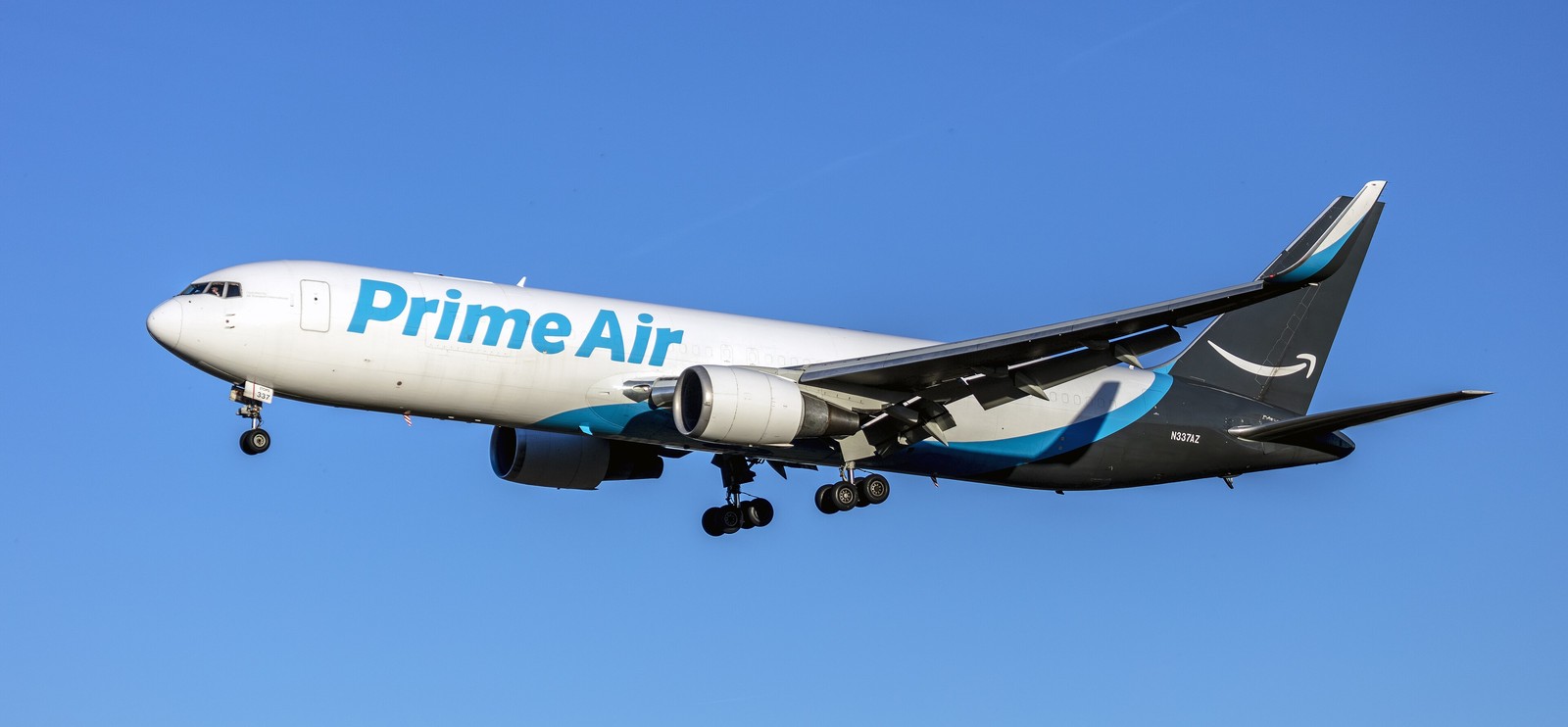
Amazon said on September 14 that it has suspended its relationship with 21 Air, the Miami-based cargo carrier that operated a freighter that crashed on landing at Miami International Airport. The Boeing 767-300 freighter, flying as Amazon Air flight 7598, overran the runway by about 1,300 feet and struck a cleaning vehicle beyond the runway edge. All five people in the vehicle were killed, and five others were injured.
The aircraft was 32 years old, according to regulators, one of the older freighters in Amazon’s network. Age alone does not determine safety, but the crash has focused attention on how Amazon uses a web of third-party carriers, some operating aircraft far older than the passenger jets flown by major airlines.
The National Transportation Safety Board said the pilots considered aborting the landing after touchdown, and that one minute before the plane touched down, a crew member noted that the speed was too fast. The board’s investigators have recovered the flight recorders and are examining why the aircraft touched down with too much speed to stop within the runway.
21 Air had flown for Amazon since 2024. The airline is one of several contract carriers that operate under the Amazon Air brand, a model in which Amazon controls the network while others own the aircraft and employ the crews. Amazon said the volume 21 Air had carried would shift to other carriers.
The suspension does not ground 21 Air’s entire operation, but it removes the airline from Amazon’s network while investigators work. Cargo carriers that lose their largest customer face immediate financial pressure, and 21 Air’s fleet and crew schedules depend heavily on the Amazon contract, according to people familiar with the arrangement.
The crash is the kind of event that forces a cargo operator to re-examine its standards. Amazon has built its air network rapidly over the past decade, moving from no aircraft to one of the largest freighter operations in the country by contracting with carriers like Atlas Air, ABX Air, and 21 Air. That speed has drawn periodic scrutiny from pilot unions and safety advocates.
The 767-300 freighter is a converted passenger aircraft, a common choice in the cargo industry because used passenger planes are cheaper than purpose-built freighters. Conversions add years of service to airframes that airlines have retired, and cargo operators prize them for their range and capacity. Their age means maintenance and inspection standards carry outsize weight.
The Miami airport is a major hub for Amazon’s Latin America traffic, and the crash occurred on a runway used heavily by freight operators. The accident shut down operations temporarily and added to a stretch of high-profile aviation incidents that has drawn public and political attention to air safety.
Amazon has said little beyond confirming the suspension and expressing sympathy for the victims. The company has not commented on the specifics of the landing or on whether it will review its standards for the age and condition of the aircraft its contractors fly. Regulators, not Amazon, lead the investigation.
The NTSB’s early signals point toward the final approach and landing rather than a mechanical failure. The pilots’ discussion of an aborted landing, and the note about speed, suggest the crew recognized the approach was unstable. Why the aircraft continued to a landing that could not be completed within the runway remains the central question.
Aviation safety experts said the sequence is familiar. Unstable approaches are a leading cause of runway overruns, and the industry has spent years training crews to abandon landings that are too fast or too high. Whether the 21 Air crew had the opportunity to do so will be a focus of the investigation.
The five people killed were workers on the ground, not passengers or crew. Their deaths underscore a risk that aviation safety discussions often understate: the people who service airports and aircraft work in close proximity to machines that, when they go wrong, do so with little warning and no margin for error.
For Amazon, the immediate response is operational. The company must move the freight 21 Air would have carried onto other aircraft, and its air network is designed to absorb exactly that kind of disruption. The longer-term question is whether the crash changes Amazon’s tolerance for older aircraft in its contracted fleet.
The suspension is a prudent step while the facts are established, but it is also a statement. Amazon’s brand rides on the reliability and safety of its logistics, and the company has moved quickly to distance itself from the carrier at the center of the crash. What it does next will signal how much the accident changes its air strategy.
Investigations of this kind typically take a year or more, and the NTSB will not assign a probable cause until its work is complete. In the meantime, the carrier, the airport, and Amazon will operate under the shadow of a crash whose full explanation has not yet been written.