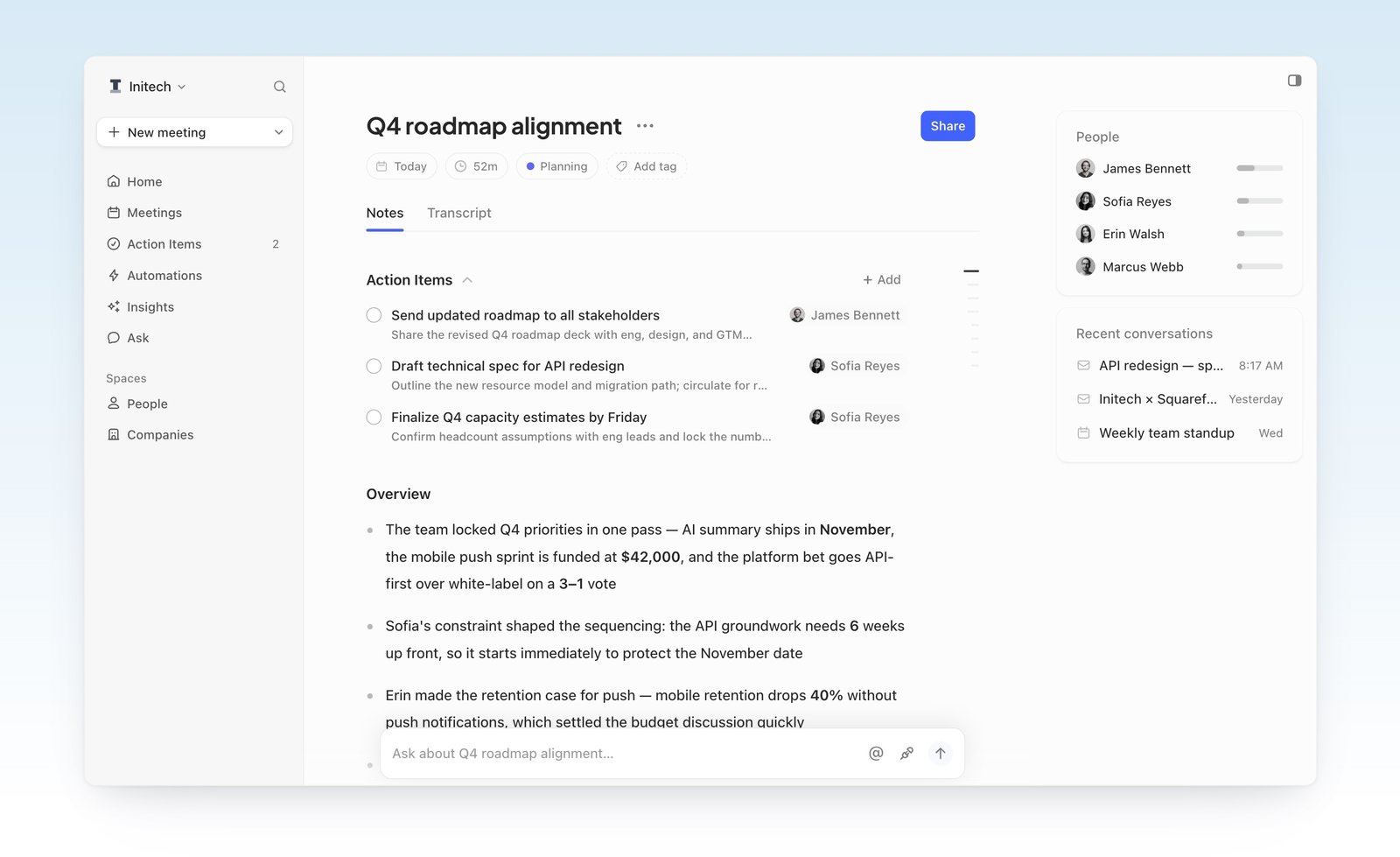
Superhuman tried to build its own meeting recorder first. The company, known for an email client that sells itself on speed, spent time experimenting with transcription features, only to conclude that the problem was harder than it looked. On September 14, Superhuman announced it was buying Fathom, a startup that already solved it, for an undisclosed sum.
Fathom fits a familiar profile. Founded in 2020 and backed by Y Combinator, the company raised more than $30 million from investors that include Zoom Apps Fund and Telescope Partners. Its valuation reached $94 million in 2024. Reddit’s chief executive, Steve Huffman, is among its individual shareholders. The product, an AI meeting recorder that produces summaries and transcripts, has grown to 400,000 monthly active users, and more than a million people have used its recording feature.
The purchase is the latest move in a productivity software market that has been reorganizing itself around AI. Superhuman built its reputation on email, an application people touch hundreds of times a day. Meeting notes are the adjacent territory, and they share a quality with email: they are generated constantly, they are tedious to produce, and an assistant that could handle them would be worth paying for.
Superhuman’s own history helps explain the move. The company, co-founded by Rahul Vohra, launched its email client through a long waitlist that became a marketing strategy in its own right, and it charges a premium monthly fee for a product that promises to make inboxes faster to clear. That customer base, small but loyal and willing to pay, is exactly the kind of audience a meeting tool would want.
Shishir Mehrotra, Superhuman’s chief executive, has been candid about why the company chose to buy rather than build. He said the company’s internal experiments convinced him how difficult the problem really is, and that the faster path was to acquire a team that had already spent years on it. It is an admission that, in software, a working product can be worth more than the pride of building one in-house.
The deal also reflects a broader shift in what productivity tools are expected to do. For years, the selling point of these applications was that they removed friction from tasks the user still had to perform. The new generation promises something different: the software does the work, and the human reviews the result. Meeting recording is the natural starting point, because the raw material is spoken and the output is a document.
The meeting transcription market has become crowded in a hurry. Otter.ai and Fireflies.ai built businesses around automated notes, while Zoom and Microsoft folded similar features into their own video and productivity products. For an independent player, the question is no longer whether the feature works but whether it can reach users before the incumbents bundle it away.
Fathom’s growth came through a generous free tier, a strategy that built a large user base before monetization fully kicked in. That approach is common among AI productivity tools, which give away enough value to become habitual and then charge for the features that save the most time. Superhuman is buying the technology, and the habit that comes with it.
Analysts said the acquisition is a sign of consolidation in a fragmented market. Dozens of startups have crowded into meeting transcription, and the ones with distribution, like Zoom and Microsoft, have been folding similar features into their own products. For a smaller player like Fathom, joining a company with a loyal, high-paying customer base may be the surest route to scale.
The question is how Superhuman integrates the two products. Email and meetings are different workloads with different habits, and acquisitions in software often fail on the integration rather than the idea. Superhuman’s bet is that the same user who wants a faster inbox wants a meeting recorder that runs in the background and produces notes without being asked.
The price, undisclosed, leaves room for interpretation. Fathom was valued at $94 million in 2024, and a sale at or above that figure would suggest the acquirer saw strategic value beyond the revenue. Superhuman has not said how much it paid, and neither company has disclosed the terms.
The meeting note is also a distribution channel in disguise. A tool that sits in every meeting a professional attends accumulates a record of decisions, deadlines, and commitments. Whoever owns that record owns a daily touchpoint with the user, and a daily touchpoint is the most valuable real estate in software. Superhuman is paying for that position.
For the broader market, the deal marks another step in a competition that is moving from writing better prompts to having AI do the work unprompted. Meeting content is where that shift begins, and Superhuman has decided to buy its way into the middle of it rather than start over.