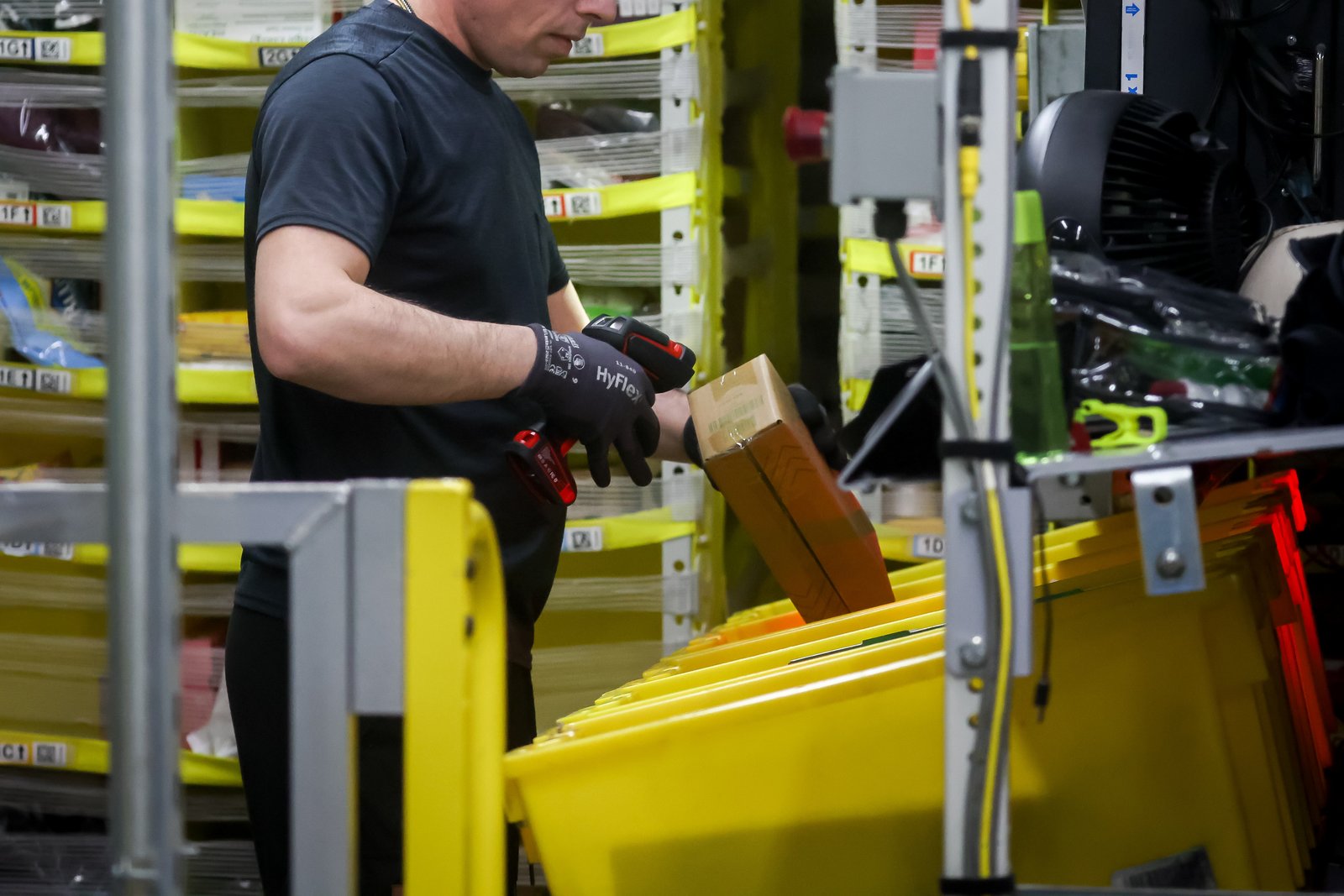
Amazon said on September 16 that it will raise the minimum starting wage for its core US operations jobs to 20 dollars an hour, bringing average pay in those roles to nearly 24 dollars an hour. The company also said it will expand its network of same-day delivery hubs so that 80 percent of American Prime members live within their reach.
The two announcements share a theme: Amazon is spending more on the physical side of its business at the same time it is pouring record sums into AI. The wage increase and the hub expansion both land on the operating-cost side of the ledger, separate from the capital spending on data centers that has dominated the company’s headlines.
Seeking Alpha estimated the wage increase will add roughly 1.5 billion dollars a year to Amazon’s costs. The company did not confirm that figure, but the arithmetic is straightforward: Amazon employs hundreds of thousands of people in the warehouses and delivery network where the 20-dollar floor applies.
The wage move is aimed at a familiar problem. Amazon’s fulfillment and delivery jobs have always churned through workers, and the company has repeatedly raised pay to keep its buildings staffed, particularly in a tight labor market and during the holiday season, when the network runs at full stretch.
The 20-dollar minimum is not new territory for Amazon. The company first hit that mark in 2018, then let its floor drift as it shifted its pay structure. The September announcement reestablishes the floor and adds a headline number the company can use in a market where warehouse and delivery workers have more options than they once did.
The same-day delivery expansion is a different kind of investment. Amazon has spent years shrinking the time between an order and a doorstep, and same-day service is the current front line of that effort. Building more hubs closer to customers shortens the last mile, but it also means carrying more inventory in more places, which is not cheap.
The company said its goal is to put 80 percent of US Prime members within range of same-day delivery. That is a substantial share of the country’s online shoppers, and it reflects Amazon’s view that speed, not just price and selection, is what keeps Prime members paying the annual fee.
Amazon also said its Alexa+ assistant has launched in India with support for Hindi, another step in the company’s effort to make its voice assistant useful outside English-speaking markets. The India launch is small compared with the wage and logistics news, but it signals where the company is looking for its next wave of customers.
The wage increase and the hub expansion sit awkwardly next to the AI narrative that has lifted Amazon’s stock. Investors have rewarded the company for its spending on data centers and chips, which they read as a bet on the future. Higher wages and more warehouses are bets on the present, and they carry none of that glamour.
Analysts said the announcements are unlikely to alarm investors on their own. Amazon’s operating margin has room to absorb 1.5 billion dollars a year, and the company has a long record of spending on logistics and watching it pay off in market share. The cost of the wage hike is modest against a retail and cloud business that generates hundreds of billions in revenue.
The bigger question is whether the two spending streams can keep growing in parallel. Amazon’s AI capital spending is climbing into the tens of billions of dollars a year, and its logistics network is expanding again. For years the company has funded both out of the cash thrown off by its cloud business, and that arithmetic still holds for now.
Amazon’s warehouse jobs have become harder to fill as the labor market has tightened. The company competes with Walmart and Target, which have both raised their own starting wages, and with the delivery services that have sprung up around the gig economy. A 20-dollar floor keeps Amazon in the middle of that bidding.
The same-day hub expansion is the latest turn in a logistics arms race that has defined Amazon for a decade. The company once promised two-day shipping, then one-day, and it has now made same-day the standard it competes on. Each step toward the customer costs money, and Amazon has been willing to spend it.
The India launch of Alexa+ in Hindi extends a strategy Amazon has used for years: bring the product to a large market early, in the local language, and let scale follow. India is one of the company’s most important growth markets, and Hindi is spoken by hundreds of millions of people.
Analysts said the wage and logistics announcements will matter more over quarters than days. Amazon tends to spend ahead of demand and harvest the results later, and the company’s investors have grown used to watching costs rise before revenue follows.
The wage announcement, in the end, is a signal about where Amazon sees its competition. The company is not just racing other retailers on price and speed; it is competing for the warehouse and delivery workers who make that race possible, and it has decided those workers will cost more this year.