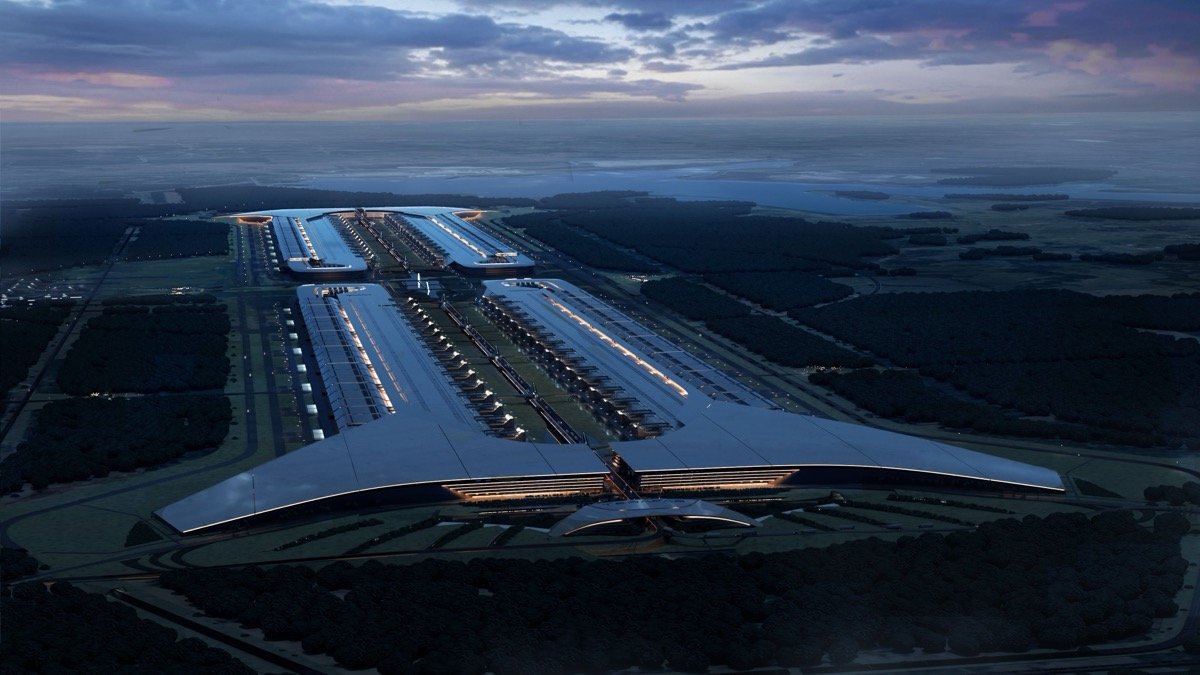
The name “Terafab” sounds like exactly what it is: a factory for building chips at the scale of a trillion operations. Elon Musk gave the name to his chipmaking plans, and now Tesla and SpaceX are in federal court to keep it. The two companies filed suit on September 16 against an Illinois nanotechnology firm, arguing that the other company’s use of the name creates confusion.
The suit is a trademark dispute with a larger meaning underneath it. The name is attached to Musk’s plans for building his own chips, and chipmaking is a piece of the AI story Tesla has been telling. The fight over the name, in that sense, is a fight over the territory around the plans, and the companies are trying to make sure no one else can plant a flag on the same ground.
Trademark law is built on confusion. The question in a case like this is whether a reasonable customer, seeing the other company use “Terafab,” would assume it was connected to Tesla or SpaceX. The two companies are arguing that the answer is yes, and that the Illinois firm’s use of the name would mislead people about who is behind it. The defendant will argue, as defendants always do, that the fields are different enough that no one would be confused.
The details of the other company’s business will matter. If it makes nanotechnology products that could be mistaken for Tesla’s or SpaceX’s work, the confusion argument is stronger. If it operates in a field far from chips and rockets, the argument is weaker. The case will turn on how close the two uses actually are, and that is a factual question the court will have to sort out.
The chipmaking plans themselves are the reason the name is worth fighting over. Tesla has been building its own chips for its vehicles and its AI ambitions, and bringing more of that in-house is part of the company’s broader argument that its manufacturing depth makes it a technology company as much as a carmaker. A name like Terafab is a signal of that ambition, and signals are worth defending.
SpaceX’s presence in the suit is the more interesting detail. The rocket company and the carmaker have shared ownership and a shared chief executive, and they have filed this one together, which suggests that the Terafab plans are shared, or at least that the two companies coordinate on the intellectual property that touches Musk’s ventures. A joint filing is a statement that the name belongs to the group, not to one company.
The timing is notable for what it implies about the plans. Companies do not sue to protect a name for a project they are not serious about. The suit is evidence that the chipmaking effort has moved far enough along that the name has value, and that Tesla and SpaceX are willing to spend legal money to keep it clean.
Trademark disputes of this kind usually end in a settlement rather than a trial. The cost of litigation often exceeds the value of the dispute, and the parties typically find a way to divide the field or change one name. But a settlement requires the defendant to agree to stop or alter its use, and that agreement is not free. The question is how much the name is worth to each side, and who blinks first.
The outcome will be watched less for its legal novelty than for what it says about the seriousness of Musk’s chip plans. A defended trademark is a public commitment, and the companies have now made one. The name Terafab, and the factories it describes, are something Tesla and SpaceX are willing to go to court over, and that fact is as much a signal to investors as it is to the defendant.
The broader context is the semiconductor self-sufficiency that Musk has been pushing across his companies. Tesla designs chips for its vehicles and for the AI systems that drive them, and SpaceX has its own needs for specialized silicon. A shared chipmaking capability, under a shared name, would serve both, and that is presumably why the two companies are filing together. The name Terafab is meant to describe that capability, and the lawsuit is meant to make sure the name means one thing and one thing only.
There is a strategic logic to defending the name early. Trademark rights grow stronger with use and weaken with neglect, and a company that waits too long to challenge a confusing use can find that it has let the name slip into generic or shared use. Tesla and SpaceX are moving now, while the name is still young, which is exactly when a trademark should be enforced. The timing suggests the companies’ lawyers understand the value of the mark, and the companies’ executives understand the value of the plans it describes.
The Illinois firm’s defense will be a test of how the market reads the name. If “Terafab” is understood as a generic description of a fabrication facility at tera scale, the defendant has room to argue that no single company can own it. If the name is understood as Musk’s coinage, attached to his ventures, the plaintiff’s case strengthens. The court will have to decide which reading matches how the word is actually used, and that decision will shape whether the name stays exclusive or becomes common property.