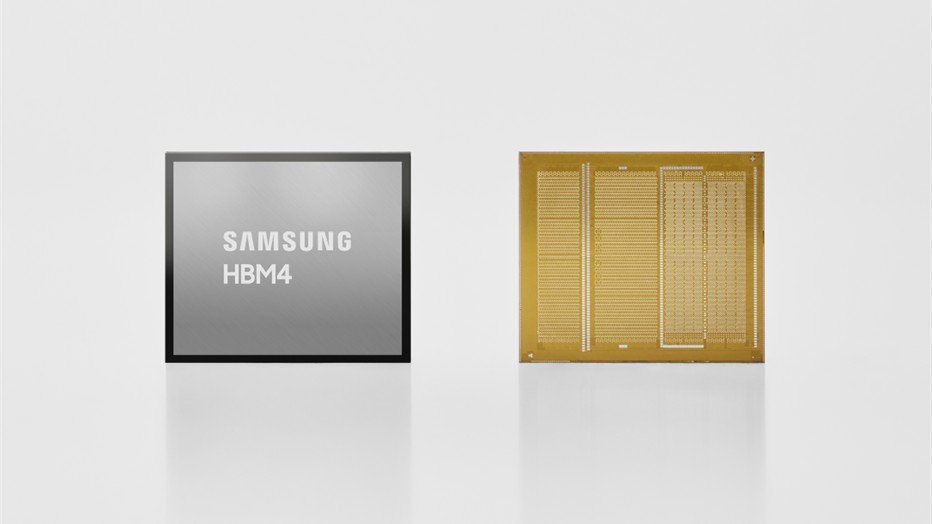
Samsung Electronics has stabilized the yield on its sixth-generation HBM4 memory at roughly 80 percent, according to a report in the Seoul Economic Daily, a level that lets the company shift its focus from making the chips work to making them at scale. The report, which cited the company’s internal expectations, said Samsung now plans to at least double its output of HBM4-series products next year from this year’s level.
The number matters because HBM, or high-bandwidth memory, is the memory that sits next to the AI accelerators sold by Nvidia and others, and it has become the scarcest and most profitable slice of the memory business. Yields determine how much of that capacity a manufacturer can actually sell, and Samsung has trailed its Korean rival SK Hynix in the HBM race for years. An 80 percent yield, sustained, would mark a material step toward closing that gap.
Samsung’s stated plan, according to the report, is to increase wafer input by about 40 percent next year, with the HBM4 family, including the upgraded HBM4E variant, growing to account for nearly 80 percent of the company’s HBM shipments. Overall HBM supply from Samsung would rise by about 40 percent, and samples of HBM4E have already been sent to customers for validation, the report said.
The shift from yield to volume is the turning point Samsung has been working toward. For the past two generations of HBM, the company has struggled with the advanced packaging and stacking techniques the product requires, falling behind SK Hynix in qualification for Nvidia’s most important products. A stable yield changes the conversation, because it converts HBM from a problem to be solved into a business to be scaled.
The glass carrier detail in the report points to how technically demanding the manufacturing has become. Samsung outsources the cleaning of the glass carriers used in high-layer stacking, and the report said the volume of that outsourced cleaning will expand from 20,000 wafers per month, a figure that will grow as production ramps. Glass carriers are part of the process for building the tall stacks of memory dies that HBM requires, and the detail is a reminder of how much of the HBM supply chain sits outside the most visible parts of the fab.
HBM’s economics have reshaped the memory industry’s priorities. A single AI accelerator can consume several times more memory than a conventional server, and HBM commands a price premium that has drawn all three major memory makers to allocate scarce capital toward it. Samsung’s push into HBM4 is, in effect, a bet that the AI buildout will keep pulling demand through next year and beyond, and that the company can finally capture a share of it proportionate to its overall size in memory.
Samsung remains the largest memory maker in the world by revenue, and its conventional DRAM and NAND businesses dwarf those of its rivals. But in HBM, the product that carries the highest margins, it has played catch-up, and the yield figure reported by the Seoul Economic Daily is the strongest public evidence yet that the catch-up is working. The company has said little officially about its HBM4 yield, and the report’s numbers have not been independently confirmed.
The competitive stakes are concentrated in a single customer relationship. Nvidia’s accelerators define the market for HBM, and qualification for those products is the gate every memory maker must pass. SK Hynix has been the primary supplier of the most advanced HBM to Nvidia, and Samsung’s ability to win a larger share of that business depends on proving its HBM4 and HBM4E meet the reliability and thermal standards the accelerators demand.
Samsung’s broader position has been under pressure beyond memory. The company’s foundry business has struggled to win leading-edge customers, and its leadership has acknowledged missteps across several divisions. A recovery in HBM would give the company a win in the one part of the semiconductor business where the market is growing fastest, and where Samsung’s scale should, in theory, be an advantage rather than a handicap.
The HBM4 ramp carries costs as well as revenue. Building the stacking capacity and securing the glass carriers and other inputs is expensive, and the yield gains Samsung has achieved are the product of months of engineering that do not appear on an income statement until the volume ships. The company’s doubling of output is a commitment to spend in pursuit of a market whose growth is assumed rather than guaranteed, a bet that the AI buildout will keep absorbing every chip the memory makers can produce.
The yield figure, if it holds, changes Samsung’s standing in the most valuable corner of the memory market, and it does so at a moment when the market’s growth is still accelerating. HBM demand has outstripped supply for years, and the companies that can ship volume reliably have been able to name their price. A Samsung that can finally claim both volume and yield is a different competitor from the one that spent two generations apologizing for falling short.