Apple built the device that put a screen on tens of millions of wrists. Now it is weighing whether a growing set of customers would rather have no screen at all.
The company is testing a screenless health and fitness tracker aimed directly at Whoop, the subscription wearable worn by athletes, according to a Bloomberg report that cited people familiar with the work. The project sits at what Apple calls a technology-investigation stage, meaning it is a research topic, not a commitment to ship.
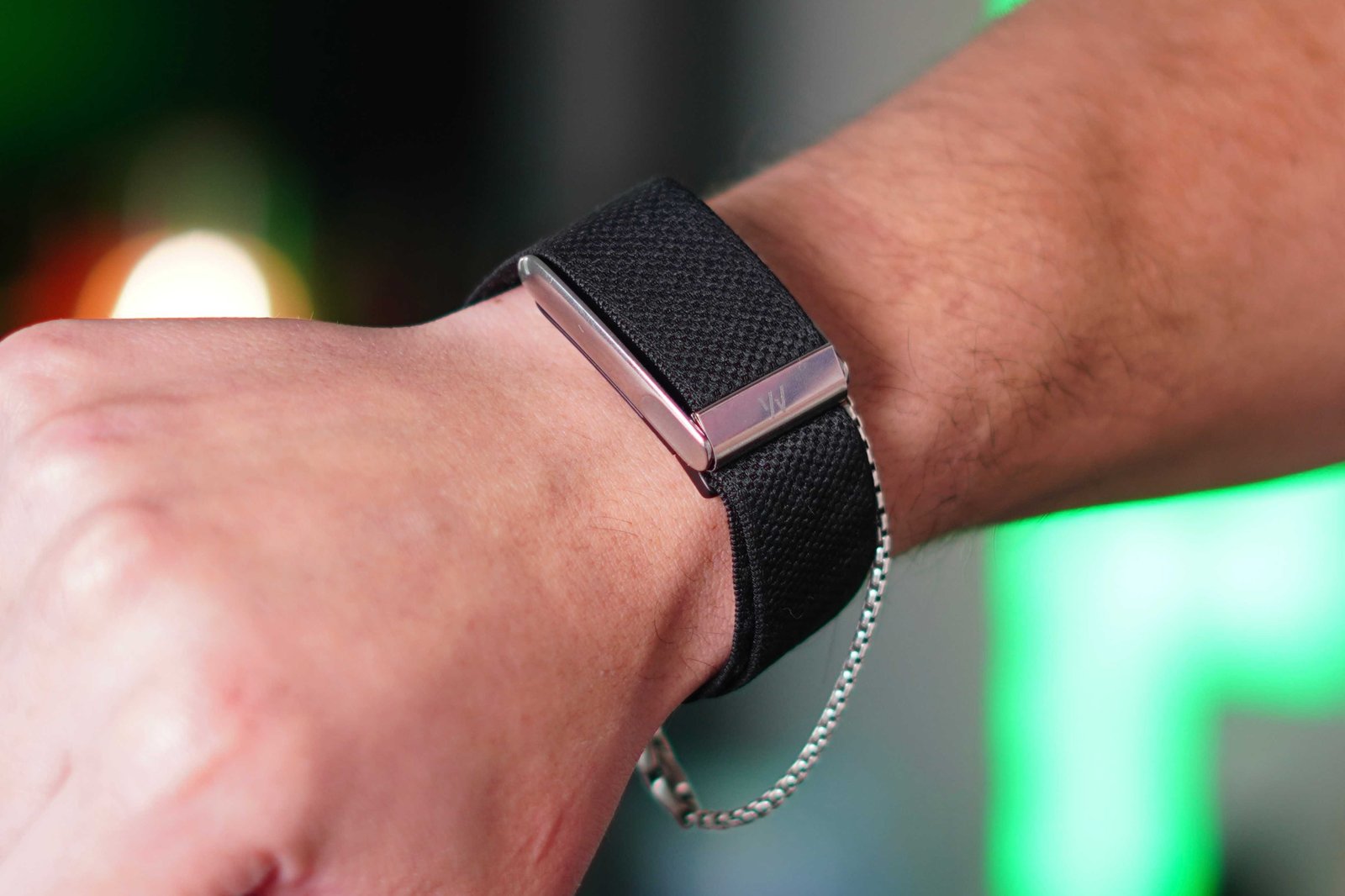
The prototype described in the report is a thin fabric band with a small module holding the sensors and computing hardware. There is no display, and the controls are pared back. That design would put Apple in a category it has watched from a distance for years, one where the point is recovery and strain rather than notifications and apps.
Apple has not decided whether to bring the device to market. Tim Cook and Eddy Cue have expressed support for the idea, the report said, but a launch would not come before 2028 at the earliest. The company has spent months on the research, and it could still choose to drop the project.
The work signals where Apple’s attention is drifting. A separate effort to build an AI pendant with a camera has been shelved, and the company’s energy has moved toward smart glasses and health devices, two markets where executives see a longer runway than another wrist gadget.
Whoop has built a loyal following on a model Apple never pursued. Founded by Will Ahmed in 2012, the company sells a screenless band paired with a monthly subscription of roughly $30 that turns sleep, strain and recovery into coaching. The device has no notifications, no apps and no clock face. That restraint is the product.
Whoop does not disclose a public subscriber count, but it has raised money at multibillion-dollar valuations and counts professional athletes among its users and early investors. Its pitch is simple: a band worn around the clock, charged while on the wrist, that removes the screen Apple made standard.
The band reads the signals Apple’s Watch has long emphasized, heart-rate variability among them, and distills them into a single daily verdict on whether a body is ready to train. Athletes pay for the simplicity. Apple’s Watch asks users to do more; Whoop asks them to do less.
Apple has been responding to that pressure on its existing Watch. The latest model carries more advanced heart-rate tracking and a readiness score that tells users whether their body is prepared for exercise. The redesigned Health app can estimate biological age from the data a user already carries.
The Watch itself began as a bet that a wrist computer could become a health device, and Apple spent years steering it in that direction. The Series 12 heart study, published recently, argued the Watch was the most accurate health wearable on the market, even as it showed how strong some rivals had become.
The screenless category is getting crowded. Google entered it with Fitbit Air, and Garmin sells fitness bands without displays. Apple, which has long defended the Watch as a general-purpose device, is now studying whether a simpler, cheaper band belongs beside it rather than replacing it.
For Apple, the appeal is partly financial. The Watch is a hardware business with a hardware margin. Whoop’s recurring subscription is a services business, the kind of revenue Apple has spent years steering Wall Street to value more highly. A band that charges users every month for health insights would fit that strategy.
It would also deepen Apple’s push into health, the area Cook has described as the company’s most important contribution over time. A device worn constantly, focused only on physiology, would feed a pipeline of features that already spans heart rhythm, sleep and aging metrics.
The risk is that Apple is chasing a niche. Whoop’s audience is athletes and the health-obsessed, not the mass market the Watch serves. A band with no screen competes for a wrist that many users would rather keep bare when they are not wearing a Watch, and it would sell in far smaller numbers.
Apple’s history with wearable experiments is mixed. Some, like the Watch, became franchises after rocky starts. Others never left the lab, and a screenless band could easily join that list. The company tests far more hardware than it ships.
Still, the direction is telling. Apple spent years pushing richer screens onto the wrist. A prototype with no screen at all suggests the company now believes the most valuable thing a wearable can do is watch quietly, gather data and let the phone do the talking.
Whether the band ever ships, the test is a bet that health, not the display, is where the next phase of wearable growth will come from. Whoop proved a niche could pay. Apple is now asking whether that niche is worth a slot in its own lineup.