The most valuable company in Europe makes the machines the world’s chip factories cannot do without. In the second quarter, it sold none of them in Europe.
ASML’s executive vice president for global public affairs, Frank Heemskerk, delivered the number plainly at an event in Amsterdam on Monday evening. “We’re not selling anything at all in Europe,” he said. “That’s because Europe isn’t investing and because no chip factories are being built there.”
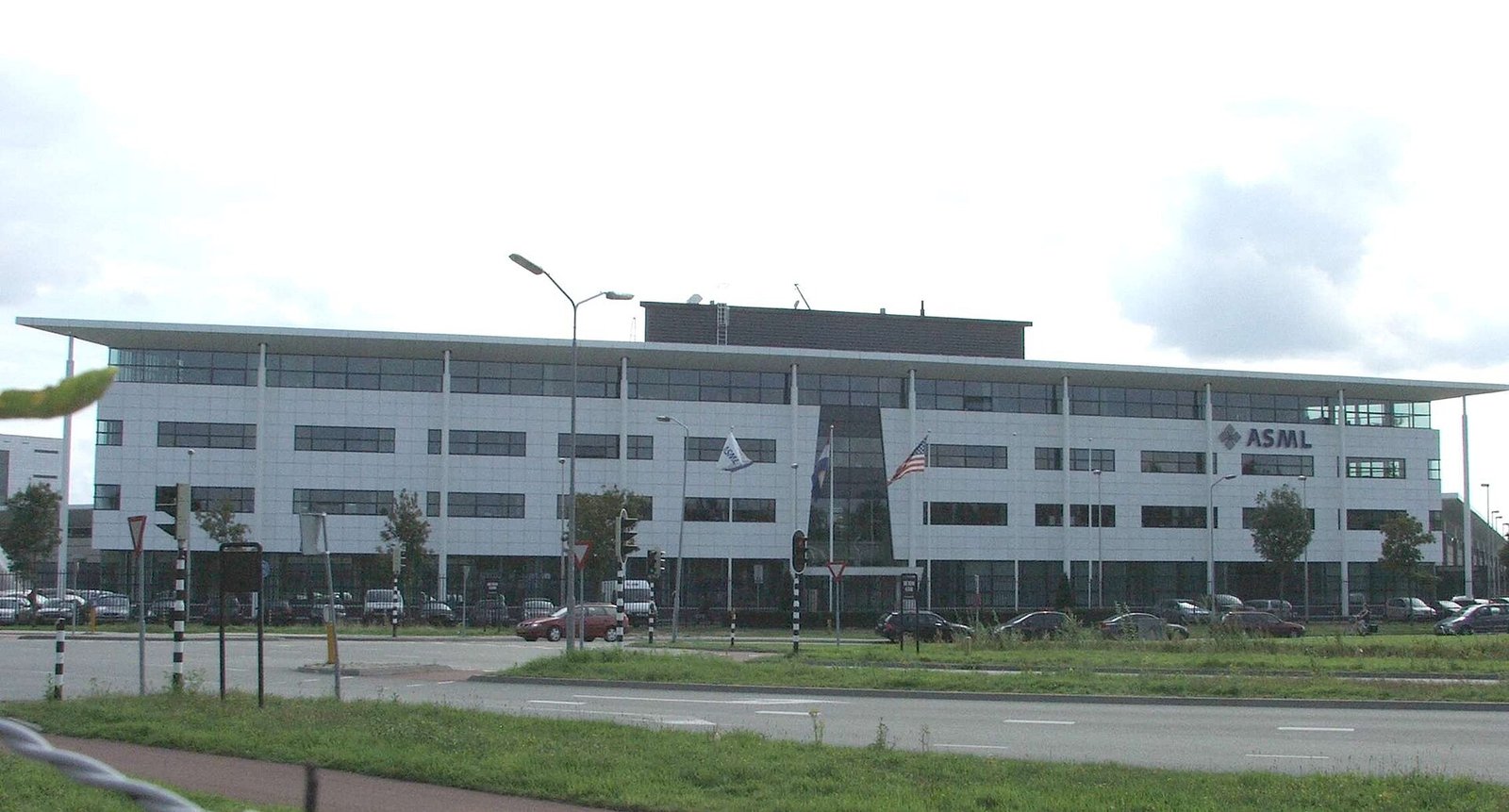
The statement puts a figure on a contradiction that has built for years. ASML, based in the Dutch town of Veldhoven, is Europe’s most valuable technology company and the only supplier of the extreme-ultraviolet lithography machines required to make the most advanced chips. Its customers are almost entirely in Asia and North America.
ASML began as a joint venture with Philips in 1984 and spent decades turning extreme-ultraviolet lithography from an engineering curiosity into the standard for advanced chipmaking. Each machine costs hundreds of millions of dollars and draws on parts from thousands of suppliers, a supply chain that took decades to assemble and that no rival has replicated. That monopoly makes the zero in its home market all the more striking.
Europe contributed zero to ASML’s net system sales in the second quarter, down from a combined 1 percent share for Europe, the Middle East and Africa in 2025. Chief executive Christophe Fouquet said in an interview earlier this year that Europe accounts for about 1 percent of sales while Asia accounts for roughly 80 percent.
The company still earns money in Europe. Its installed-base business, which includes field upgrades and servicing for machines already in factories, generated about 2.76 billion euros in the quarter, close to 30 percent of net sales. But new equipment, the business that signals where the industry is expanding, is going elsewhere.
Heemskerk warned that Europe risks being left behind as the United States, China and India pour money into domestic semiconductor manufacturing. The gap, he argued, will not close on its own. Governments that all want the company’s next factory expansions are bidding hard, he said, and Europe is not among them.
The warning comes as the European Union rewrites its Chips Act, the 43 billion euro program meant to double the region’s share of global chip production by 2030. Auditors have already cautioned that the goal may be out of reach. The policy has produced announcements but few fabs, and no foundry in Europe has committed to the kind of leading-edge capacity that buys ASML’s newest tools.
Export controls have complicated the picture further. Restrictions on selling the most advanced tools to China have narrowed the customer map at the same moment Europe is trying to widen its own manufacturing base, a bind the company has navigated carefully in public.
Fouquet has pushed for looser regulation and better financing channels, arguing that Europe cannot expect to keep its position while making it hard to build. The company has made clear it will not wait for Europe to catch up, committing to growth in the regions that are actually buying.
The shortage adds pressure. Fouquet has warned that the AI-driven chip shortage is far from over, a message that cuts two ways for Europe. Demand for ASML’s machines is strong, but it is being met by customers in Asia and America, not on the continent where the machines are designed.
ASML’s position is unusual in any industry: a company that controls a critical technology and sells none of it in its home region. The reasons are structural. Europe’s largest chipmakers focus on automotive and industrial chips, which do not require the most advanced lithography, and the region has not attracted a leading-edge foundry despite years of subsidies.
For European officials, the zero is an embarrassment with a clear cause. Building a modern fab costs tens of billions of dollars, and the companies that might do it have chosen Arizona, Japan and elsewhere. ASML cannot sell machines to factories that no one has decided to build.
The company’s tone has grown sharper as the gap has widened. Where executives once spoke of European competitiveness in careful terms, they now state the situation as a warning. The most advanced technology Europe produces is being consumed almost entirely by its rivals.
ASML is not asking for Europe to buy more machines out of loyalty. It is asking for a reason to build factories, and for the financing and regulation that would let someone do it. The company’s EUV tools remain effectively irreplaceable for cutting-edge chips, which is exactly why their absence from European factories matters so much. Until that changes, the second quarter’s number may become the norm rather than a shock.