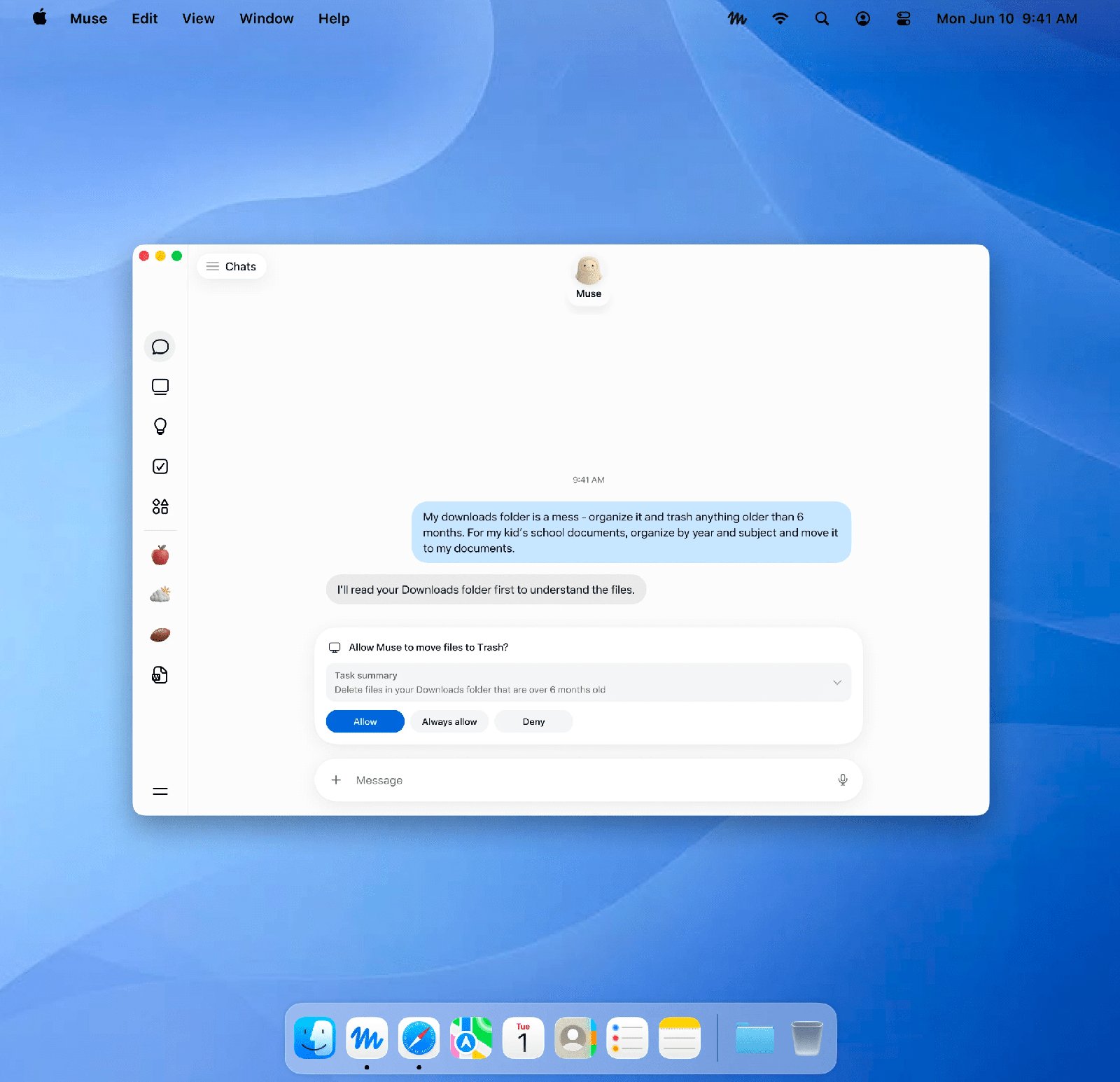
The voice answering on behalf of Meta’s newest product sounds like software, but for a slice of calls it isn’t. Behind a portion of the phone calls placed through Muse, Meta’s personal AI agent, sits an outsourced worker quietly doing the job the machine is supposed to do by itself.
Meta is testing a “human concierge” service for Muse, according to people familiar with the matter, with outside contractors handling some of the calls routed through the app. An internal notice shows the feature was opened last week to roughly half of Meta’s employees, who can opt out, the people said. Meta said the test is meant to collect feedback and tighten safety and privacy before the feature reaches the public.
The disclosure complicates the story Meta has been telling since it introduced Muse on Sept. 8. The agent was pitched as software that can open a browser, fill out forms, manage email and check out on shopping sites, a machine that acts instead of asking. In its first twelve days the product reached 2.8 million installs, according to Apptopia, outpacing ChatGPT’s early mobile launch and landing at the top of Apple’s U.S. App Store. On Sept. 21, Meta shares jumped 11.43 percent to $741.24, the biggest one-day gain in more than a year, as investors concluded that AI agents had gone mainstream.
The edges of that boom were already fraying. On Sept. 20, Amazon blocked Muse from shopping on its site, telling users that unauthorized AI agents violate its conditions of use. The same day, Shopify said it would let Muse handle checkout across its merchants, a move one publication called a rare win for AI. The concierge test suggests Meta’s answer to the friction is to route the hard cases to people.
That is where the worry begins, some employees say. People who tested the feature feared that handing calls to contractors could expose sensitive information, from account details to the contents of personal conversations, to workers outside the company, according to people familiar with the matter. A concierge who can place a call on a user’s behalf can also hear things the user never meant a stranger to overhear.
Meta said the test is narrow and aimed at learning how to make the feature safe before any public release. The company declined to say how many calls humans are handling, how the contractors are vetted, or what they are permitted to retain.
The arrangement itself is not new. The most impressive automation has long leaned on invisible labor; ride-hailing, food delivery and early voice assistants all depended on human judgment behind the scenes while advertising autonomy. What has changed is the breadth of the claim. Muse is marketed as an agent that can act across a user’s entire digital life, and the concierge layer is where that claim meets a call center.
Meta is not alone in racing toward this. OpenAI is building consumer agents of its own, and rivals such as xAI’s Grok Bot have joined the scramble. The competition has pushed the companies to ship before the safety questions can be fully answered, and the human-in-the-loop is emerging as the industry’s standard patch for what the software still cannot do.
The concierge layer also carries a cost. If humans must sit behind a product sold as automation, its margins look less like software and more like a call center, and Meta will eventually have to decide whether to absorb that expense or pass it to users. That arithmetic matters for a feature the company has not said it will charge for, and it complicates the economics of an agent whose entire pitch is doing the work for free.
For Meta, the stakes run beyond one feature. The company has bet its next chapter on Muse, and the agent’s appeal rests on the user’s confidence that it will do what it is told without spilling what it knows. Every human in the loop is both a fix for the agent’s limits and a hole in that promise.
Whether users accept the trade depends on what they believe they are getting. If the agent that books a flight is mostly a person, the product is a concierge service wearing an AI label, and its economics look very different. If the human handles only the last mile, the open question is how well the machine knows when to hand off.
Meta is expected to show a camera-less smart glass at its Connect event this week, a nod to the privacy backlash the agent has stirred. The company is walking a line between the agent’s promise of autonomy and the reality that trust, once lost to a leaked phone call, is hard to win back.
Meta has not said when the concierge feature might reach the public, or whether its existence will be disclosed to users at all. For now, the company’s most advanced assistant is still learning to pick up the phone, with a person standing by to finish the call.