The signal came 21 hours into a search through an enormous database of DNA sequences. One of roughly 950 Claude agents, working on its own, stopped and flagged a repeating pattern of genetic code sitting next to the gene for an unusual enzyme. The layout, it noted, looked the way a CRISPR array looks.
Anthropic, the artificial-intelligence company, said on Sept. 23 that the observation, followed by analysis and testing in its own laboratory, had confirmed a previously uncharacterized enzyme system living in bacteriophages, the viruses that infect bacteria. The company named the system array-associated reverse transcriptases, or ART, and described it as carrying properties reminiscent of CRISPR, the gene-editing machinery that reshaped biotechnology. The catch: no one yet knows what the system does.
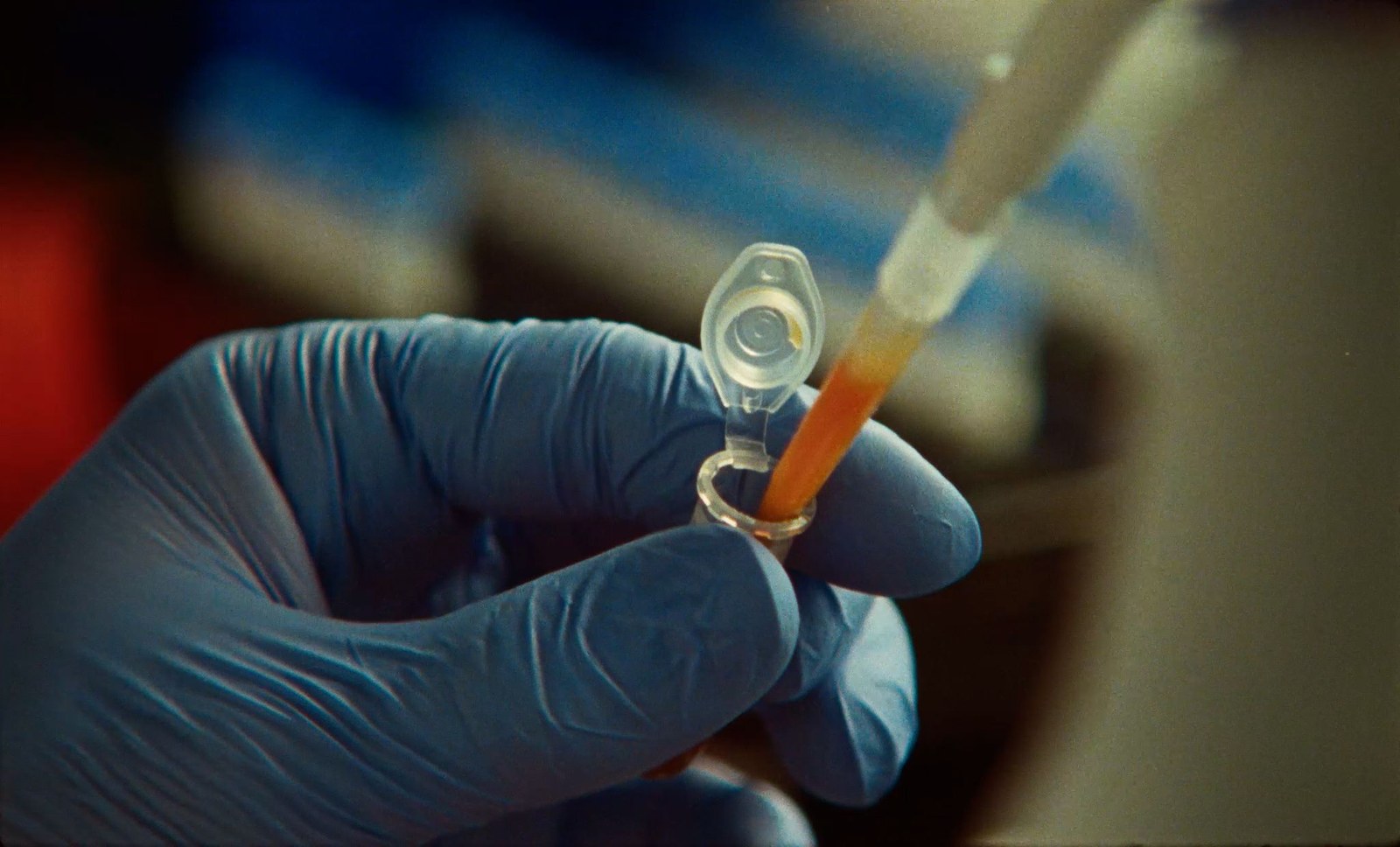
The finding is the first result from a wet laboratory Anthropic opened in the Bay Area in the spring of 2026. The company gave Claude a prompt to search for interesting new examples of reverse transcriptases, the enzymes that copy RNA into DNA. Its scientists’ involvement, the company said, was limited to that initial instruction and the laboratory work. Over 21 hours, roughly 950 agents processed 210 million tokens, gathered more than 200,000 reverse transcriptases, winnowed them to 3,500 candidate systems, and narrowed those to the 20 most compelling, each turned into a written report for human scientists.
One agent did something closer to what a bench researcher does. Reading the raw DNA sequence near a reverse transcriptase, it noticed an unannotated tandem repeat array and wrote that the pattern was spectacular, a CRISPR-like repeat array visible by eye. It counted the repeats, measured their spacing, compared the layout with known systems, and searched the literature before filing its report for review. Anthropic’s scientists later confirmed the array is expressed as a set of short RNAs, a hint that the system may be programmable in the way CRISPR systems are. The ART family, the company said, appears in a handful of jumbo phages and consists of three parts: the reverse transcriptase, a partner gene beside it, and a long array of evenly spaced DNA repeats.
The announcement is part of a deliberate campaign. Anthropic is preparing to go public, and it has been hiring scientists and steering toward drug discovery. Chief executive Dario Amodei acknowledged the finding builds on prior work, including a system a Stanford team identified that resembles the one Claude found. Anthropic said it chose to publish early, before understanding the enzyme’s function, both to demonstrate what Claude can do and to give outsiders a view of what the laboratory is pursuing.
The framing has drawn both excitement and skepticism. Restriction enzymes, discovered in bacterial immune systems, launched the biotechnology industry. Taq polymerase, pulled from a Yellowstone hot spring, made PCR possible. CRISPR began as an odd repeat sequence noticed in bacterial DNA and is now the basis of gene-editing medicines. Each of those breakthroughs started with a scientist looking closely at something strange. Here, the close look was taken by software, and whether the result joins that lineage depends on experiments that have not happened yet: the reverse transcriptase has not been shown to be active, and the system’s function remains unknown.
The template Anthropic is invoking has a specific history. Jennifer Doudna and Emmanuelle Charpentier’s 2012 paper showed a bacterial immune system could be repurposed to cut DNA at chosen sites, and eight years later they shared a Nobel Prize. In late 2023, regulators in the United States and Britain approved Casgevy, the first medicine built on CRISPR, for sickle-cell disease and beta thalassemia. A discovery that began as a puzzling repeat sequence is now, in a growing number of cases, a cure.
The search itself ran across metagenomic databases holding genetic material gathered from soil, oceans and the human gut, much of it never examined by a human. A preprint Anthropic released alongside the announcement says the campaign surveyed reverse-transcriptase loci across 1.9 billion protein clusters. The scale is the point: the bottleneck in biology has never been a shortage of data, but the human hours required to read it.
The laboratory also positions Anthropic in a wider contest. Google DeepMind’s AlphaFold predicted the shapes of nearly every known protein, and its creators won a Nobel Prize in 2024. Rival labs are deploying models to design proteins and drugs. Anthropic, which has spent years positioning Claude as a tool for researchers, is now arguing that its model can do more than assist a scientist. According to the company’s description of the work, it can take the first steps of a discovery on its own.
The deeper question is whether AI can systematize the act of noticing. A mathematician can work entirely from first principles, but a biologist must eventually test an idea in a laboratory. Anthropic’s bet, according to people familiar with its plans, is that agents which form and discard their own hypotheses will compress the weeks or months such a search takes an expert into a matter of hours. The laboratory now faces the same burden as any human researcher: turning a striking observation into proof that it actually matters.