For months, one of Boeing’s most important deals looked as if it might collapse. Turkish Airlines had threatened to walk away from an order for 150 of its 737 MAX jets in a dispute over engine maintenance, and Reuters reported in mid-September that Boeing was scrambling to salvage the agreement. On Sept. 23, the two companies closed it anyway.
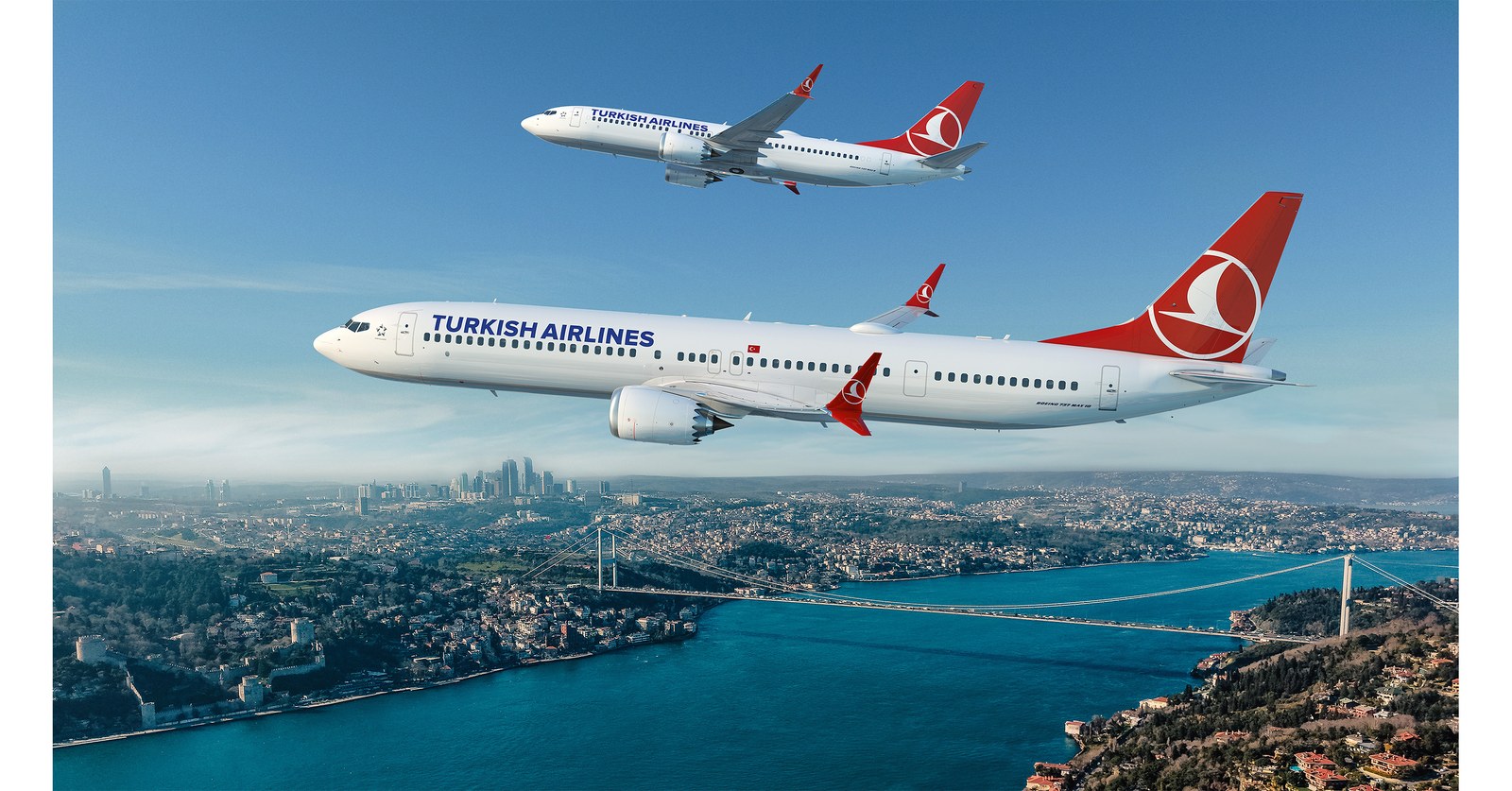
Boeing and Turkish Airlines finalized an order for up to 150 737 MAX airplanes, the carrier’s largest single-aisle purchase from Boeing. The agreement covers 100 firm 737-8 jets with options for 50 more, and includes substitution rights for the larger 737-10. Deliveries are scheduled between 2033 and 2037, and the deal was signed in the presence of Recep Tayyip Erdogan, the president of Türkiye.
The order is the conclusion of discussions that began in 2025, part of a package of 225 jets announced after Erdogan met U.S. President Donald Trump a year earlier. That package also included an order for up to 75 787 Dreamliners, the wide-body aircraft Turkish Airlines agreed to buy in 2025. The 737 MAX deal had stalled over the airline’s request for an industrial arrangement on engine maintenance.
The engine question mattered because the 737 MAX is powered exclusively by CFM International, a venture co-owned by GE Aerospace and France’s Safran. Four people familiar with the matter told Reuters that the disagreement over maintenance terms had held up the high-profile deal and that Turkish Airlines had threatened to abandon it. CFM declined to comment, and the dispute was ultimately resolved well enough for both sides to sign.
For Boeing, the order is a reprieve at a time when the company has been rebuilding the credibility of its single-aisle program. Stephanie Pope, the chief executive of Boeing Commercial Airplanes, called the agreement a reflection of the partnership’s trust, and Boeing noted the 737 MAX family cuts fuel use and emissions by about 20 percent compared with the planes it replaces.
The 737 MAX carries particular weight for Boeing. Two fatal crashes, Lion Air Flight 610 in October 2018 and Ethiopian Airlines Flight 302 in March 2019, killed 346 people and grounded the jet worldwide for nearly two years. The crisis that followed cost Boeing billions, reshaped its leadership and slowed its production lines, and the company has spent the years since trying to restore the model’s standing with airlines. A large order from a marquee customer is a measure of how far that recovery has come.
Turkish Airlines framed the purchase as a step in its fleet expansion. The airline, including its AJet low-cost subsidiary, operates more than 200 Boeing airplanes across the 737 MAX, 787 Dreamliner, 777 and 737 Next-Generation families, within a total fleet of 567 aircraft flying to 358 destinations. Its chairman, Murat Seker, said the new jets would bring efficiency and flexibility to its Istanbul hub.
The order also fits a broader shift in the airline’s strategy. Skift reported that the carrier’s new leadership has been trading scale for margins, taking a more measured approach to growth after years of breakneck expansion. Locking in deliveries only as far out as 2037, rather than ordering more aggressively, is consistent with that caution. Analysts said the pace of deliveries gives the airline room to adjust as demand evolves.
The single-aisle order arrives as global airlines scramble to refresh their narrow-body fleets, and it lands alongside a smaller purchase in the same week: Biman Bangladesh added 11 more Boeing airplanes to its plans, extending a run of demand for the 737 MAX from carriers in emerging markets. Boeing has been working to keep its order book full while it restores the production rates that fell during the grounding years earlier.
The Turkish deal matters beyond its size. Turkish Airlines has long been a bellwether carrier, a customer that buys from both Boeing and Airbus and whose choices other airlines watch closely. Its decision to expand its Boeing narrow-body order, after threatening to cancel it, suggests the airline sees enough value in the jets to set the dispute aside.
The single-aisle market remains one of the most contested in aviation, and Boeing is still playing catch-up to Airbus’s A320neo family, which has outsold the 737 MAX since the grounding. Winning back a major Airbus-capable customer such as Turkish Airlines, and doing so at a moment when the carrier’s new leadership is scrutinizing costs, gives Boeing a demonstration that its plane can still compete on economics rather than loyalty alone. The long delivery window also works in Boeing’s favor, giving it a decade of guaranteed work on a line it is trying to run faster.
Neither company disclosed the value of the agreement, and the options portion means the final tally could shift over the delivery years. But the order, secured after a public standoff, is the clearest sign in months that Boeing’s most troubled product line still has buyers willing to plan a decade ahead.