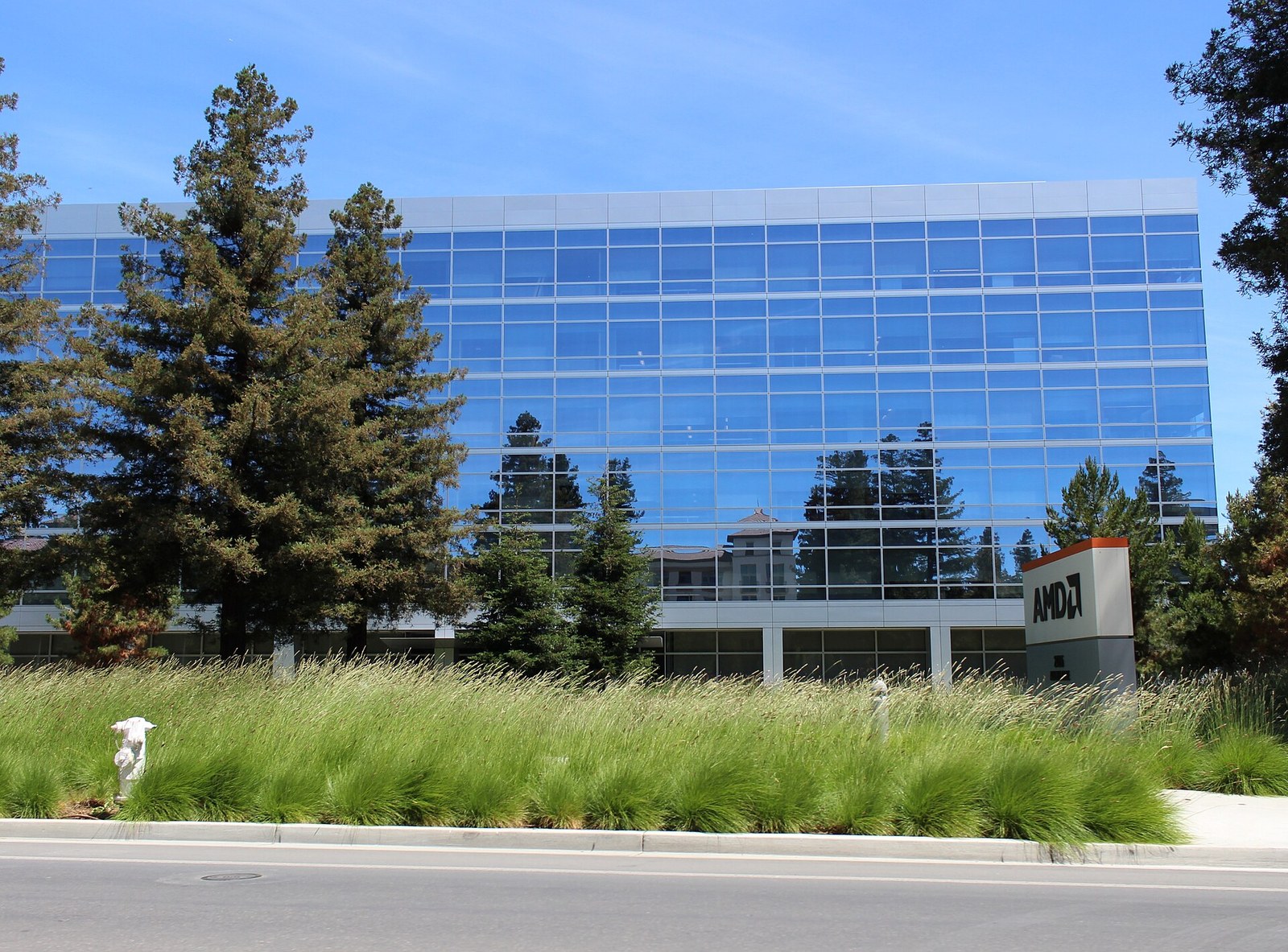
The woman who built the dataset that helped ignite modern AI spent this year telling audiences she wanted to be closer to the hardware. On September 28, she got her wish. AMD said it had signed a definitive agreement to acquire World Labs, the company Fei-Fei Li co-founded, in an all-stock transaction worth roughly $8.2 billion.
Li, the Stanford professor who created ImageNet and has been called one of the field’s godmothers, started World Labs in early 2024 with Ben Mildenhall and Justin Johnson. The company builds what it calls spatial intelligence models — systems that generate and simulate interactive three-dimensional environments from text, images and video.
Those environments serve two markets at once. They let creators produce worlds for games and film, and they give robotics companies a cheap way to generate the simulated settings in which a machine can learn. World Labs’ first product, Marble, is aimed at generating interactive scenes.
The deal, which AMD said it expects to close before the end of the year subject to regulatory approval, is a talent acquisition as much as a technology one. Li will become executive vice president and chief scientist at AMD, reporting directly to chief executive Lisa Su. Her co-founders and staff are part of the package.
Su framed the purchase in plain terms. Building the next generation of AI compute, she said, requires a deep understanding of how models evolve, and the acquisition brings AMD the world-class talent Li has gathered. The unspoken context is that AMD’s rival has already assembled much of that talent in-house.
Nvidia has Cosmos, an open-weight world model, and has spent years layering software and research on top of its chips. AMD, by contrast, has had text and video models but nothing comparable on the spatial side. Analysts said the purchase is an attempt to close that ecosystem gap rather than to add a product line.
The two companies were already close. World Labs has been training and optimizing its models on AMD GPUs since last year, and Li appeared at AMD’s CES presentation earlier this year — an early signal, in hindsight, of where the relationship was heading. A person close to the companies said the technical fit had been tested long before the bankers arrived.
The price reflects how fast the category has repriced. World Labs raised $1 billion earlier this year at a valuation reported at around $5 billion, according to people familiar with the matter. An $8.2 billion all-stock exit months later is a sharp move up, even by the standards of a hot market.
The deal also arrives at a moment when AMD’s stock has been running. Reports the same day put the company’s market value above $1 trillion, a threshold it crossed as investors rewarded its inroads against Nvidia in the AI chip market. Paying in stock lets AMD use that currency while it is rich.
For Li, the move is a bet on proximity. She has said publicly that she wanted to be closer to the hardware, a statement with a specific logic: world models are among the most compute-hungry systems in AI, and whoever controls the chips that run them controls how fast they improve. A researcher of her standing does not need a chipmaker’s balance sheet; she wanted a chipmaker’s silicon.
The risk is the classic one for hardware companies that buy research shops. AMD is acquiring a company whose value lives in people, and people can leave. Analysts said the reporting line — Li directly to Su — is designed to give her the authority to hold the team together, and to signal that this is not a bolt-on acquisition.
What AMD gets is not only a founder but a thesis. Spatial intelligence has become the industry’s preferred answer to the question of what comes after language models: the idea that the next frontier is systems that understand and act in physical space, not just text. Buying World Labs puts AMD inside that thesis with a name the whole field recognizes.
The question is whether a chipmaker can keep a research culture alive. The history of big companies absorbing celebrated labs is uneven, and the people who built World Labs came for independence as much as for funding. Su’s bet is that Li, given a direct line to the top and the chips to match, can preserve what made the company worth buying.
Whether the purchase works will not be visible for years. World models are still early, Marble is a first product rather than a proven business, and the payoff AMD is counting on — that models built on its chips will pull customers toward those chips — is the same bet Nvidia has been making, with a longer head start. The difference now is that AMD has a founder with the pedigree to make its version credible.