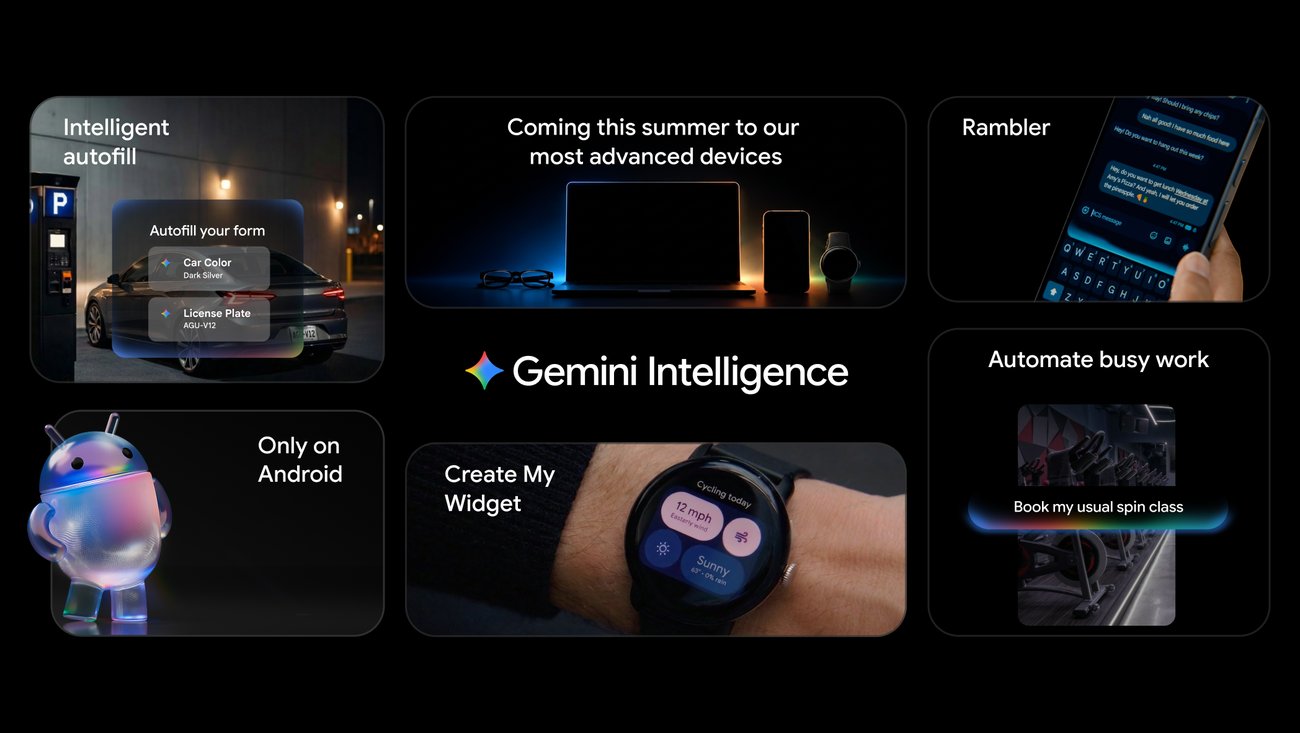
For a decade, holding down a button on an Android phone summoned Google Assistant, a voice that answered questions, set timers and controlled smart-home devices. This week, across the United States and Europe, users pressing that same button began getting something else: Gemini.
Google’s long migration of its voice assistant reached its final stage in recent days. Gemini has replaced Google Assistant as the default assistant on Android, and users report that the older helper has simply stopped working on their accounts and devices. The app has also removed the option to switch back, closing off the route that had let people retreat to the familiar assistant.
The change spans the whole surface of Google’s ecosystem. It covers phones and tablets, Wear OS watches, earbuds and Android Auto, which means the assistant that lived in a car dashboard or on a wrist is gone along with the one in the hand. Users in the United States and Europe were among the first to notice the shift, and the accounts were switched over without much ceremony.
In the same week, Google made a second change to the Gemini line. The company said it would replace Gems, the customizable AI personas inside Gemini, with a new framework called skills. The old system of custom bots is being folded into the skills structure, a sign that Google is reorganizing how users build and share specialized assistants rather than abandoning the idea altogether.
Taken together, the two moves point in the same direction. Google is pulling its scattered AI entry points under a single Gemini brand, consolidating a decade of assistant products into one place. The company spent years running Assistant and its AI models as parallel products, and the result was two assistants that overlapped and confused users about which one to call.
The retirement of Assistant has been gradual but is now effectively complete. The assistant first appeared in 2016 and became the default voice on Android phones and Google Home speakers, accumulating what Google has called hundreds of millions of users. Its replacement by Gemini has been rolling out for more than a year, with the switch-back option lingering until now.
Assistant arrived at a moment when Google was racing Amazon’s Alexa and Apple’s Siri to own the home and the car. It won a large share of that race and became the default answer to a spoken question for a generation of users. Gemini is the successor to a different lineage, the chatbot work that began with Bard and later took the Gemini name, and the two product families are now being forced into one.
Google has a lot riding on the transition, and not only in devices. Assistant became the front door to Google’s search business on phones and in homes, and replacing it means handing that front door to a model the company is still teaching. The risk is that a user who finds Gemini lacking will not sit and wait for it to improve; they will ask a different assistant.
The migration carries real costs for users who built routines around the older assistant. Assistant’s integration with smart-home controls, reminders and media playback was deep, and not every one of those behaviors has a one-to-one equivalent in Gemini. Google has argued that the new assistant does more, but the loss of the familiar tool has produced a wave of complaints in forums and on social media from people who found their devices acting differently overnight.
For Google, the consolidation is partly a bet that a single assistant brand will be easier to sell than two. It also reflects the competitive pressure from OpenAI and Apple, both of which have pushed their own assistants deeper into devices and operating systems. Google cannot afford to maintain a legacy assistant while its rivals pour resources into one.
The Gems-to-skills change suggests Google is not just consolidating but rebuilding. Gems let users craft their own assistants with specific instructions, while skills recast that idea as a set of capabilities the main assistant can call on. The shift is less a product cancellation than a reorganization, and it removes a second competing surface inside the Gemini app.
For Google, the stakes go beyond a product name. The assistant is how the company reaches users who never open a browser, and losing that touchpoint to a rival would cost more than any single app. Consolidating on Gemini is an admission that Google can afford only one answer to the assistant question, and that it has chosen the model over the decade-old product.
What is left is a cleaner product line and a less forgiving one. Every user who relied on Assistant now has to learn Gemini, and every flaw in the new assistant lands harder because there is no old one to fall back on. Google has bet that clarity is worth the disruption, and the next few months will show whether its users agree.