Brett Ostrum fielded the question the way an executive does when the answer was decided long before the question was asked. Would Microsoft build a cheap Surface laptop to answer Apple’s MacBook Neo? No, he said. Surface would leave that ground to someone else.
The question has followed Microsoft since March, when Apple introduced the MacBook Neo, a 13-inch laptop starting at $599 that runs on the same chip as the iPhone 16 Pro. It was Apple’s first honest attempt at a budget Mac, and it landed in a market Microsoft has carefully avoided.
Ostrum, Microsoft’s corporate vice president for Surface, told Windows Central in an interview at Qualcomm’s Snapdragon Summit that the decision was deliberate. Microsoft, he said, had seen the Neo coming “long before it showed up” and had already asked itself whether Surface needed to respond.
The answer was no. Surface would not launch a low-price product to compete directly with Apple’s new laptop. The company chose instead to leave the low-cost segment to its Windows hardware partners, the PC makers who already fight over it.
That does not mean the pressure went unanswered. Microsoft acknowledged that it has heard from media, retailers and partners calling for Surface to move down-market, toward the price point where most laptops are actually sold. Ostrum said the company would consider that feedback seriously.
But he was clear about the ceiling on that consideration. Surface does not need to compete in every category, he said, and the reasoning was the same one the company has used before — that its partners already cover a market, and Surface has nothing to gain by joining them.
The logic is not new at Microsoft. Ostrum has made the same argument about gaming PCs, which Surface has never shipped because PC makers like Asus and Lenovo already serve that market well. The MacBook Neo, in his telling, is simply another lane that already has traffic.
The strategy draws a sharp line around what Surface is for. Microsoft built the brand more than a decade ago as a showcase for Windows, a premium line that would show PC makers what the software could do. Competing on price with a $599 MacBook would pull it away from that role.
Surface began in 2012 as a tablet that Microsoft hoped would reset the hardware conversation around Windows. Over the years the line grew into laptops, desktops and convertibles, but it never strayed into the bargain bin. The cheapest Surface has always cost more than the cheapest Mac, and that gap is now a matter of policy rather than accident.
It is also a bet that the low end is not where Microsoft wins. The company makes money licensing Windows to every PC maker, not from the thin margins of cheap hardware. Letting HP, Dell, Lenovo and the rest absorb Apple’s challenge keeps Microsoft’s hand clean while its partners fight the price war.
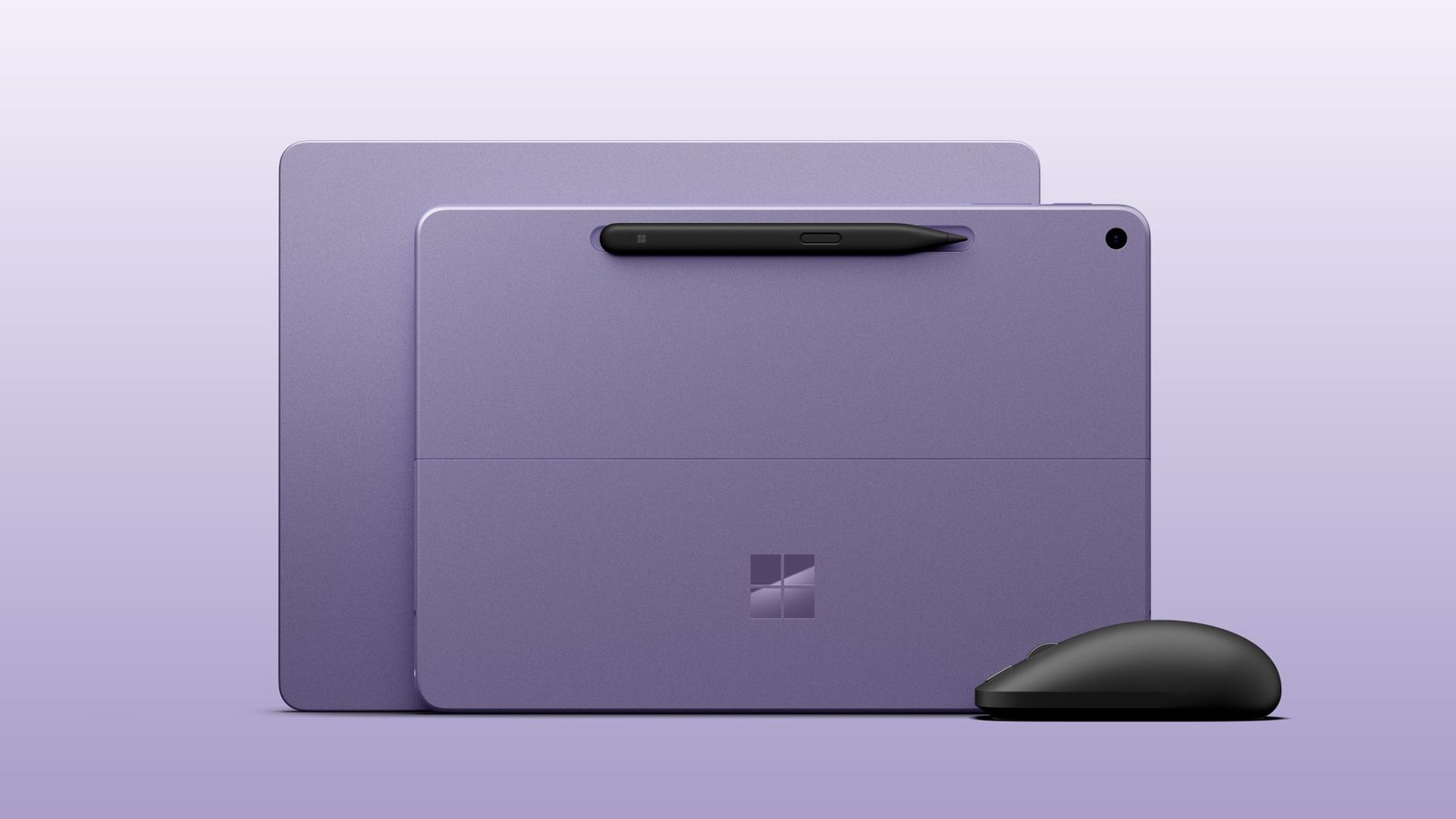
The line Surface is now drawing is a sharp one. At the same Snapdragon Summit, Microsoft showed off a new 12-inch Surface Pro and a 13-inch Surface Laptop built on Qualcomm’s Snapdragon X2 chips, machines aimed squarely at the premium end where battery life and build quality command higher prices.
That positioning leaves a wide gap beneath it. The MacBook Neo, with its A18 Pro processor, aluminum shell and $599 price, sits in the space where Apple has never competed before, and where Microsoft’s own partners now have to meet the challenge without Surface’s help.
The gap is real, and it is widening. Apple’s cheapest laptop now undercuts most mid-range Windows machines on price while carrying the Mac brand, a combination that once seemed impossible. Microsoft’s answer is to hold Surface above the fight and let its partners absorb the blow.
Analysts said the posture makes commercial sense even if it cedes headlines to Apple. The MacBook Neo’s price has already risen since launch, and its margins are thin by Apple’s standards; a Surface priced to match would likely lose money while undercutting the partners Microsoft depends on.
Ostrum’s framing — that Surface does not need to compete everywhere — is the quiet part said out loud. It is an acknowledgment that Microsoft’s hardware ambition has limits, and that those limits are drawn in part by the company’s relationships with its own licensees.
The decision also fits a pattern of retrenchment. Microsoft has in recent years pulled Surface back from the dozens of experiments it once ran, concentrating on a smaller number of devices aimed at professionals rather than chasing every corner of the consumer market.
The MacBook Neo, for its part, is still the cheapest Mac ever sold, and it has given Apple a foothold in a segment it ignored for years. Microsoft has now answered the obvious question: it will not follow Apple down-market.
That leaves the budget-laptop fight where it has always been, between Apple and the PC makers that license Windows. The company that owns the operating system will keep watching from a distance, selling its software to both sides of the argument.