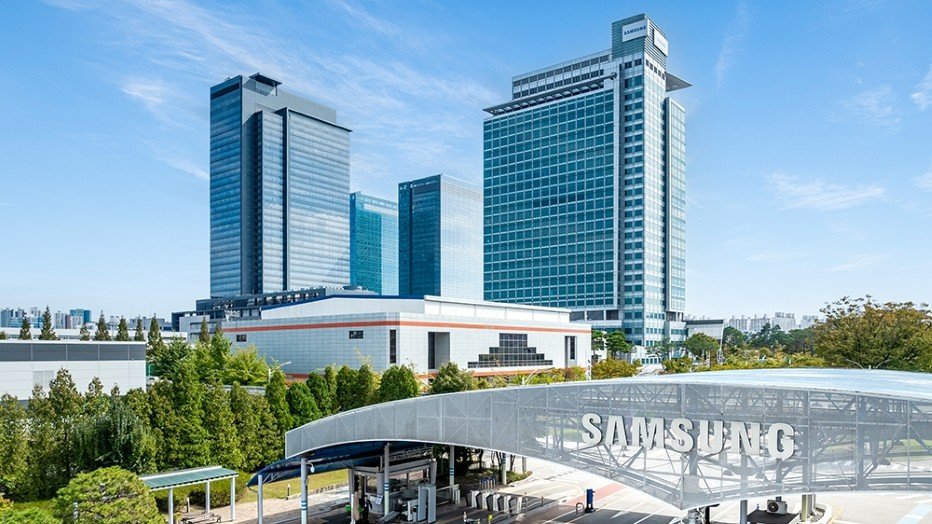
Adam Selipsky spent three years running Amazon Web Services before leaving in 2024. On September 29, the chief executive of Helix Digital Infrastructure called a new investor’s money a vote of confidence in his strategy. The money came from Samsung, and it was spread across six of the conglomerate’s companies.
Samsung Electronics said it would invest $500 million in Helix, with the remainder of a combined $1 billion commitment coming from five affiliates: Samsung C&T, Samsung SDS, Samsung SDI, Samsung Life and Samsung Fire & Marine. The investment lifts the total capital raised by Helix past $11 billion.
The funds are earmarked for the physical machinery of the AI boom. Helix said the money would go toward building next-generation data centers and the power generation and transmission capacity to run them. Data centers built for AI consume far more electricity than the facilities that came before, and the companies building them now treat power as a constraint as serious as land or chips.
Helix was founded in June of this year to be a single coordination point for the largest cloud and AI companies. Its mandate spans the development and operation of hyperscale data centers, baseload and flexible power generation, transmission and distribution, and fiber networks. KKR launched the company with more than $10 billion in committed capital from founding investors that include the Kuwait Investment Authority, Nvidia and Vistra, the American power company.
The structure of the partnership tells the story of where the industry thinks the bottleneck sits. Nvidia is Helix’s cornerstone strategic partner, aligning its projects with the chipmaker’s AI factory architecture to squeeze more output from each watt of power. Vistra, the Texas power company with nearly 50,000 megawatts of generation across 18 states, is the preferred power provider. Waldemar Szlezak, KKR’s global head of digital infrastructure, serves as the venture’s chief investment officer.
Selipsky’s appointment as co-founder and chief executive is the draw for much of the capital. He led AWS from 2021 to 2024, through the period when cloud computing became the default way companies bought computing, and before that ran the data-analytics firm Tableau. A person close to Helix said investors read his arrival as a signal that the company intends to compete at the same scale as the largest American builders, selling data centers, power and connectivity as one package.
Samsung’s participation is unusual in another way. The conglomerate is at once a chipmaker, a builder and a buyer of the very infrastructure Helix constructs. The announcement spells out what each affiliate brings: Samsung Electronics supplies chips and cooling systems, Samsung C&T builds the sites, and Samsung SDI provides backup batteries. The deal, Samsung said, shifts the company from selling components to helping decide how AI infrastructure gets built.
The investment lands in the middle of a global scramble to build capacity that frontier models are assumed to require. Technology companies have committed hundreds of billions of dollars to data centers, and the bottleneck has moved from chips to the electricity and land those facilities demand. Individual campuses now routinely draw more than 100 megawatts, far beyond what the grid was built to deliver, which is why builders are reaching for power plants as much as servers.
For KKR, the Samsung stake extends a bet the firm has been scaling for years. Its infrastructure platform now manages more than $100 billion in assets, with over $70 billion in digital and power assets, and Helix is the vehicle meant to coordinate a buildout the firm has described as the largest in modern history. Samsung brings capital, but it also brings components and construction, the pieces a developer needs to break ground faster. The group has described power as the central constraint on the AI buildout, and Helix is the vehicle meant to solve it, by investing directly in generation and in partnerships with developers such as Vistra.
The stake also deepens Samsung’s ties to the AI supply chain it already serves. The company is one of the leading suppliers of high-bandwidth memory, the chips that sit alongside Nvidia’s processors inside AI data centers, and its foundry business builds chips for others. Helix is, in part, a future customer: every data center the venture completes will need memory, storage and the components that Samsung and its affiliates manufacture. What looks like a financial investment is also a way to keep selling into the buildout from the inside.
For Samsung, the stake is a hedge as much as a return. Its memory chips and foundry business rise and fall with the same AI cycle driving data-center construction, and a position in Helix gives it a share of the buildout rather than just a customer for its components. Whether the bet pays off depends on whether demand for computing keeps growing at the rate the industry has assumed. Selipsky, for his part, framed the check as the answer, calling it a vote of confidence in the strategy he is now building.