Micron Technology reports fiscal fourth-quarter results after the market closes on Tuesday, and the figure investors expect would have been unthinkable a year ago. Analysts expect revenue of roughly $50.75 billion, up from $11.31 billion in the same quarter last year. The number would be another record for a company that has set one every quarter this year.
The stock has already priced in much of the run. Shares are up more than 550% over the past year, and the median sell-side price target still sits about 40% above the current level. A beat is no longer enough. Investors are weighing how much of the future is already in the price, and any misstep on the details is likely to move the shares more than the headline number.
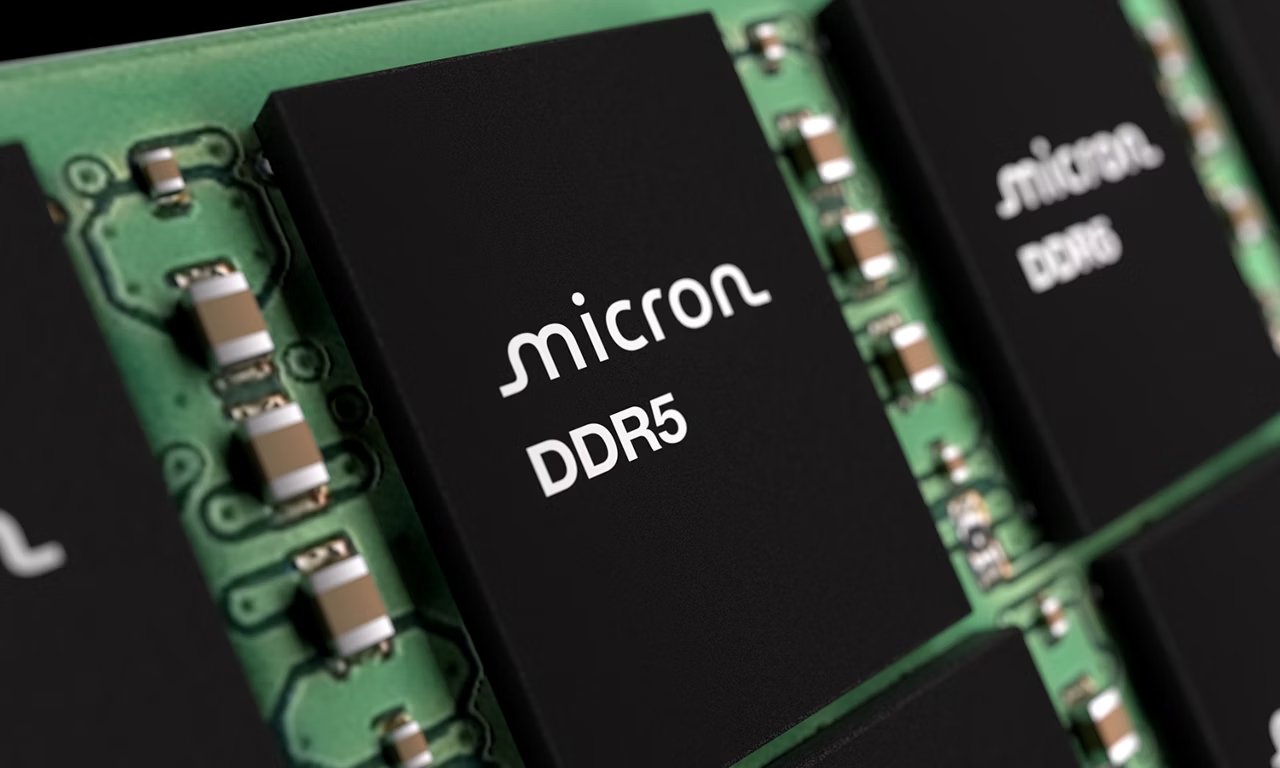
What they are watching is high-bandwidth memory. HBM4, the stacked DRAM that sits next to AI accelerators, is the scarce input in the AI buildout. Micron began volume shipments of HBM4, built on its 1-beta DRAM technology, for Nvidia’s Vera Rubin platform, and it has said the 12-high ramp is tracking twice as fast as the previous generation. HBM4E, built on 1-gamma technology, is in development with volume production planned for calendar 2027.
The HBM segment is a three-way contest, and Micron is no longer the laggard. South Korea’s SK Hynix has led the category for years, and Samsung is its other rival. Winning a high-volume position on Nvidia’s current platform has shifted the balance, and Micron has said it shipped more than $1 billion of HBM4 revenue in the quarter, with demand that still exceeds what it can produce. SK Hynix and Samsung are also ramping HBM4, so the margin Micron has built depends on holding its qualification lead rather than resting on it.
The company has moved to lock in the demand. It has signed 16 multi-year strategic customer agreements representing roughly $100 billion in remaining performance obligations and $22 billion in committed customer deposits. Chief executive Sanjay Mehrotra has said Micron can meet only half to two-thirds of customer demand in the medium term, and that new fabrication plants will not add meaningful output until fiscal 2028.
The day before the report, memory patent holder Netlist asked the U.S. International Trade Commission to block imports of Micron DRAM chips and of servers and GPUs using related technology from Google, Nvidia and Broadcom. The complaint, over two high-bandwidth memory patents, lands squarely on the company’s fastest-growing product line. Netlist won a $445 million infringement judgment against Micron in a federal court in Marshall, Texas, in 2024.
The quarter itself is expected to extend a streak. In the third quarter, revenue reached $41.46 billion, up 346% from a year earlier, with gross margin of 84.6% and net income of $28.24 billion. Data center revenue exceeded $25 billion in that quarter, an annualized run rate above $100 billion. The company guided fourth-quarter revenue to $50 billion, plus or minus $1 billion, gross margin of about 86%, and non-GAAP earnings of about $31 per share.
Micron is based in Boise, Idaho, and its fiscal year ends in late summer, so the fourth quarter covers a period when AI orders kept accelerating. The company now reports through four units: Cloud Memory, Core Data Center, Mobile and Client, and Automotive and Embedded. The first two have become the growth engine, driven by the memory that sits next to AI chips rather than the memory inside phones and laptops.
Memory has spent two years swinging from glut to shortage. A downturn in 2023 forced Micron and its rivals to cut production, and the AI buildout that followed caught the industry short of the specific kind of memory that accelerators require. Prices for both HBM and conventional DRAM have climbed as a result, and Micron has converted the shortage into long-term contracts that give it visibility its customers would rather not grant. Mehrotra has described robotics as a demand driver that could run for two decades, and the company has also returned cash to shareholders, raising its dividend and paying down debt. Analysts will press Mehrotra on whether 2027 supply is being locked in and whether the memory allocated to data centers is crowding out PC and phone customers, whose bit shipments have already been constrained.
The market’s reaction to the last report shows what Micron is up against. The shares rose on the day of the June results and then slid over the following weeks, because a stock that has risen 550% has already bought much of the good news. For a company that has spent most of its history at the mercy of a commodity cycle, the shift from spot pricing to signed multi-year agreements is the more durable change, and it is what investors are paying for. Tuesday’s report will be judged less against last year than against expectations that have been raised quarter after quarter.
The question for Tuesday is not whether demand is strong. It is how long the pricing power lasts. Any sign that HBM4 yields are slipping, or that competitors are closing the gap, would hit the stock even against record numbers. Micron has spent the year turning a memory shortage into multi-year contracts; the report will show whether the numbers justify the faith the market has already placed in them.