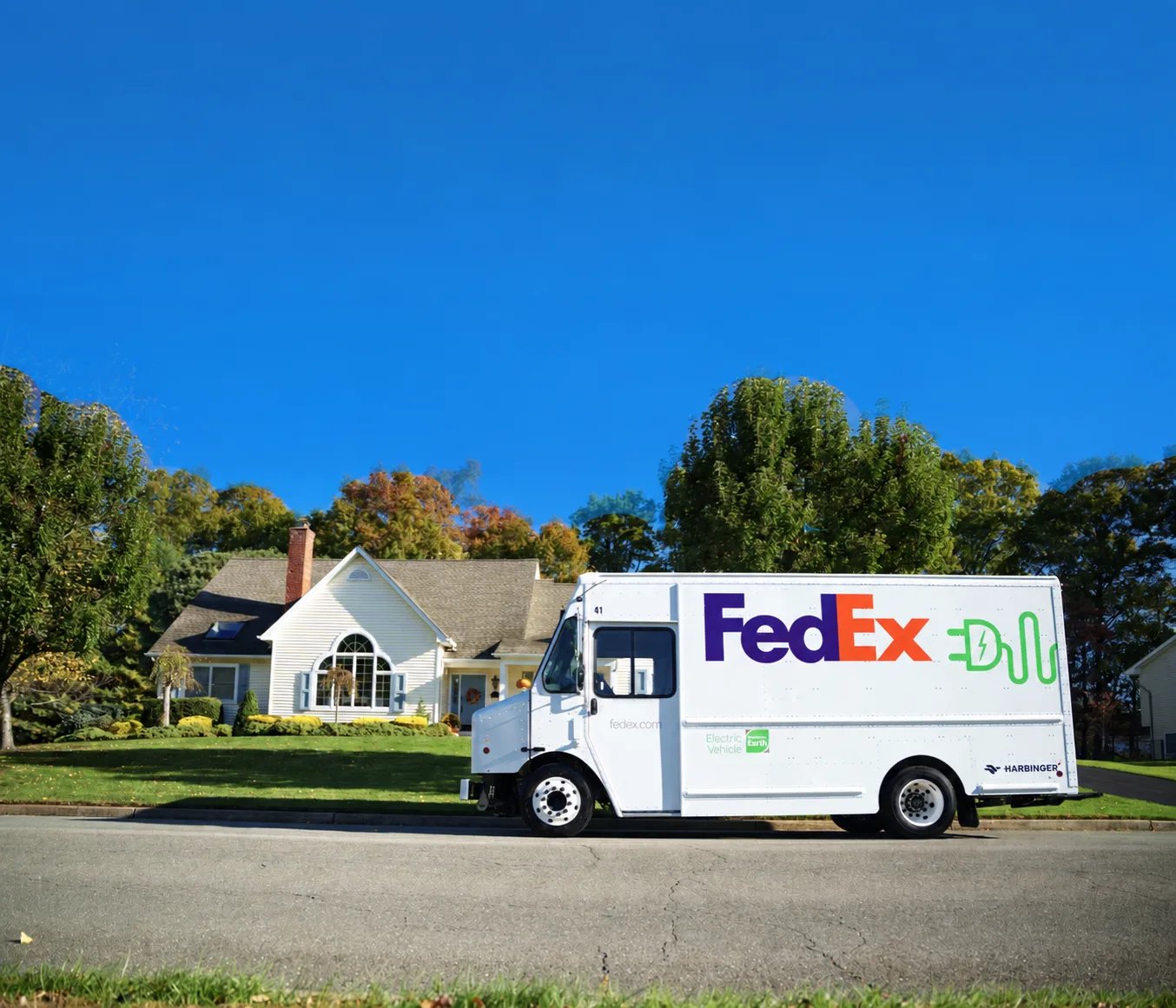
FedEx has spent years buying electric delivery vehicles one pilot order at a time. On Sept. 30 it committed to a single supplier in a single stroke: 2,000 medium-duty electric trucks from Harbinger, a startup founded in 2022, in a deal worth $300 million.
The order is Harbinger’s largest to date by a wide margin. The company, which builds one medium-duty commercial chassis and nothing else, plans to deliver all 2,000 trucks by the end of next year, it told TechCrunch. Bloomberg first reported the order on Wednesday morning.
The money has been building toward this moment. Late last year FedEx led Harbinger’s $160 million Series C round, joined by recreational-vehicle maker Thor Industries and Capricorn Investment Group’s technology impact fund. As part of that investment, FedEx placed an initial order for 53 trucks, a toehold that has now grown roughly 38-fold in a single purchase order.
Harbinger was founded by former employees of Anduril, the defunct electric-vehicle startup Canoo, and QuantumScape. Its pitch from the start was to make one product and make it well: an electric stripped chassis for medium-duty commercial vehicles, the workhorse class that runs delivery routes, shuttles and vocational fleets. The company builds its trucks in Garden Grove, California.
The economics of that class explain the size of FedEx’s bet. Harbinger estimates that over a typical 20-year service life, 2,000 trucks could generate roughly $800 million in diesel fuel savings. For a delivery giant whose largest operating costs are fuel and drivers, an electric medium-duty truck that costs less to run changes the arithmetic of a route, and a fuel bill is a recurring expense an electric motor mostly erases.
FedEx framed the order as part of a broader fleet modernization. The company said the deal would help it build a “more modern, efficient, and intelligent fleet” for its customers and global operations. It has a stated goal of carbon-neutral operations by 2040, and its delivery network, one of the largest in the world, gives it a direct financial reason to cut the diesel bill across tens of thousands of vehicles.
FedEx is not new to electric delivery vehicles. It was among the early customers of General Motors’ BrightDrop electric van unit, and it has run electric vehicles in select markets for years. The company has also run delivery-route pilots across North America and Europe to learn how range and charging hold up under daily parcel loads, while regulators in California and Europe tighten emissions rules for commercial fleets. What is new is the depth of the commitment: a single order this size shifts Harbinger from a supplier testing the waters to one building for the core of FedEx’s ground operation.
The medium-duty segment has drawn a crowded field of startups, and most have struggled. Workhorse and Canoo both ran into production and financing trouble, with Canoo collapsing into bankruptcy in early 2025, and Rivian’s electric delivery vans have so far been tied mostly to Amazon, which ordered them by the tens of thousands. Harbinger’s bet is that a purpose-built stripped chassis, not a passenger platform adapted for parcels, is what delivery fleets actually need.
Harbinger sells the chassis with the motor, battery and suspension already integrated, leaving bodybuilders to add the delivery box or other equipment on top. That design has appeal for a fleet that wants a vehicle built for parcel work rather than a passenger van converted after the fact, and it is the argument Harbinger has carried to investors as it moves toward a public listing.
That concentration is the risk embedded in the deal. A $300 million order to a company with a single model and, until now, production measured in dozens of trucks, tests whether Harbinger can scale manufacturing without the quality and delivery problems that have undone other electric-vehicle startups. The trucks are slated to deploy across the United States and Canada.
Harbinger is reportedly preparing an initial public offering, which gives the order a second audience: the public markets. A marquee customer and a booked order of this size are the strongest arguments a young manufacturer can bring to investors, and the FedEx name carries weight on both counts.
For FedEx, the order also reads as a hedge. A dedicated chassis maker builds a truck for the job rather than adapting a passenger-vehicle platform, and the company has tied its medium-duty program to a supplier that can tailor the vehicle to delivery work. The bet will be measured in years, not quarters.
Whether the fleet performs as advertised, on range, on uptime and on cost per mile, will be watched more closely by FedEx than by anyone else. The company that just signed Harbinger’s biggest check is also the one that will find out first whether the math behind it holds.