Elon Musk announced the change the way he announces most things: in a short post on X. “We cut our RAM in half for the Tesla AI5 chip (now 72GB of LP5) and 1/3 for AI6 (now 144GB of LP6),” he wrote on October 1. “This was the only way to get enough volume for Optimus production and greatly reduces cost.”
The post resolved a question that had been hanging over Tesla’s custom chip program: how the company would balance the memory-hungry demands of autonomous driving against the sheer volume of chips it will need for its humanoid robot. The answer, Musk said, was to shrink the specs. Tesla cut the AI5 chip’s memory in half, from 144 gigabytes to 72, and reduced the AI6 chip’s memory by a third, from 216 gigabytes to 144.
Musk argued the trade-off is less painful than it sounds. Because memory bandwidth — how fast data moves in and out — is a bigger constraint on performance than total storage, he said, holding bandwidth constant while cutting capacity should have a negligible effect on Optimus. The real benefit is on the factory floor: fewer memory modules per chip means more chips for the robot, and lower cost per unit.
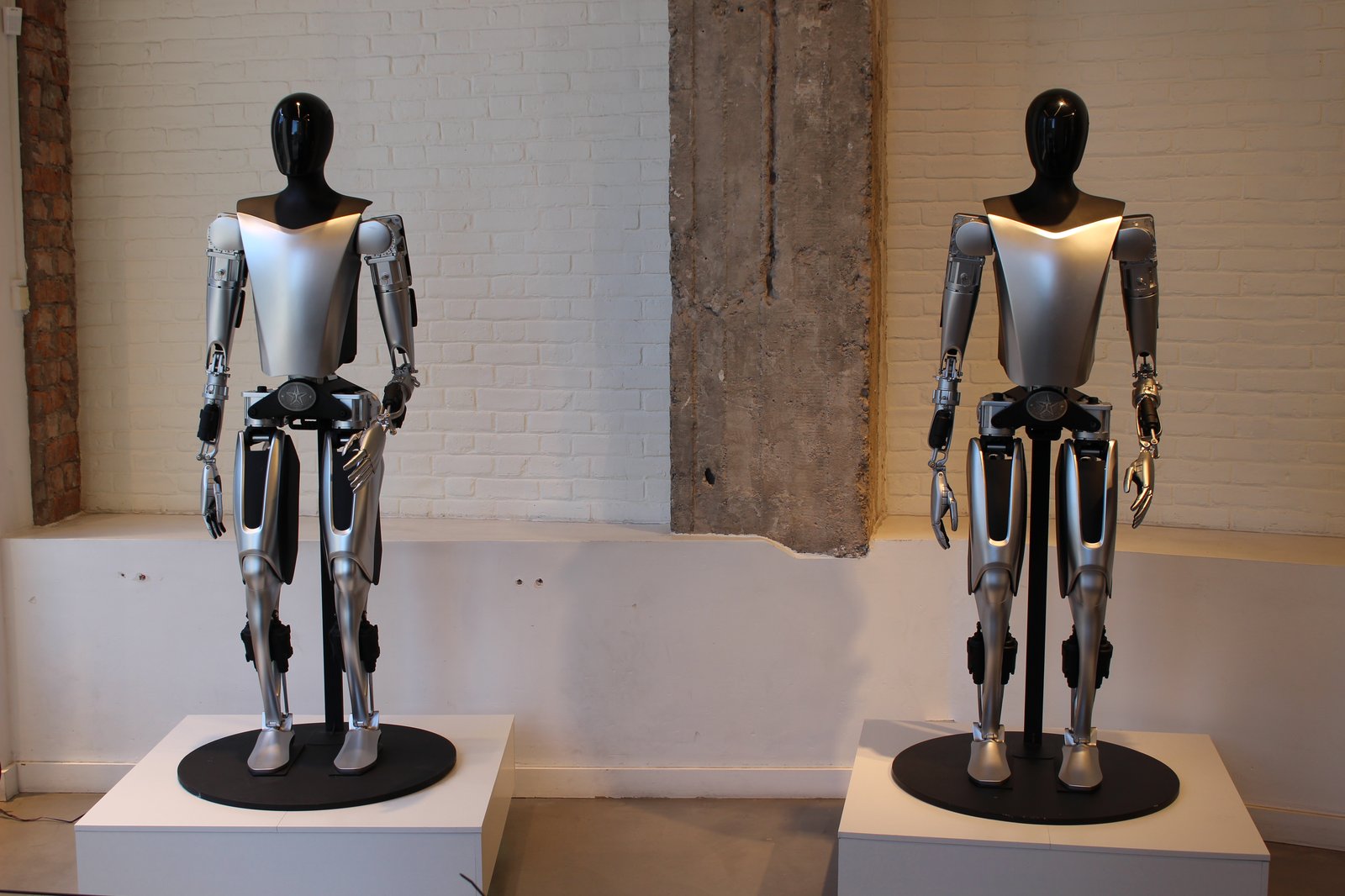
The decision, first reported by digitimes, is explicitly about production volume. Tesla’s AI5 and AI6 chips serve two masters — the Full Self-Driving software in its cars and the Optimus robot — and the robot is the one that needs to be built in the millions if it is ever to pay off. The steel structure for Tesla’s Optimus production line in Austin, Texas, is nearly complete, and the company has signaled that mass production is the next step.
Tesla has been designing its own AI chips since it abandoned third-party silicon for its driver-assistance systems, and AI5 and AI6 are the next steps in that road map. AI5, built by TSMC, is expected to be a single-chip successor to the dual-chip boards in current vehicles, and Tesla has described it as a low-cost, power-efficient inference chip for models with up to roughly 250 billion parameters. Samsung won a $16.5 billion contract to produce AI6, which is slated to begin manufacturing in 2026.
The memory cut shows that even a company with Tesla’s resources has to ration scarce components. Advanced memory — the high-bandwidth and low-power DRAM that AI chips depend on — is in tight supply across the industry, with prices rising and lead times stretching. Tesla’s decision to cut its chips’ memory to secure volume for Optimus shows how the robot program is now competing with the car business for the same silicon budget.
Optimus is a long-term bet with an uncertain payoff. Musk has argued that the robot could one day be worth more to Tesla than its car business, and he has pushed the company to prepare for mass production even as rivals such as Figure and Boston Dynamics chase the same goal. The robots are meant to do work in Tesla’s own factories first, handling repetitive tasks, before the company tries to sell them to outside customers.
Scaling back the chip specs is a rare concession for a company that has typically marketed its hardware as the best available. Musk’s framing — that the change will have a negligible effect on performance — is partly a reassurance to investors and customers who might read a memory cut as a downgrade. But it also reflects a hard truth about manufacturing: a robot that cannot be built in volume is a robot that does not exist.
The two chips have different roles in the plan. AI5 is designed primarily for inference in the cars — running the neural networks that interpret camera feeds and drive the vehicle — while AI6 is meant to be a more powerful successor that could handle training as well. Both will be used in Optimus, which relies on the same vision-based approach as Full Self-Driving: cameras feeding a neural network that decides how the machine should move.
That shared software foundation is what makes the memory question acute. Every Optimus robot built will carry the same kind of chip as a car, which means a surge in robot production would consume enormous quantities of advanced memory. By trimming the memory per chip, Tesla effectively multiplies how many robots it can build from a given supply of memory modules.
The trade-off also reveals something about Tesla’s confidence in its own software. A chip with less memory forces engineers to fit the model into a smaller footprint, which can degrade performance if the model is too large or too inefficient. Musk’s claim that the cut will have a negligible effect implies Tesla believes its models and its memory-management approach can absorb the reduction without a meaningful loss — a bet that will be tested when the first AI5-powered vehicles and Optimus robots reach production.
The timing puts the chip decision in the middle of a broader push. Tesla has been moving its Optimus work from prototypes to production tooling, and the Austin line’s steel structure is the first visible sign that the factory is taking shape. Whether the AI5 and AI6 memory cuts are enough to secure the volume Tesla needs — and whether Optimus can hit the production numbers Musk has promised — will be tested soon, as the robot line begins to make more than samples.
For now, the chips are a means to an end. Tesla is not selling AI5 or AI6 to outside buyers; it is consuming them itself, in cars and in robots. Cutting their memory is a decision about where the company’s scarce silicon should go. Musk has made clear which product he thinks matters more.