
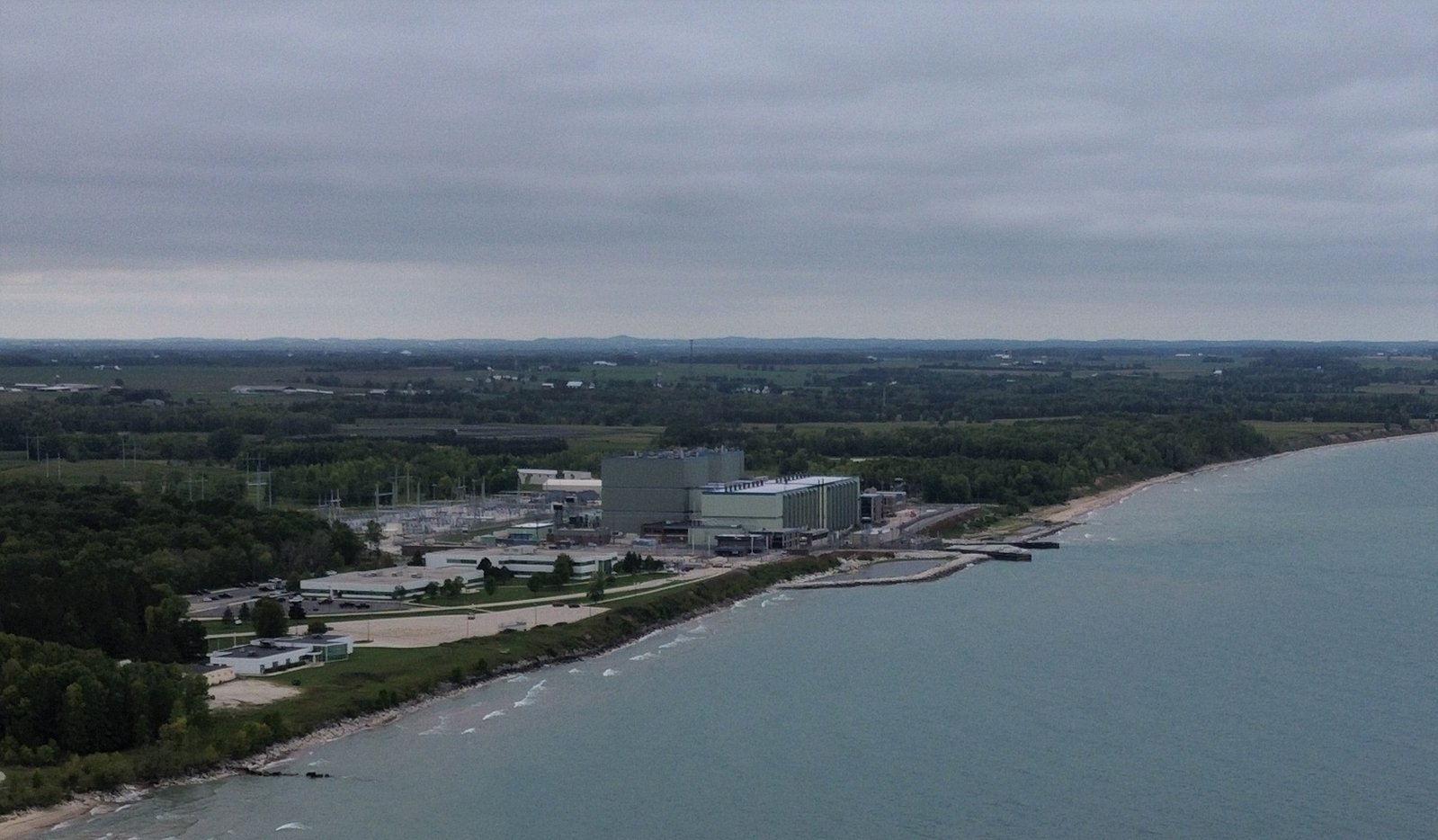
The Point Beach nuclear plant has been producing electricity on the shore of Lake Michigan for more than fifty years. The power from its two reactors is about to get more expensive, and the utility that buys most of it, We Energies, had a problem: the increase would land on the bills of more than a million Wisconsin households and businesses. On October 2, Oracle stepped in to take the cost instead.
The company said it will subscribe to a portion of the plant’s electricity, absorbing roughly $300 million in added fuel costs that We Energies is required to purchase under a power-purchase agreement with the plant’s owner, NextEra Energy. The move, Oracle said, shields more than one million Wisconsin utility customers from the increase while giving the company a steady supply of carbon-free power for its data centers.
The arrangement ties together two forces reshaping the American power grid. Oracle is building a data-center campus in Port Washington, Wisconsin, under a project it calls Project Lighthouse. Data centers consume enormous amounts of electricity, and their arrival in a region pushes up demand and, in some cases, the prices that existing customers pay. Oracle’s commitment is a direct answer to that criticism: it is paying more, not less, so that ratepayers do not have to.
We Energies had already put the underlying power-purchase agreement before state regulators. The utility’s existing deal to buy energy from Point Beach’s two units runs to 2030 and 2033, and the new agreement would extend purchases to 2050 and 2053, covering about 86 percent of the plant’s output, according to utility filings and reporting from Wisconsin Public Radio. Oracle’s subscription covers a share of that purchase, and it remains subject to approval by the Public Service Commission of Wisconsin.
The cost problem was real and measurable. A draft report from state utility regulators projected that electricity demand in Wisconsin could rise more than 40 percent by 2032, driven by hyperscale data centers. Scott Lauber, the chief executive of We Energies’ parent company, WEC Energy Group, told investors earlier this year that the Point Beach agreement carried costs that were “pretty high” and that the utility would look at affordability for its customers. Replacing the plant’s generation, he estimated, would cost between $2 billion and $2.5 billion.
By agreeing to absorb the increase, Oracle is making a bet that goodwill and reliable power are worth more than the savings it would have captured by fighting the cost. “By absorbing approximately $300 million in rising energy costs, we are helping protect Wisconsin ratepayers while supporting the reliable, carbon-free power the state depends on,” Mahesh Thiagarajan, an executive vice president at Oracle Cloud Infrastructure, said in a statement.
The company framed the commitment as part of a larger investment. Oracle said Project Lighthouse is expected to generate more than $11 billion for the local economy, create more than four thousand construction jobs over three years, and support about one thousand ongoing operations positions. It said it will fully fund the data center’s energy costs, rather than passing them onto ratepayers, to protect electricity bills and support grid reliability.
The gesture also has a strategic dimension. Nuclear power has become one of the most sought-after commodities in the technology industry, as companies racing to build AI data centers look for power that is both abundant and carbon-free. Microsoft, Amazon, and Google have signed or pursued nuclear deals of their own, and the competition for existing reactors has become a defining feature of the AI build-out. Oracle’s Wisconsin arrangement is its version of the same scramble, with a ratepayer-friendly twist.
Point Beach sits in Manitowoc County, north of Milwaukee, and its two units supply baseload power to the regional grid. Federal regulators recently cleared the plant to keep operating for decades, extending the licenses of its two units to 2050 and 2053. That longevity is part of what makes the plant valuable to a data-center operator that wants power guaranteed for the life of its servers.
Whether the deal holds depends on regulators. The Public Service Commission of Wisconsin must approve the subscription, and ratepayer advocates have said they want more detail on how the arrangement protects customers over the long term. The utility’s own filings describe the agreement as a way to secure a generation’s worth of carbon-free power while the state’s demand climbs.
If the deal is approved, Point Beach’s reactors will power a data-center campus rather than merely feed the regional grid, and Oracle will have paid a premium to keep Wisconsin’s households out of the transaction. In an industry where data centers are often blamed for pushing electricity prices up, the company is trying to show the opposite can be true. For a company that has spent heavily to lay out its AI plans, the $300 million is a comparatively small price for a long, fixed supply of power.



