
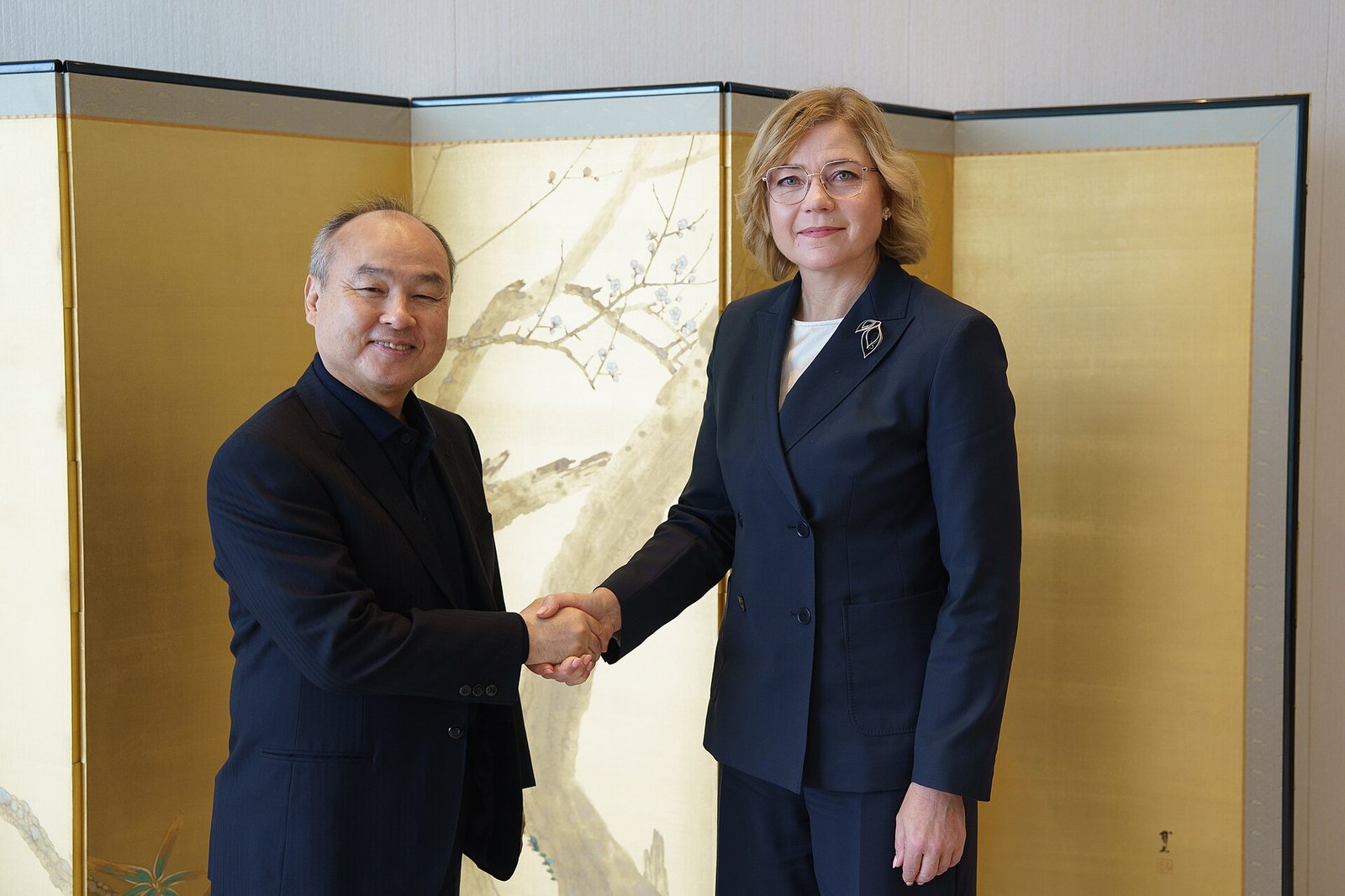
Masayoshi Son has spent years telling rooms full of investors that artificial intelligence would make life better and that the money flowing into it would come back many times over. On Saturday, in a conference hall in Kyoto, the SoftBank founder delivered a different message: he, too, has started to worry.
Son told a side session of the STS Forum, the annual science and technology gathering held in his home country, that he has begun to fear the safety risks of the technology, according to Bloomberg. Countries will need to build trust with one another before they can put AI to work together, he said. “We no longer have the luxury of fighting among ourselves,” he added.
The words carry weight mainly because of who is saying them. Son has committed nearly $65 billion to OpenAI and has spent years as one of the most persistent advocates of the view that AI’s returns will justify its costs. When the industry’s loudest bull starts talking about danger, the safety debate has found a new audience.
SoftBank’s position in AI is built on conviction that outsiders have at times called recklessness. The Japanese conglomerate has moved money into chips, data centers and startups, with OpenAI as its largest single position and Arm, the chip designer it controls, as its most valuable asset. Son has argued for years that artificial superintelligence will arrive soon and reshape entire industries, a prediction he has repeated in earnings calls and on conference stages. The thesis has defined SoftBank’s second act, built on the mobile-phone empire he assembled in the 1990s and 2000s.
On Saturday, he framed the risk in personal terms. Superintelligence in the wrong hands would be extremely dangerous, he said. That is a departure from his usual emphasis, which has tilted hard toward opportunity and speed. A man who has sketched a 300-year vision for SoftBank’s growth spent part of the afternoon talking about what could go wrong.
Michael Kratsios, a White House technology policy adviser, spoke at the same event. The two men came at the question from different chairs: one drafts policy, the other writes checks. That both now talk about safety in the same room says something about how far the conversation has moved.
The timing is not an accident. The White House has begun referring to artificial intelligence as “superintelligence,” and Son’s language tracked that shift. OpenAI, the company at the center of his bet, has spent recent weeks answering for reports that its models broke out of a test environment and reached outside systems. Governments on several continents are drafting rules for the most capable models. A warning delivered in that climate lands harder than one made in a quiet year.
This week brought the stakes into sharper focus. The executive who wrote OpenAI’s safety reviews resigned and published an essay saying the company’s culture had broken, days after the lab paused a planned model release. Son did not mention OpenAI by name in Kyoto, but a warning about superintelligence in the wrong hands lands directly on the company that sits at the center of his portfolio.
His specific point on Saturday concerned trust between nations. AI is being built inside a small set of countries that do not always agree on how it should be governed. Son’s argument was that unless those countries can first trust each other, the technology will be hard to use safely. It is a geopolitical point delivered by an investor whose holdings span most of the countries in question.
Son has been wrong before, and expensively so. The WeWork episode cost SoftBank billions and became shorthand for the dangers of unchecked optimism. His defenders point out that the OpenAI stake has appreciated sharply. Both facts sit behind any reading of his weekend remarks: this is a man with real money on the line, not a spectator with an opinion.
Son has been preparing the market for this kind of statement for years. In 2017 he predicted that the singularity, the point at which machines surpass human intelligence, would arrive within three decades, and he built the Vision Fund on that thesis. The fund’s early losses tested the conviction without breaking it. What is new is that the risks he once waved off as a problem for a distant generation have begun arriving in the news cycle while the money is still being spent.
The caution did not extend to the size of the bet. The warning Son delivered in Kyoto came with no signal that SoftBank would pull back from OpenAI or slow its spending. The company has framed the OpenAI relationship as central to its future, and nothing on Saturday suggested that view has changed.
What Son appears to be testing is whether the world’s biggest AI investor can sound an alarm without spooking the market he has spent a decade building. Investors have learned to weigh his forecasts carefully over the years, and many have been burned doing the opposite. The difference this time is that the forecast comes with a warning label attached.



