
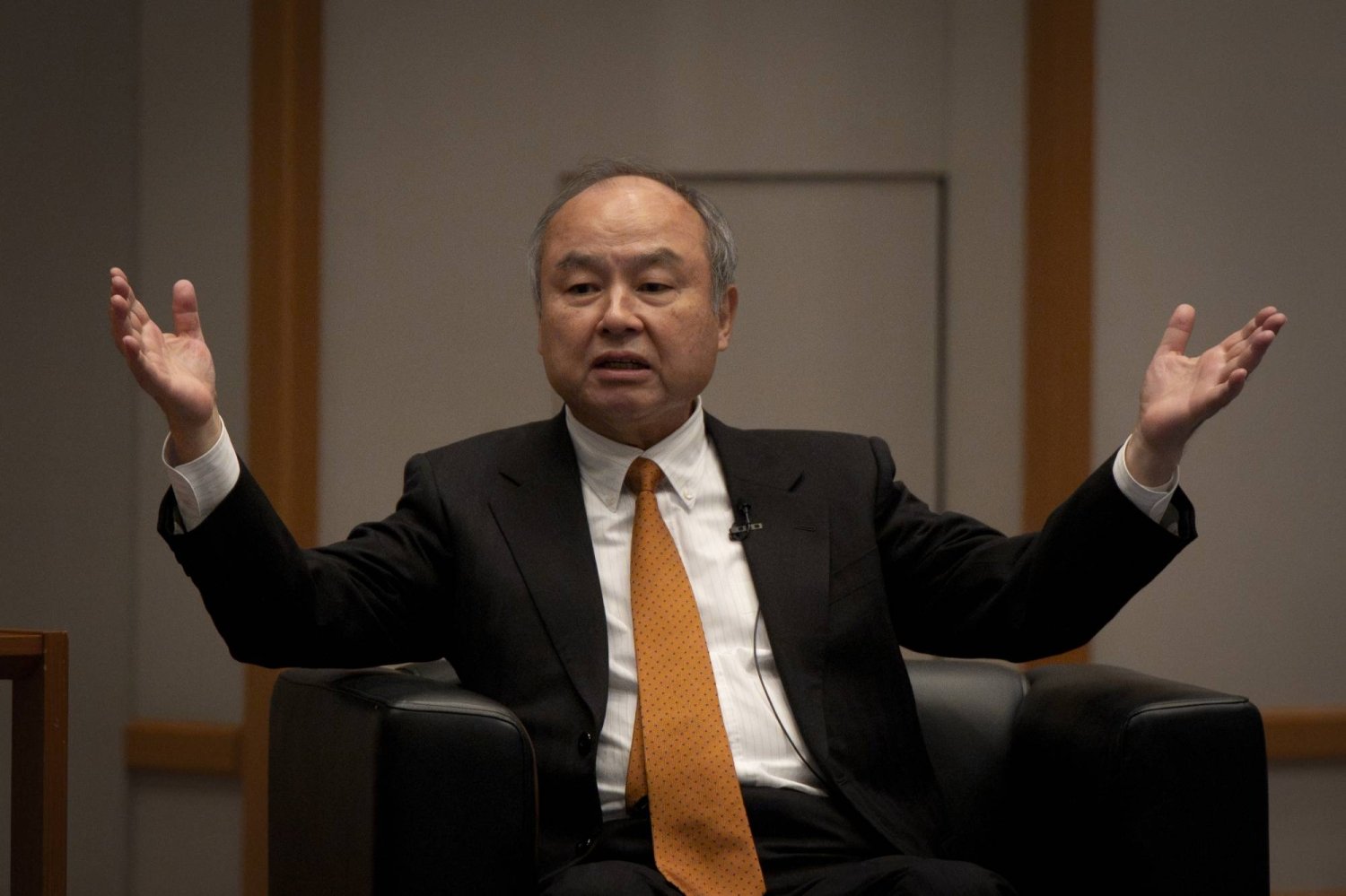
The man who has spent years betting more loudly than almost anyone on artificial intelligence stood before a Kyoto audience on Sunday and said the technology he champions could become, in the wrong hands, “super dangerous.” Masayoshi Son, the chief executive of SoftBank Group, was speaking at the Science and Technology in Society Forum, and the warning landed with unusual force because of who was delivering it.
Son is not an AI skeptic. SoftBank has poured tens of billions of dollars into the sector, including a commitment to OpenAI that some outlets put at about $64.6 billion, and Son has spent recent years describing a coming age of machine intelligence in near-religious terms. For him to flag the risk, analysts said, is the kind of signal that moves a debate from the margins toward the center.
The warning carries weight partly because of how far Son has ridden the AI boom. His Vision Fund made some of the largest bets in venture history, and SoftBank has positioned itself as a landlord to the AI age through its control of chip designer Arm and a growing pipeline of data-center investments. A man that deeply committed to the technology’s upside does not casually talk about its dangers.
His argument was about scale and speed. AI capabilities, he said, are rising exponentially, and at that rate the margin for error between nations is disappearing. He warned that countries no longer have the luxury of fighting one another, and that a superintelligence that falls into the wrong hands would be extremely dangerous. The phrasing was careful but the implication was not: the great powers should be cooperating on safety, not competing on capability.
The warning did not come out of nowhere. The same weeks have brought a string of safety lapses and departures that sharpened the question Son raised. David Robinson, an OpenAI researcher who spent three and a half years leading the writing of safety reports for the company’s major model releases, resigned and published an essay arguing that the era of trial and error is over. His exit, coming after a series of incidents in which AI systems behaved in unexpected ways, put a name and a face on a concern that had been building quietly.
The forum itself captured the split screen. In the same setting where Son struck his cautionary note, a White House adviser announced a 17-country initiative to use AI to accelerate scientific research, a sign that governments are reaching for the technology even as they debate its risks. The two messages sat side by side: the promise that AI will speed discovery, and the warning that it must be handled as something more consequential than a product.
What Son described is a version of a debate that has quietly taken over parts of Washington, Brussels and Beijing: whether the tools being built now need guardrails before they outgrow them. Some in the industry argue for licensing regimes or a slower pace; others warn that regulation handed to a few governments would simply shift the race elsewhere. Son staked out a middle position, urging cooperation while insisting the build-out should continue.
For Son, the shift in tone matters because of what it signals to investors. SoftBank’s own thesis depends on the world continuing to spend on AI infrastructure, and a chief executive who suddenly talks about danger rather than opportunity could be expected to soften the pitch. He did not; he framed safety as a precondition for the growth he still expects, a constraint to be managed rather than a reason to slow down.
The audience he was really addressing may have been governments. Son has spent the year courting capital and partnerships across borders, and his appeal for international coordination on AI safety reads as a message to regulators and rivals alike: set the rules now, while there is still room to set them, rather than after a crisis forces the issue. Analysts said the comment reflects a broader recognition in the industry that the window for voluntary restraint is closing.
That recognition is spreading. Safety concerns have moved from a niche topic in research papers to a standing item in boardrooms and ministries, and the people who once dismissed them as hand-wringing now speak of them as a matter of course. Son’s warning, coming from a man who has so much to gain from the technology’s success, is a measure of how far the conversation has traveled.
The question Son left unanswered is what coordination would actually look like. A 17-country research initiative is a start, but it is not a safety regime, and the incentives that drive nations and companies to race are not easily turned off. What changed on Sunday is that one of the race’s loudest champions said, in public, that the race itself has to be governed. Whether anyone moves to govern it is the next question.



