
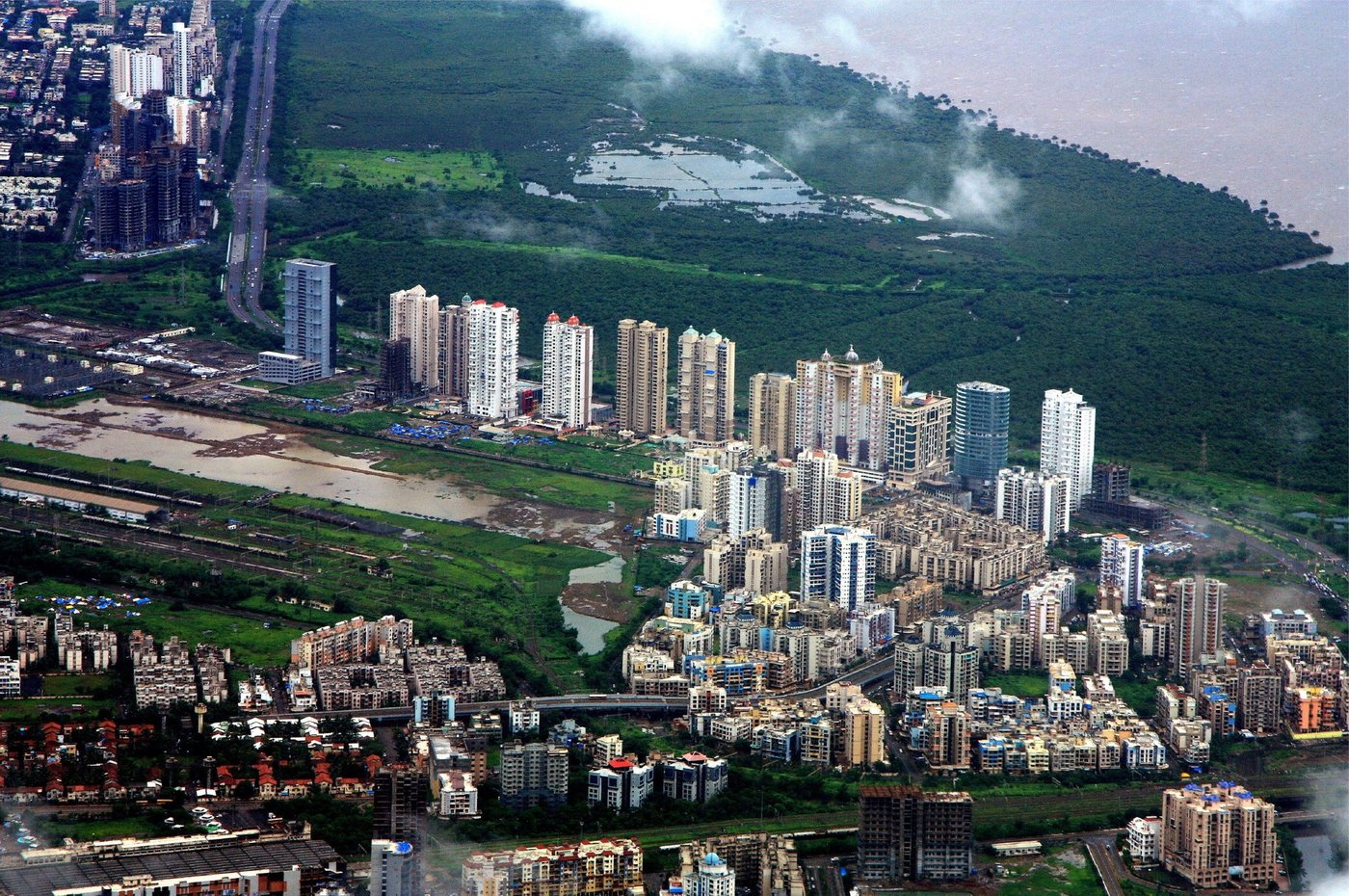
Sometime in mid-2028, the first racks will switch on at a campus called Taloja, in the planned city of Navi Mumbai east of the port. Three buildings, each drawing 80 megawatts, will hold Nvidia’s newest chips and sell their compute the way a utility sells electricity: by the unit, to whoever will pay.
CoreWeave, the New Jersey company that climbed from cryptocurrency mining to a Nasdaq listing in three years, said Wednesday it will build its first data centers in India through a partnership with AdaniConneX, a joint venture between India’s Adani Group and the U.S. operator EdgeConneX. The deal gives CoreWeave 240 megawatts of capacity at the Taloja campus, with an option to double it to 480 megawatts, and makes the company the sole tenant across the three buildings.
The investment is expected to total several billion dollars over the life of the project, according to people familiar with the terms, and CoreWeave plans to open an office in the country. The first phase is set to come online in mid-2028, with additional capacity arriving in stages.
For CoreWeave, the move is a wager that demand for AI compute in South Asia will keep pace with a balance sheet that depends on it. The company began in 2017 as a cryptocurrency miner, buying graphics cards to run the Ethereum network, then pivoted toward AI when the market for those chips exploded. It has since spent three years signing long-term contracts with hyperscalers and AI labs, then borrowing against those contracts to buy more chips. Microsoft agreed to spend roughly $10 billion on its services last year, and OpenAI committed to a reported $11.9 billion. Nvidia, whose chips fill CoreWeave’s halls, is a major shareholder.
CoreWeave went public on the Nasdaq in March 2025, and its revenue has grown at a pace few companies outside the chipmakers themselves have matched. The growth rests on a simple formula: sign a contract, borrow against it, buy more GPUs, and repeat. The India deal extends that formula to a new continent, and the option to double the campus to 480 megawatts means the company can scale up without starting a second negotiation if demand arrives as expected.
India is the next square on a map that already covers the United States and Europe. The country’s pool of engineers and its push to build domestic AI capacity have made it a target for every large cloud provider. Microsoft has pledged $3 billion toward Indian AI infrastructure, and Nvidia has struck deals with the conglomerates that dominate the country’s industrial base. CoreWeave’s entry signals that the rush now reaches beyond the usual hyperscalers, into a market that wants its own chips on its own soil.
India has become one of the few markets where government and private industry are spending on AI at once. The country’s data-center capacity is expanding faster than almost anywhere in Asia, as firms and ministries push to keep computing, and the data it produces, inside national borders. CoreWeave is arriving late to that race; Microsoft, Google and Amazon have been building there for years. Its pitch is that it arrives with Nvidia’s newest silicon and the customer relationships of the U.S. market already in hand. The office it is opening in India is as much a bid for engineering talent as for local demand.
The choice of partner reflects how the business has matured. AdaniConneX, an equal partnership between Adani Enterprises and EdgeConneX, has spent years building data centers across India for the group run by billionaire Gautam Adani, one of the country’s largest and most scrutinized conglomerates. The Taloja site is designed for high-density AI work: direct liquid cooling for the GPU halls and a chilled-water system that does not rely on evaporation, a concession to water scarcity in a region where heat and power are perennial constraints.
The deal also shows how American AI infrastructure money is reaching places it skipped two years ago. CoreWeave listed on the Nasdaq in 2025 and has kept expanding even as questions mount over how the industry will finance its enormous capital spending. India, long a back office for the AI economy, is being written into the hardware map itself.
Analysts said the entry carries familiar risks: power supply, land costs, and the gap between signing a deal in 2026 and booking revenue in 2028. Building at this scale in India has tripped up foreign firms before, from approval delays to the difficulty of securing reliable electricity for halls that consume as much as a small city.
But for a company whose entire business is building capacity faster than its rivals, waiting for demand to appear before construction starts is not an option. The cranes go up first. The customers are supposed to follow.



