
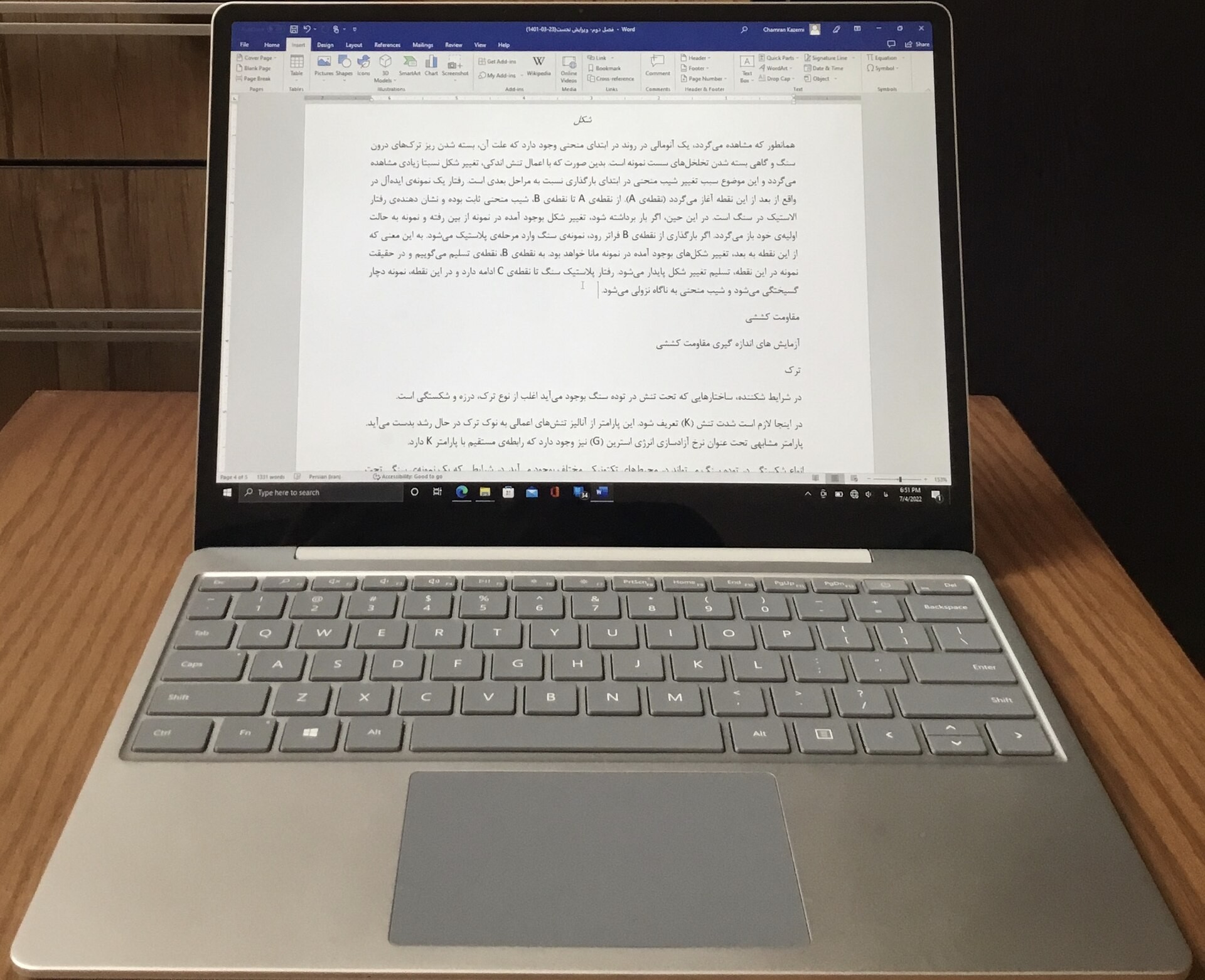
The event had the feel of a summit more than a product launch. On a Tuesday morning in San Francisco, Microsoft chief executive Satya Nadella and Nvidia chief executive Jensen Huang walked onstage together to introduce a laptop that had been teased for months and that both companies now want to carry the next few years of their PC ambitions.
The machine is the Surface Laptop Ultra, and its defining feature is not the screen or the keyboard but the chip inside. It is the first Surface built around Nvidia’s RTX Spark, an Arm-based superchip that pairs a 20-core Grace processor with a Blackwell graphics chip and up to 128 gigabytes of unified memory.
Nvidia says the combination delivers roughly one petaflop of AI performance, enough, in Microsoft’s telling, to run large language models of about 120 billion parameters directly on the device, with no cloud connection required. That claim, if it holds in everyday use, is the point of the whole exercise: computation that once lived in a data center now fits in a briefcase.
Microsoft first showed the laptop at the Computex trade show in Taipei in June, with a 15-inch mini-LED display and the promise of local AI. What it did not show, and still has not, is a price or a firm release date. The company has said final availability depends on regulatory approval, a caveat that has kept the product in a pre-release state even as the marketing has begun.
The gap between the two companies’ pasts and this product is part of the story. Microsoft’s earlier attempt at an AI-first PC, the Copilot+ machines built on Qualcomm’s Snapdragon chips, ran modest models and leaned on the cloud for heavier tasks. RTX Spark is meant to be a different class of silicon, with full CUDA support that reaches the developers who already build AI on Nvidia hardware.
Huang has spent the year arguing that the next wave of computing will run on the device rather than in someone else’s data center. At Computex he introduced RTX Spark as a platform, not just a chip, and Nvidia has lined up ASUS, Dell, HP, Lenovo and others to build machines around it. The Surface Laptop Ultra is Microsoft’s own answer on the same silicon.
For Microsoft, the stakes run through Windows as much as through hardware. The company has spent two years telling developers and consumers that the “AI PC” is a real category, and buyers have been cautious. A laptop that can genuinely run a large model offline gives that pitch something concrete to point at, the first time the marketing and the machine have lined up.
Apple is the unspoken presence behind the stagecraft. Its M-series chips, built on Arm, have run useful local AI for years without the company ever calling it an AI PC, and Apple keeps its heaviest model work in the cloud or in smaller on-device doses. Microsoft and Nvidia are now making the explicit case that a Windows machine should run frontier-scale models the same way a Mac runs its own software: privately, on the device.
For developers, the practical signal is CUDA. The RTX Spark chip brings Nvidia’s software stack, the same one that dominates data center AI, to a laptop Microsoft will sell under its own brand. A model tuned on a workstation can run on a conference-room Surface without being rewritten, and that continuity matters more to working engineers than any benchmark.
The economics sit underneath the spectacle. Running a large model in the cloud means paying per token to a provider; running it on a machine you already own shifts that cost to a one-time hardware purchase. For enterprises weighing data privacy and predictable budgets, that trade can look attractive, and it is the argument Huang has made for months.
The event also carried a message about the two companies’ relationship. Nvidia has become the world’s most valuable company on the strength of data center chips, and Microsoft is one of its largest customers through Azure and OpenAI. Putting a Blackwell chip in a consumer laptop stretches that relationship down-market, from the server rack to the kitchen table.
Analysts said the device matters less for how many units it sells than for what it signals. If local AI becomes the norm, the companies that control the silicon and the operating system stand to capture value that has so far flowed to cloud providers. Microsoft and Nvidia, they said, are betting that the model running on a desk will matter as much as the one in the data center.
The caveats are not small. Price has not been disclosed, and a laptop with 128 gigabytes of unified memory is unlikely to be cheap. Regulatory approval for the Arm-based design has still not come through, and Microsoft has not said when it will. And the claim that a 120-billion-parameter model runs usefully on a laptop is one that reviewers will test the moment the machine ships.
The PC industry has been waiting for a reason to buy. Unit sales have been flat for years, and the upgrade cycles that used to drive them have stretched out. A laptop that runs a large model offline is the kind of reason manufacturers have been hoping for, and the industry will be watching whether it sells machines or merely moves the conversation.
Still, the image from San Francisco is the part the industry will remember. The two executives who have done the most to concentrate computing power in the cloud stood onstage to argue that the future is coming back to the device. Whether buyers agree will decide how the Surface Laptop Ultra is remembered, a question the two men left to the price tag and the first reviewers to answer.



