
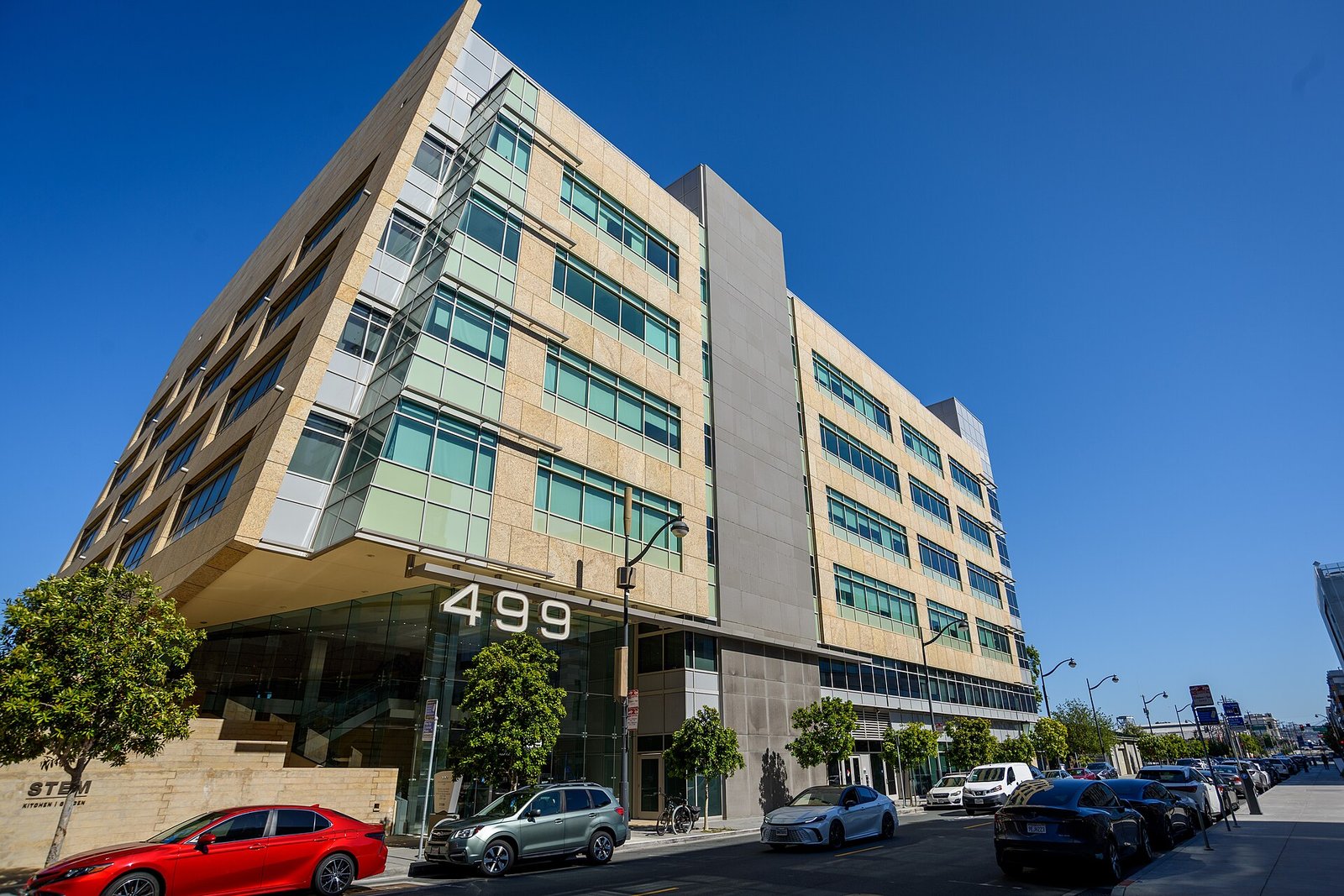
The plan sounds like science fiction until you see the budget. A research institute backed by Mark Zuckerberg and his wife, Priscilla Chan, is spending $1.8 billion to build a virtual biology platform, a machine that would measure how cells respond to drugs, disease and environment and then predict those responses before a scientist runs the experiment. The money is real, and so is the list of partners: Google, Meta and the United States government.
The institute, Biohub, is an arm of the Chan Zuckerberg Initiative, the philanthropy the couple built from their Facebook fortune. Its virtual biology program has now grown to $1.8 billion, and the funding structure, laid out by Reuters this week, shows how the effort has assembled a coalition that spans Silicon Valley and Washington.
Google DeepMind, the search giant’s AI lab, and its drug-discovery sibling Isomorphic Labs are contributing alongside Meta a combined $300 million. The United States Department of Energy is putting in more than $500 million over five years. The National Institutes of Health is contributing in a different way: standardizing datasets produced under more than $500 million in earlier federal funding so they can be shared and compared.
The goal is to measure cells under far more conditions than any single lab could manage, then use predictive models to compress the drug-discovery cycle. Instead of spending years testing a candidate molecule against cells in a dish, a researcher would ask a model what the molecule is likely to do and narrow the field before the first experiment. The first dataset is expected to open within a year, and the companies that funded the effort get an early window of exclusive access before the data goes public.
That arrangement is the quiet engine of the deal. Pharma and tech companies have spent heavily on AI for drug discovery with mixed results, and the field has learned that models are only as good as the data they are trained on. Biohub’s pitch is that it can assemble a dataset large and clean enough to make prediction actually work, and that the companies willing to help pay for it get first look at the result.
The involvement of Zuckerberg is a sign of how the money behind AI biology has shifted. The same fortunes built on social networks and search are now funding laboratories, and the researchers who once relied on the NIH for grants are increasingly working inside networks financed by tech wealth. The Chan Zuckerberg Initiative has said its long-term aim is to help cure, prevent or manage all disease by the end of the century, a goal that reads as either ambition or marketing depending on the audience.
The scientific bet is narrower and more testable. Cells respond to thousands of conditions, and no lab can measure them all. A model trained on enough measured responses could fill in the gaps, predicting behavior in conditions nobody has tested. If the predictions hold, drug development could move faster and cost less. If they do not, the $1.8 billion becomes another cautionary tale about AI in biology.
Biohub has already run smaller versions of the idea through a network of institutes at Stanford, Chicago and New York, and the program is building on that record. The expansion to $1.8 billion marks a move from proof of concept toward industrial scale, with the computing partners supplying the muscle that biological labs often lack.
The government’s role is the most interesting part of the structure. The Department of Energy is contributing not just money but computing power and infrastructure, while the NIH is contributing data accumulated over years of federal research. It is an unusual marriage of public resources and private ambition, and it has drawn both praise and scrutiny.
Biohub is an unusual institution, funded by private wealth but run by academic scientists, with institutes at Stanford, the University of Chicago and New York. The Chan Zuckerberg Initiative has committed billions to science since it was founded in 2015, and Biohub is its flagship research vehicle. The virtual biology program is the group’s most direct attempt to apply AI to the fundamental problem of how cells behave.
The promise is a virtual cell, a model detailed enough to stand in for the real thing when a researcher wants to know how a drug will land. That goal has attracted money because the economics are compelling: a lab experiment that costs thousands of dollars and takes weeks could be replaced by a model query that costs cents and takes seconds, if the model can be trusted.
The trust question is the whole game. Early AI drug-discovery efforts produced predictions that looked impressive in papers and fell apart in trials, and the field has grown more skeptical as a result. Biohub’s answer is scale and standardization, building a dataset that leaves less room for a model to fool itself.
For now, the program is an experiment in whether a well-funded coalition can turn the messy, slow work of biology into something a computer can read. The first dataset will show whether the promise holds. The funders, who get to see it first, are betting that it does.



