
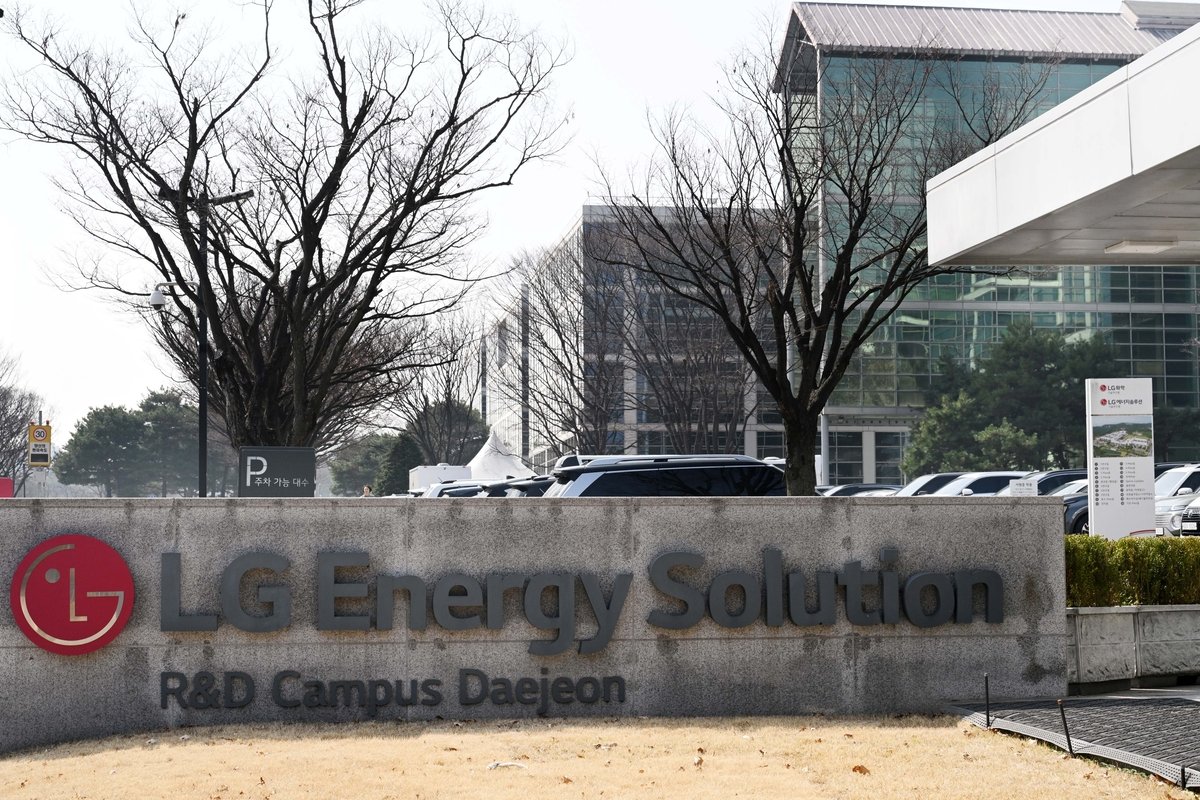
LG Energy Solution Ltd. opened its third-quarter results on Oct. 8 with a number that looked like a clean turn in its favor: operating profit of 756 billion won, or about $564.2 million, up 25.7% from a year earlier. Revenue climbed 59% to 9.64 trillion won. The company is selling more batteries than it did a year ago, and it is being paid more for them.
The fine print tells a more complicated story. In its statement, the South Korean battery maker said the quarter’s profit included tax credits it received under the US Inflation Reduction Act, credits tied to its battery production in the United States. Strip those out, and operating profit falls to 339.1 billion won. Washington’s subsidy, in other words, did more than half the work of the quarter’s headline profit.
That gap is the clearest measure of how thin battery economics remain. A company growing revenue by nearly 60% would normally expect its profit to grow in step. Instead, the increase in the profit line was less than half the increase in the revenue line, and the part that did grow leaned heavily on policy rather than on the market.
The credits themselves are structured to reward volume. Under the production tax credit, battery makers receive a payment tied to each kilowatt-hour of cells produced in the United States. LG Energy Solution runs plants in Michigan, Ohio and Tennessee and holds joint ventures with General Motors across several states. The more cells those plants produce, the larger the credit, which is why the subsidy grows as the company’s American footprint grows.
The company was spun off from LG Chem in 2020 and quickly became one of the world’s largest suppliers of electric-vehicle cells, selling to General Motors, Ford, Hyundai, Tesla and others. It spent heavily to build those American plants on the bet that a wave of electric-vehicle demand would justify the outlay. The credits were designed to close the gap while the industry scaled up.
The problem is that the market the company is selling into has cooled. Global electric-vehicle sales are still rising, but more slowly than the industry expected when it committed to billions of dollars of capacity. Automakers have delayed some models and trimmed others. Battery makers that built for a boom now carry factories sized for a market that has not arrived on schedule.
Chinese competitors have made the pricing environment harder still. CATL and BYD have driven down the cost of cells across the industry, and LG Energy Solution has responded by pushing into lithium-iron-phosphate chemistry and stationary energy storage, where it can compete on cost rather than premium performance. The diversification is real, but the premium segment that once carried the company’s margins is under pressure from both demand and price.
Analysts have long argued that the subsidies mask how thin the underlying margins really are. This week’s disclosure made the point in the company’s own numbers. More than half of operating profit vanishing when a tax credit is removed is not an accounting detail; it is a statement about where the value in the business actually sits.
The US credit is not a hidden subsidy. It was written into law precisely to pull battery manufacturing onto American soil, and the company has been among its largest beneficiaries. Its size in this quarter’s results, though, shows how much of the industry’s profit has come to depend on policy rather than on the market itself.
The company’s pivot toward storage is itself a hedge. Stationary batteries for grid and commercial use carry steadier demand than electric vehicles, and they are less exposed to the whims of consumer adoption. If the electric-vehicle transition keeps arriving more slowly than promised, the storage business gives LG Energy Solution a second market for the same factories. It also complicates any attempt to read the quarter’s results, since the company does not yet break out how much of its growth came from each segment.
Investors will be watching two numbers in the months ahead. The first is the size of the tax credit in each quarter’s results, a measure of how much profit is still coming from Washington. The second is whether the company’s American plants run closer to their promised capacity, which would let revenue growth finally translate into profit that does not depend on a subsidy. Neither answer will be available until the full results land, and both will matter more than the headline.
The quarterly figures are preliminary, and the company will report fuller detail later in the month. What is unlikely to change is the shape of the story: more revenue, more cells shipped, and a profit line whose strength owes as much to a statute in Washington as to anything happening on the factory floor.
For the moment, the quarter reads as growth with an asterisk. The company is selling more batteries and booking more revenue. Whether it can earn more from those batteries without a tax credit doing the heavy lifting is the question that will follow it into next year, and it is a question the company itself has now put in front of investors.



