
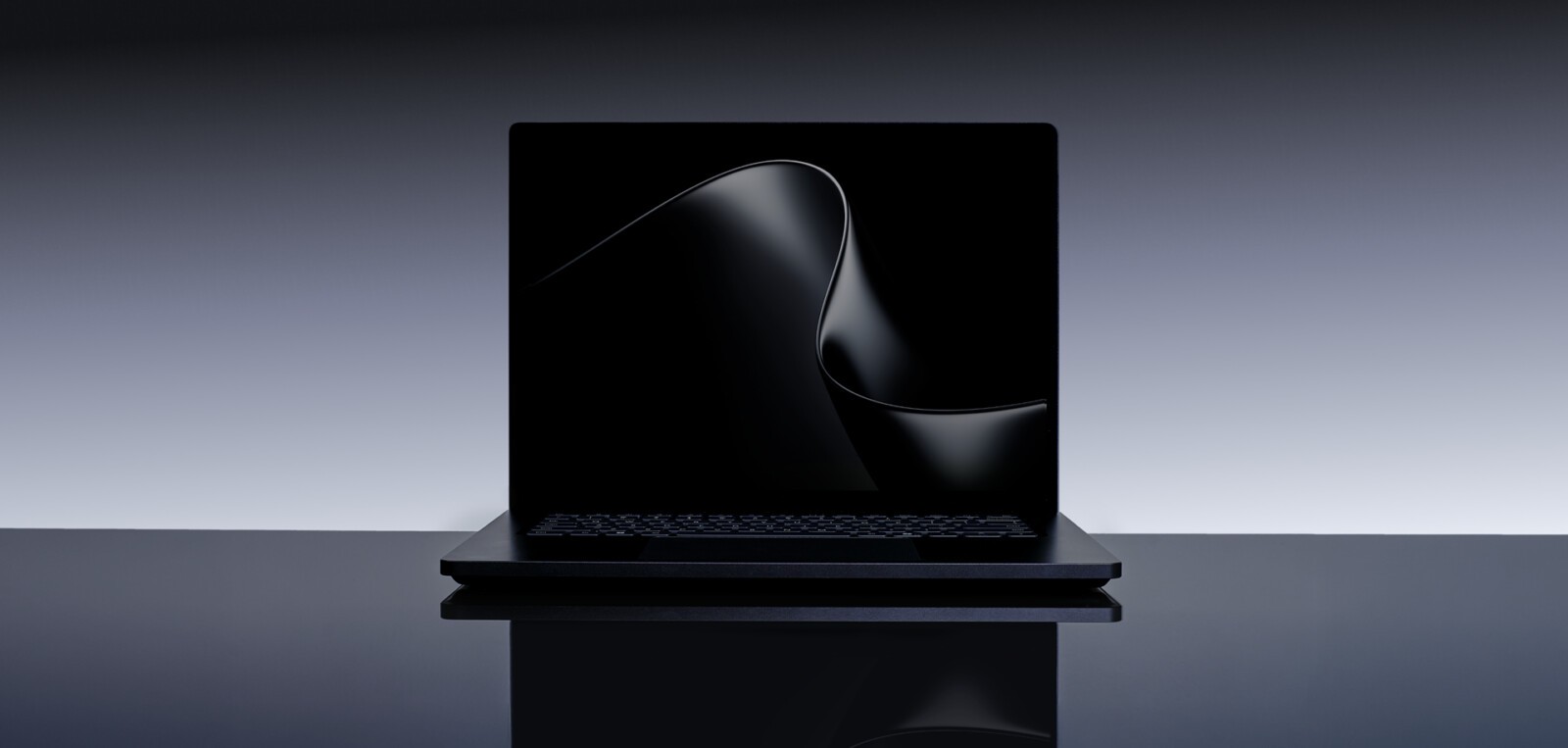
For months, Microsoft’s most ambitious laptop existed mostly as a promise: a Windows machine built around an Nvidia chip, capable of running large AI models on the device itself, with no price and no release date. On Tuesday in San Francisco, the company finally filled in both blanks. The Surface Laptop Ultra starts at $2,599, and preorders open now, with the first machines shipping October 16.
The laptop is built around Nvidia’s RTX Spark platform, which pairs a Grace central processor with up to 20 cores and a Blackwell graphics chip with up to 6,144 cores, sharing as much as 128 gigabytes of unified memory. The entry configuration is more modest, with an 18-core processor, 24 gigabytes of memory, and 512 gigabytes of storage, while the top-end model runs to $5,899.99.
The price puts Microsoft directly against Apple. The MacBook Pro, with its own Arm-based silicon, has long been the machine developers and creative professionals measure every other laptop against. Microsoft’s executives made the comparison themselves, telling reporters in San Francisco that the Surface Laptop Ultra processes prompts for local AI models about twice as fast as Apple’s MacBook Pro M5 and generates video about six times faster.
Those claims come with the usual caveats. They describe specific tasks under conditions Microsoft controlled, and reviewers will test them the moment machines reach their hands. But the fact that Microsoft is naming Apple at a product launch, after years of treating the Mac as an unspoken rival, is itself a signal of how the AI PC battle has sharpened.
What the machine is really selling is locality. A large language model running on a laptop needs no cloud connection, sends no data off the device, and incurs no per-token fee. For businesses weighing data privacy and predictable costs, that trade is attractive, and it is the argument Nvidia’s Jensen Huang has made for the past year: the next wave of AI computing runs on the desk, not in someone else’s data center.
Microsoft also opened preorders for a companion machine aimed squarely at developers. The Surface RTX Spark Dev Box, at $5,999, is a workstation built for the engineers who train and tune models locally. It ships to U.S. customers in November. The two devices together sketch Microsoft’s bet: consumers get a laptop, and the people who build the software those consumers run get a dedicated box.
The partnership stretches Microsoft and Nvidia’s relationship further down-market. Nvidia became the world’s most valuable company on the strength of data center chips, and Microsoft is one of its largest customers through Azure and OpenAI. Putting a Blackwell chip in a consumer laptop takes that relationship from the server rack to the kitchen table, and it gives developers who already work on Nvidia’s CUDA software stack a reason to buy a Windows machine.
Microsoft’s earlier attempt at an AI-first PC, the Copilot+ machines built on Qualcomm’s Snapdragon chips, ran modest models and leaned on the cloud for heavier tasks. The Surface Laptop Ultra is a different bet: a full Nvidia graphics stack, with CUDA support, aimed at the developers who already build AI on Nvidia hardware. It treats local AI as the main event rather than a side feature.
Apple remains the unspoken presence behind the stagecraft. Its M-series chips, built on Arm, have run useful on-device AI for years, while Apple keeps its heaviest model work in the cloud or in smaller on-device doses. Microsoft and Nvidia are now making the explicit case that a Windows machine should run frontier-scale models the way a Mac runs its own software: privately, on the device.
Analysts said the device matters less for how many units it sells than for what it signals. If local AI becomes the norm, the companies that control the silicon and the operating system stand to capture value that has so far flowed to cloud providers. Microsoft and Nvidia, they said, are betting that the model running on a desk will matter as much as the one in a data center.
The PC industry has been waiting for a reason to buy. Unit sales have been flat for years, and the upgrade cycles that used to drive them have stretched out. A laptop that runs a large model offline is the kind of reason manufacturers have been hoping for, and the industry will be watching whether it sells machines or merely moves the conversation.
Still, the event carried a message about two companies and their ambitions. Microsoft, which built its empire on software, is now willing to go to market with a $2,599 piece of hardware to defend the relevance of Windows. Nvidia, which built its empire on chips, is lending its name to machines sold to consumers. Whether the bet pays off will be decided in October, when the first Surface Laptop Ultra arrives and reviewers measure the marketing against the machine.



