
The letter arrived at Wolfspeed with a specific purpose: to keep a stretch of the American chip supply chain from leaving the country.
On October 7, the War Department’s Office of Strategic Capital sent Wolfspeed a commitment letter for a $1.5 billion loan, with a 30-year term, to expand domestic production of silicon carbide materials and wide-bandgap power devices. The money is aimed squarely at defense applications: upgrading gallium nitride epitaxy, developing radiation-hardened components, and advancing gallium-nitride-on-silicon-carbide radio-frequency wafers.
The loan will be disbursed in four tranches, with the first worth $600 million, according to the terms. Before any of it flows, Wolfspeed must raise $750 million in outside capital on its own. In return for the financing, the War Department receives warrants for up to 7.5% of the company’s equity.
The conditions are the point. Washington wants the capacity built, but it does not want to be the only one writing checks. The requirement that Wolfspeed line up private money first is a test of the company’s own viability, a way to make sure public dollars follow conviction rather than replace it.
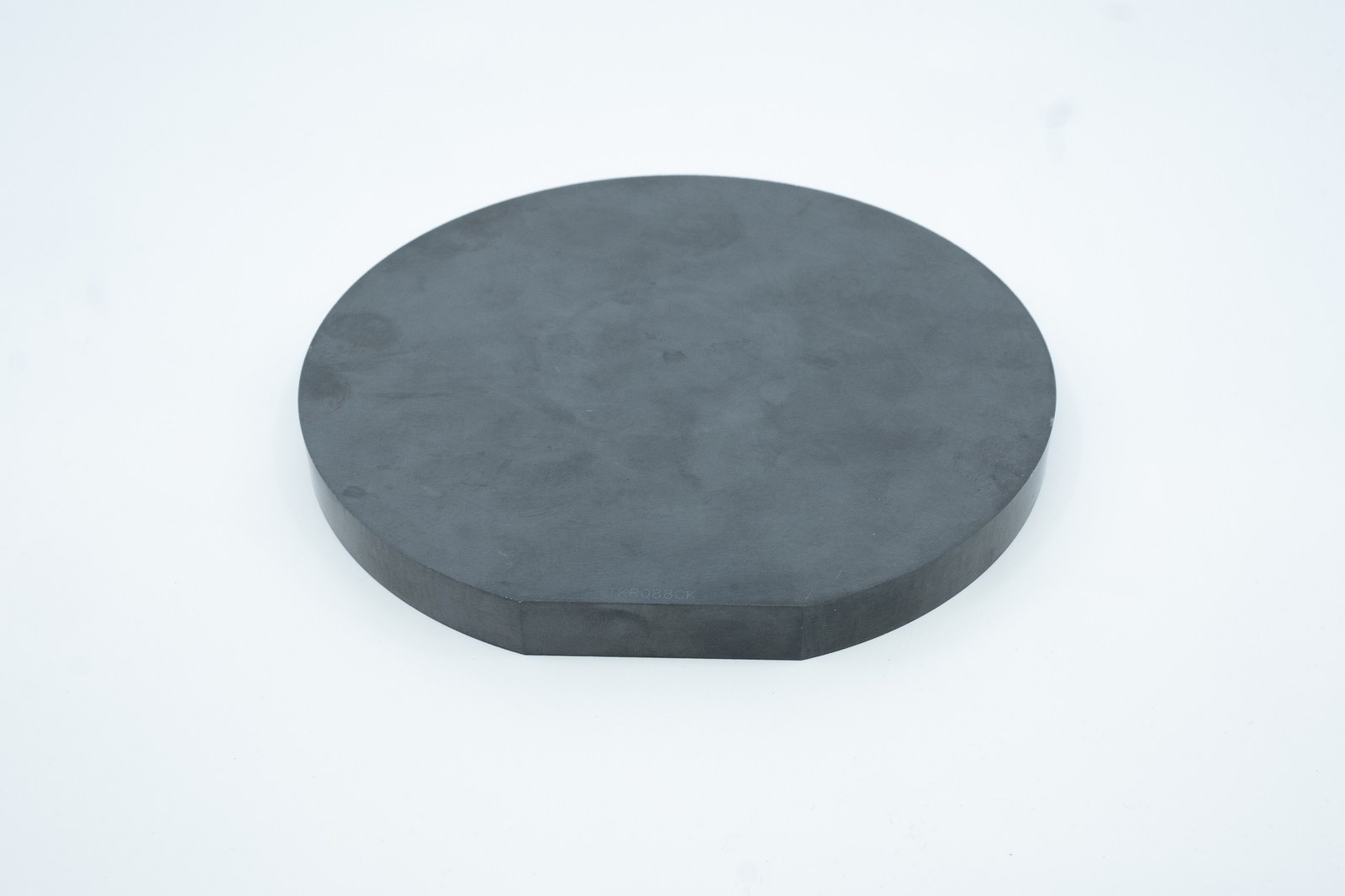
Silicon carbide is the material at the center of the deal. It lets power devices run at higher voltage and temperature than plain silicon, which makes it useful in electric vehicles, grid equipment and military systems that must work under stress. A domestic source of the material is now treated as a national-security asset.
Wolfspeed, based in Durham, North Carolina, is one of the few Western companies with meaningful silicon carbide capacity. It has spent years building fabs and has struggled with the heavy cost of doing so, burning cash as the market for the devices developed more slowly than its factories.
The government’s involvement follows a pattern. The Office of Strategic Capital was created to steer financing toward technologies the military depends on but the private market may not fund fast enough. A loan with warrants is its standard instrument, cheaper for taxpayers than a grant and tied to the company’s success.
The 30-year term is unusually long and signals patience. The War Department is not betting on a single product cycle. It is trying to lock in a manufacturing capability that will matter for decades, through election cycles and market swings.
The defense rationale is concrete. Radar, electronic warfare and missile guidance all depend on power semiconductors that can survive high power and hostile conditions. If the only suppliers sit in a rival’s territory, the military’s supply chain has a single point of failure.
Wolfspeed’s financial path has been rocky. The company has restructured, closed plants and sought repeated injections of capital. The $750 million it must raise before the loan lands is its next test, and the market will read the outcome as a verdict on the whole silicon carbide sector.
The deal’s structure also hands the government a stake in the upside. The warrants for up to 7.5% of the company mean that if Wolfspeed recovers and its stock climbs, the taxpayer participates in the gain. It is the kind of arrangement Washington has used before in rescues, applied here to a building spree rather than a bailout.
For the broader chip industry, the loan is another data point in a long effort to rebuild domestic manufacturing. Silicon carbide sits one layer below the AI chips that dominate the headlines, but it powers the systems that move electricity into and out of them.
The risk is that the demand never matches the capacity. Wolfspeed has expanded into a market that has grown in fits, and a glut would punish the very company the loan is meant to support. The tranches are designed to pace the money, releasing it as targets are met.
The company did not say how quickly it can satisfy the private-capital condition. The commitment letter is a promise, not a closing, and terms can still shift. What is fixed is the direction: the United States has decided that some chip capabilities are worth lending against.
The silicon carbide market has been shaped by the electric-vehicle boom, which made the material the standard for the power electronics that manage a battery pack. Military systems demand more of it still, because the devices must keep working after radiation exposure and under heat that would break ordinary silicon. Wolfspeed sits where those two markets meet.
The loan also fits a broader pattern in which Washington has put money behind chip manufacturing it considers strategically important, whether through direct subsidies or, as here, through financing that carries repayment and a share of equity. The War Department’s instrument is less a gift than a structured bet.
For a company that has spent years on the edge, the letter is a lifeline with strings. The strings are the point. The money arrives only if the market agrees the company is worth saving, and the government keeps a piece of the upside if it is.



