
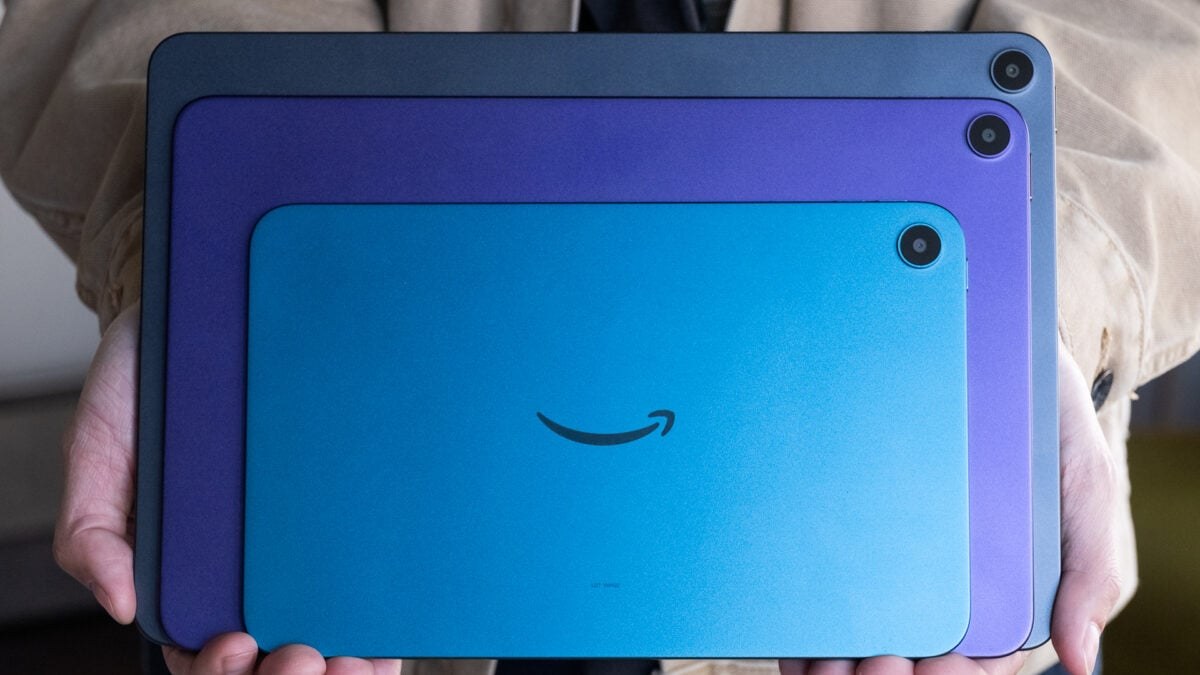
For more than a decade, Amazon’s Fire tablet was the default answer to one question: what is the cheapest tablet that still works? The Fire HD 10, at $155, was the emblem of that strategy. On October 8, Amazon said it is finished making devices in that price band.
The company unveiled three new tablets under the Alexa brand — an 8-inch, an 11-inch and a 12-inch model, priced from $230 to $550 and shipping October 14. The low-cost Fire line will stop getting new models, though existing devices will keep receiving support. The flagship, the 12-inch Alexa Tablet 12 Pro at $550, costs more than three times the old Fire HD 10 and lands just beneath Apple’s iPad range.
Panos Panay, the executive who runs Amazon’s devices business, attributed the shift to component costs. Memory prices, he said, have climbed far enough that making a capable tablet without compromises has become hard to do at a bargain price. Amazon had never before put the Alexa name on its hardware; now the voice assistant’s brand sits on the devices themselves.
The new tablets arrive with a redesigned home screen built around dynamic tabs and a feature the company calls “screen intelligence,” which can read what is on the display and complete a purchase on the customer’s behalf. It is a wager that a tablet can be more than a screen for streaming and browsing — that it can act as a shopping terminal with a voice assistant at the wheel.
The move reverses a decade of positioning. Amazon entered hardware to be the price floor in every category, from speakers to e-readers, and the Fire tablet was that logic at its purest. Climbing toward iPad prices concedes that the floor has lost its appeal and that margins, not volume, are now the point.
The Fire line had real reach. Amazon’s tablets were among the best-selling Android slates in the world, not because they were the best but because they were cheap and tied to Prime, and parents bought them by the box for children. That volume came at a cost: the devices business has long been a thin-margin arm of a company that treats hardware as a doorway to shopping rather than a source of profit.
The tablet market has tilted this way for years. Apple and Samsung hold the premium tier, while the budget segment has been squeezed by smartphones with ever-larger screens. Amazon’s retreat from the bottom leaves that segment to a handful of low-margin players and quietly concedes that a $155 device was never going to fund the kind of AI features the company now wants to ship.
Amazon is betting that Alexa, freshly rebuilt around generative models, gives it a reason to charge more. The assistant can now carry on conversations, take actions across apps and, with the new screen-reading capability, shop for the user directly. A tablet that buys things for its owner is a different product from a tablet that merely shows them.
That bet is not without precedent inside Amazon. The Echo speaker started at $180 and dropped to $50 as the company chased scale, and the Kindle went from a $399 curiosity to a device Amazon now sells near cost. The tablet line is moving the other way, toward price, which is a statement about how Amazon now views Alexa: not as a giveaway to be subsidized but as a product worth paying for.
The risk is that Amazon has spent twenty years teaching customers to expect its hardware to be almost free, sold at cost to drive Prime memberships and purchases elsewhere. Persuading those same customers to pay $550 for the same brand is a test of whether Alexa has become something people will pay a premium to keep near.
The change also reflects a company deciding which of its many devices matter. Amazon built the Echo, the Kindle, the Ring camera and the Fire TV on the same principle: sell the hardware thin, make money on what flows through it. The Alexa tablet inverts that principle. It is priced to make money on its own, which means Amazon now thinks its assistant and its shopping engine are strong enough to stand alone instead of being carried by a cheap screen. Panay, who spent years at Microsoft steering Surface toward premium prices against the iPad, is the executive chosen to run that experiment. The playbook is familiar: stop competing on price, start competing on features, and accept a smaller, pickier customer base than the Fire crowd.
Amazon did not say whether a cheaper tablet would return. For now, the company is asking a question it has never asked before: whether its hardware can sell on quality rather than on being the cheapest thing in the room. The Fire HD 10’s era appears to be over, and the Alexa tablet is the answer Amazon is betting on.



